

Is the National Museum of Korea Worth Visiting in Seoul?
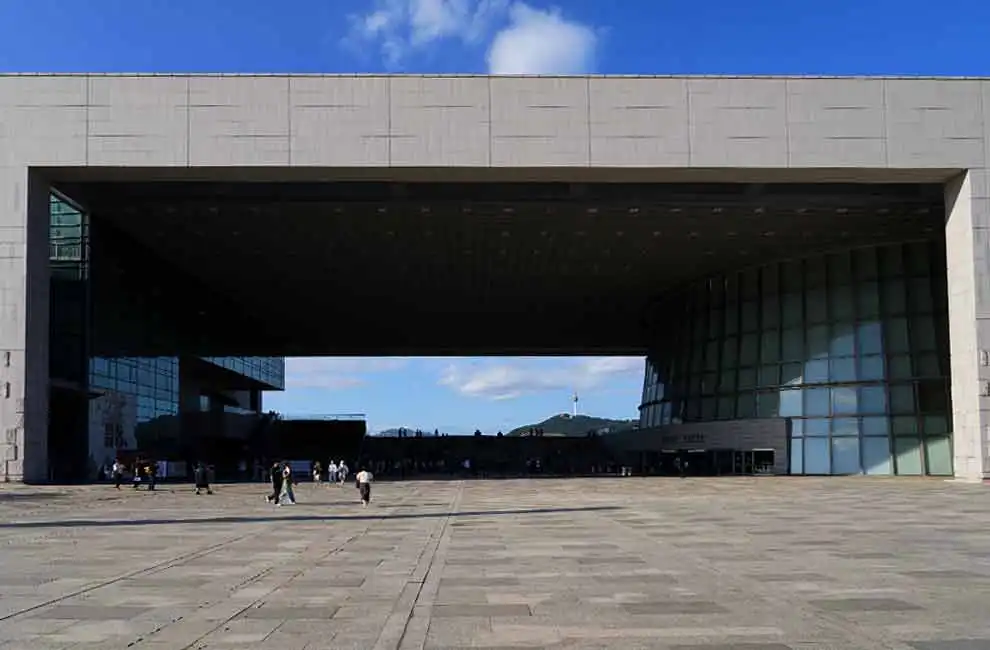
If you’re planning a trip to Seoul and come across the National Museum of Korea, you might find yourself wondering, “Should I really go?”
You may be thinking, “Won’t it be boring?” or “Will I even understand the history of a country that isn’t my own?” And when you only have a limited amount of time in Seoul, you might wonder if a museum is really worth giving up time that could be spent bakery hopping or exploring a traditional market.
But here’s why I think the National Museum of Korea is worth considering.
You can see thousands of years of Korean history in one place — from ancient artifacts and Silla gold to Goryeo celadon, Buddhist art, treasures from the Joseon period, and the famous Pensive Bodhisattva. And all of the permanent exhibitions are free.
So if you’re wondering whether a museum should really be on your Seoul itinerary, I’d say this one deserves a spot.
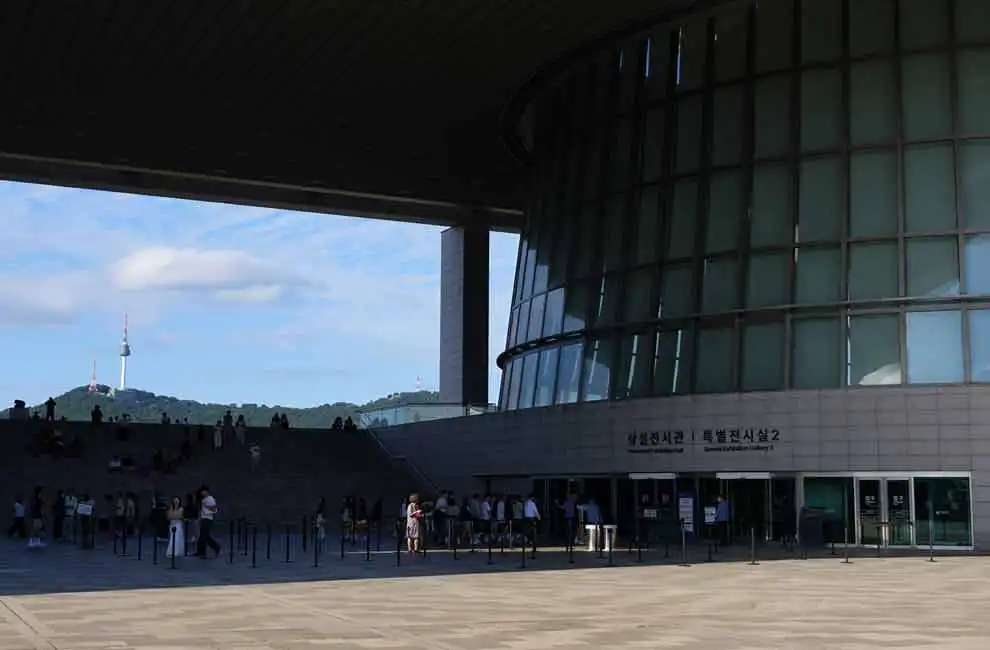
The museum is also much bigger than you might expect, so you don’t need to see everything.
If you have only a couple of hours, you can simply follow the museum’s recommended highlights and focus on a few masterpieces.
Is the Free Permanent Exhibition Enough?
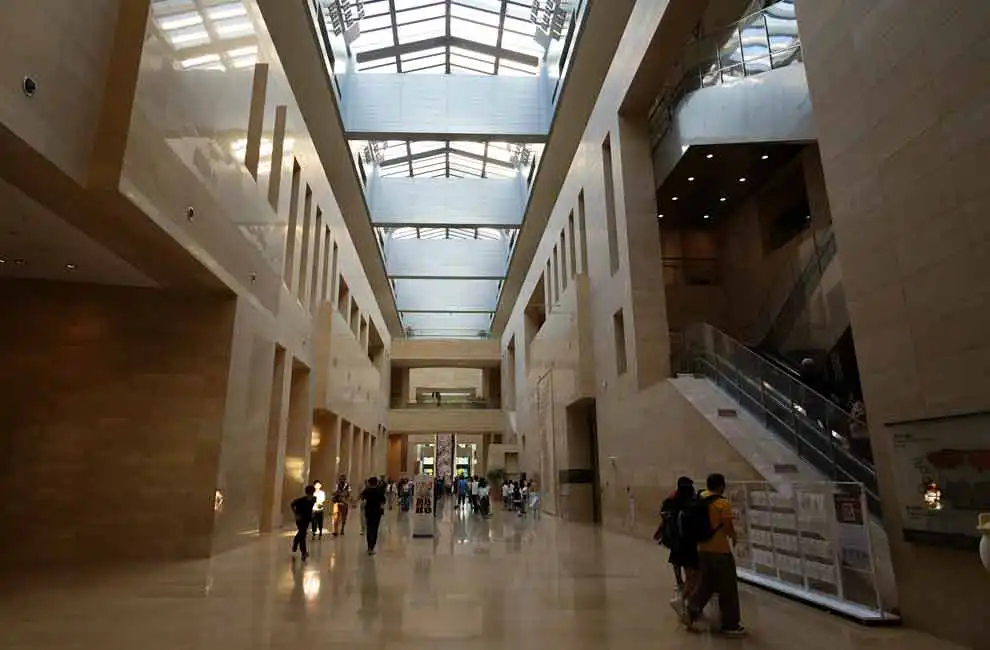
You don’t need to buy a ticket to enjoy the National Museum of Korea.
The permanent galleries are free and already offer more than enough for a first visit.
If there happens to be a special exhibition that interests you, you can always add it to your visit.
| Admission Fee | Free for the Permanent Exhibition. (Special temporary exhibitions require a separate ticket). |
| Opening Hours | Mon, Tue, Thu, Fri, Sun: 9:30 AM – 5:30 PM |
| Wed & Sat : 9:30 AM – 9:00 PM (Night Openings) | |
| How to Get There | Take Seoul Subway Line 4 or the Gyeongui-Jungang Line to Ichon Station. Follow the underground walkway directly from Exit 2 into the museum plaza. |
| Pro Tip | Drop your heavy bags or coats at the free electronic lockers near the main entrance on the first floor before you start exploring. |
What Are the Must-See Exhibits at the National Museum of Korea?
Pensive Bodhisattva
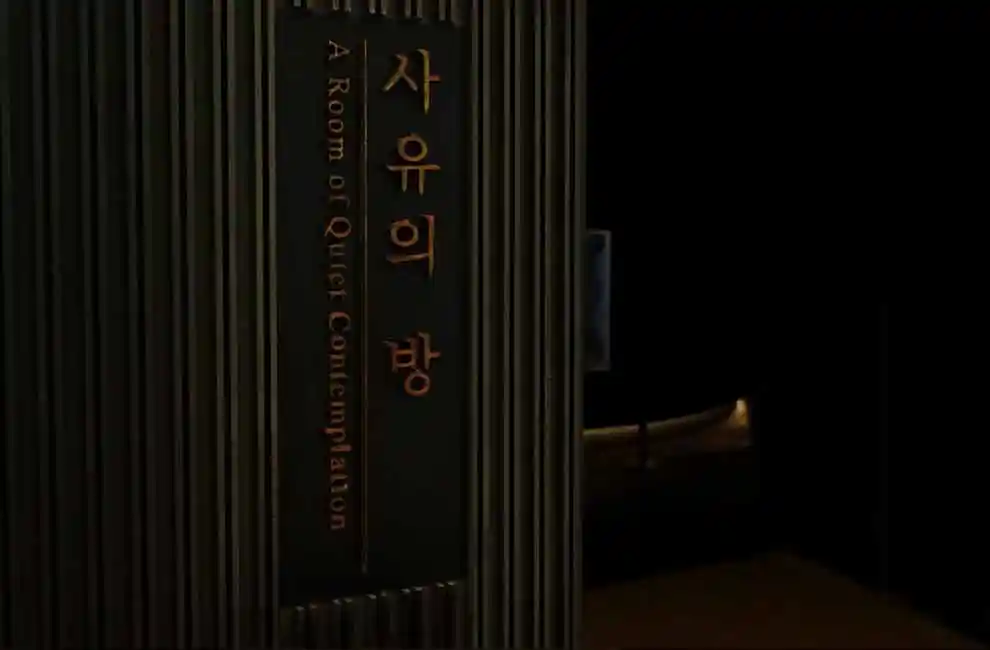
One of the most memorable places in the National Museum of Korea is the Room of Quiet Contemplation.
At the center of this dark, quiet space are two Pensive Bodhisattvas, both created more than 1,300 years ago during Korea’s Three Kingdoms period.
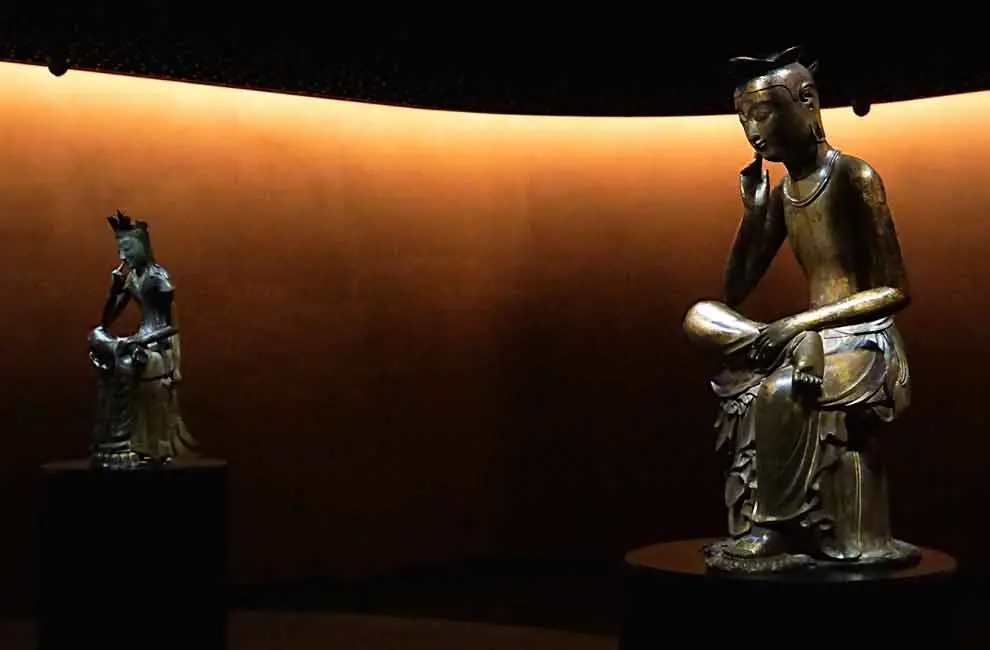
The statue gets its name, “Pensive Bodhisattva,” from its relaxed pose — one leg is resting over the other, while one hand gently touches the cheek.
This bronze statue was created sometime between the late 6th and early 7th century, during Korea’s Three Kingdoms period.
It’s a piece that most Koreans have seen in their school history books and on history exams,
so it’s especially meaningful to see the real thing in person. If you’re visiting the National Museum of Korea, I’d definitely put the Pensive Bodhisattva on your must-see list.
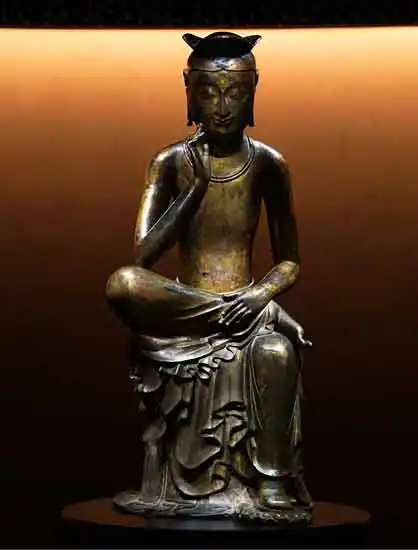
The Mystery of the Twin Statues: A Golden Treasure and a Wooden Masterpiece
Did you know that Korea and Japan share two Buddhist statues that look almost like identical twins?
Korea’s National Treasure No. 83 is cast in shining gilt-bronze, while Japan’s famous Pensive Bodhisattva at Koryu-ji Temple is beautifully carved from wood.
Aside from the material, their poses and expressions are shockingly similar.But here’s where the story gets really fascinating. When scientists analyzed the Japanese wooden statue, they uncovered a surprising truth: it was made entirely of Red Pine (Jeoksong).
This specific tree grows natively in the ancient Silla region of the Korean Peninsula and was rarely used for Japanese sculptures back then.To back this up, an ancient Japanese text called the Nihon Shoki records that in 623 AD, a Buddhist statue sent from the Kingdom of Silla was enshrined at Koryu-ji Temple by a clan leader of Korean descent.So, how did this masterpiece end up in Japan?
Today, most historians agree on two possibilities:
it was either crafted in Silla and sent as a royal gift,
or created right in Japan by immigrant Korean artisans using imported Silla timber.
Pretty cool history mystery, right?
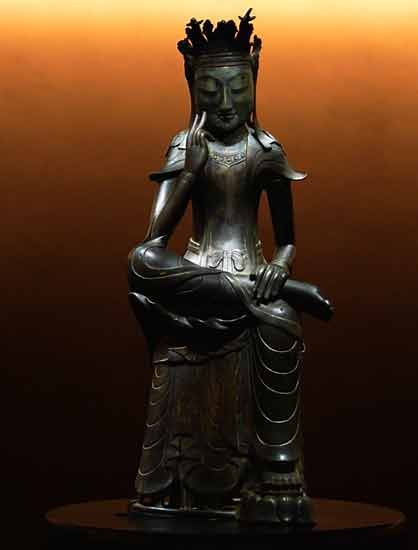
Although they share almost the same pose, looking closely reveals very different expressions, proportions, and details.
Are they smiling? Are they meditating? Or do they simply look like someone lost in thought?That quiet ambiguity may be one of the reasons the Pensive Bodhisattvas have remained so memorable for more than 1,300 years.
Ten-Story Stone Pagoda from Gyeongcheonsa Temple Site
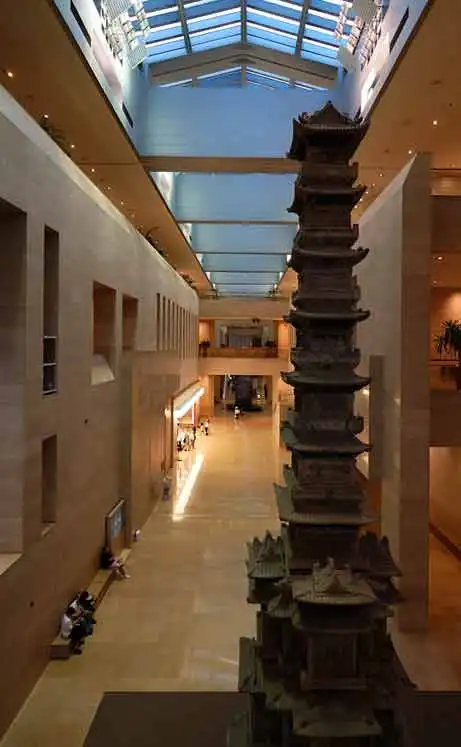
One of the first things you may notice inside the National Museum of Korea is the enormous Ten-Story Stone Pagoda from Gyeongcheonsa Temple Site.
Standing about 13.5 meters tall, this remarkable pagoda dates back to 1348, during the Goryeo Dynasty. Unlike many Korean stone pagodas, it was made from marble rather than the more commonly used granite, giving it a particularly detailed and elegant appearance.
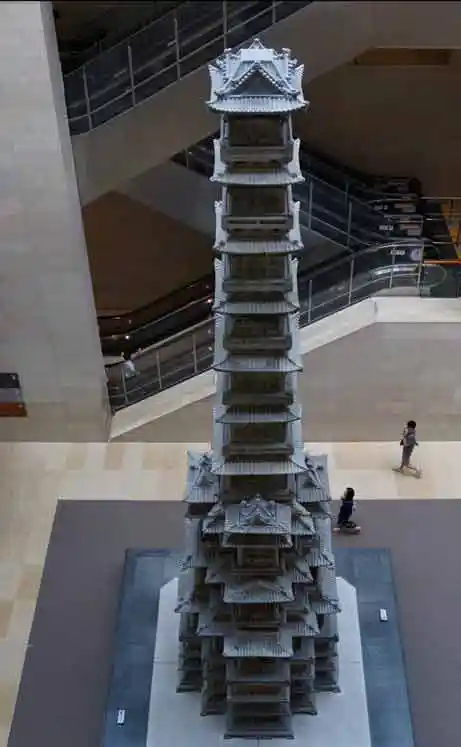
Look closely and you will see that almost every surface is covered with intricate carvings. The pagoda features Buddhist figures, architectural details, and decorative patterns carved into the stone, making it feel more like a three-dimensional work of art than a simple tower.
Its history is also surprisingly dramatic. The pagoda was originally built at Gyeongcheonsa Temple in present-day Gaeseong, which is now in North Korea.
It was taken to Japan during the early 20th century and later returned to Korea after efforts by Korean cultural figures. It was eventually placed in the National Museum of Korea, where visitors can see it today.
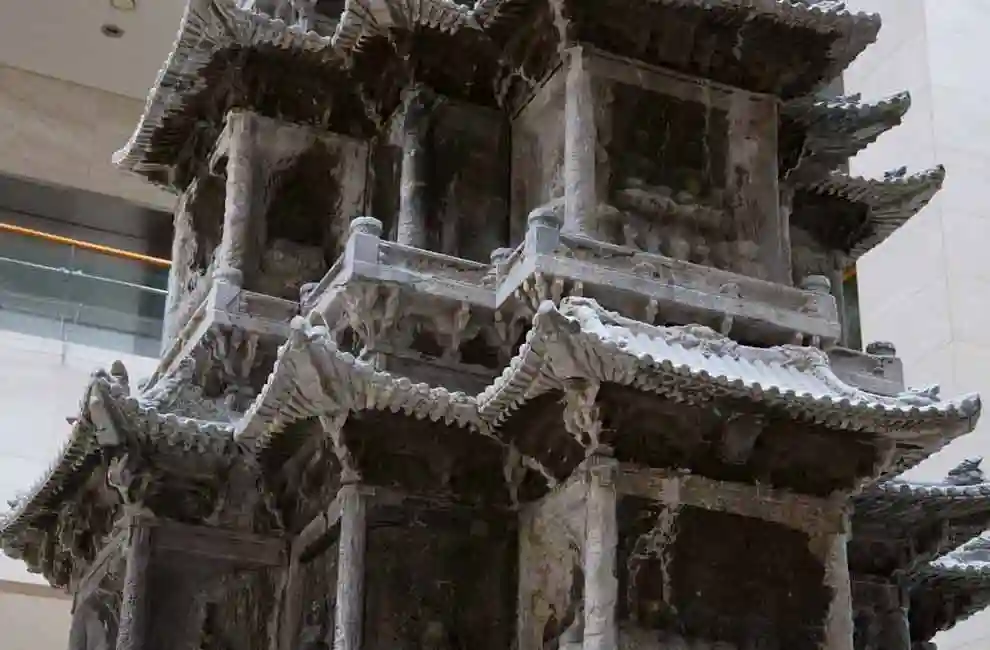
For first-time visitors, this is one of the museum’s most impressive sights—not only because of its size, but because you can walk around it and examine the detailed carvings from different angles.
Tip: Don’t just look at it from a distance. Walk around the entire pagoda and look up at the different levels. The closer you get, the more details you start to notice
Silla Gold Crown
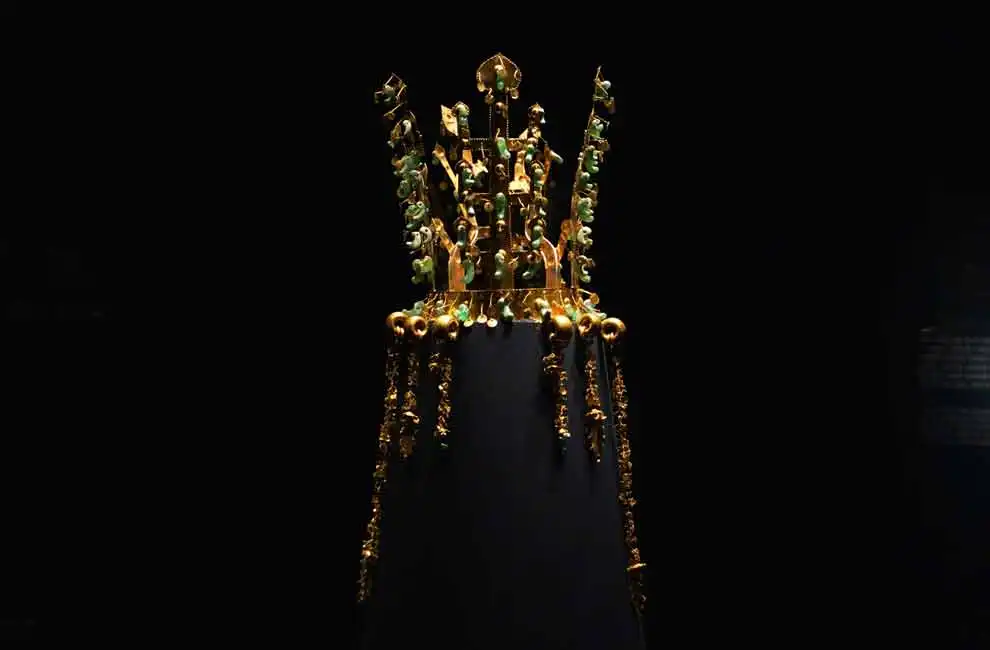
Silla gold crowns were made during the Silla Kingdom (57 BCE–935 CE) and were found in royal and elite tombs around Gyeongju, the ancient capital of Silla. Their elaborate design was closely connected to the social status of the person buried with them. In Silla tombs, the presence of a gold crown was one of the clearest signs that the deceased had belonged to the highest level of society.
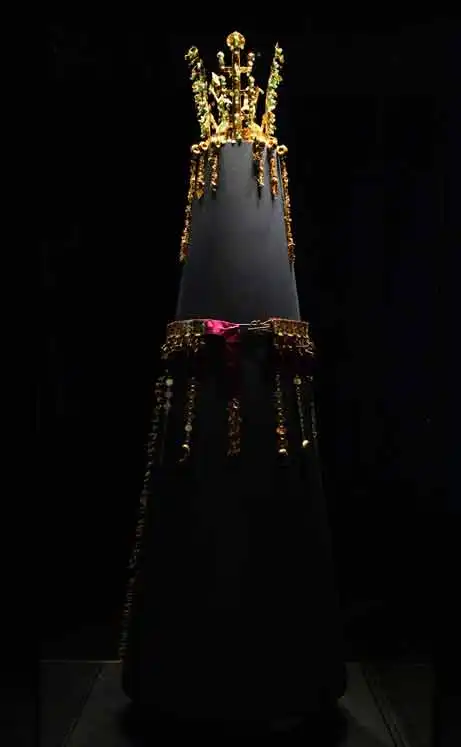
The thin gold plates were carefully shaped and decorated with repeated patterns.
Small gold ornaments and curved jade pieces were attached to the crown, while long pendants hung down from the sides.
These dangling ornaments were not just decoration. Their design and number varied between crowns and can provide clues about the status of the person buried with them.
Some of the most elaborate examples have exceptionally long and detailed pendants.
Why Is the Silla Gold Crown So Famous?
What makes Silla gold crowns especially fascinating is that they are not simply beautiful objects made of precious metal.
They give us a glimpse into how Silla society expressed wealth, status and power more than 1,000 years ago.
More Things to See
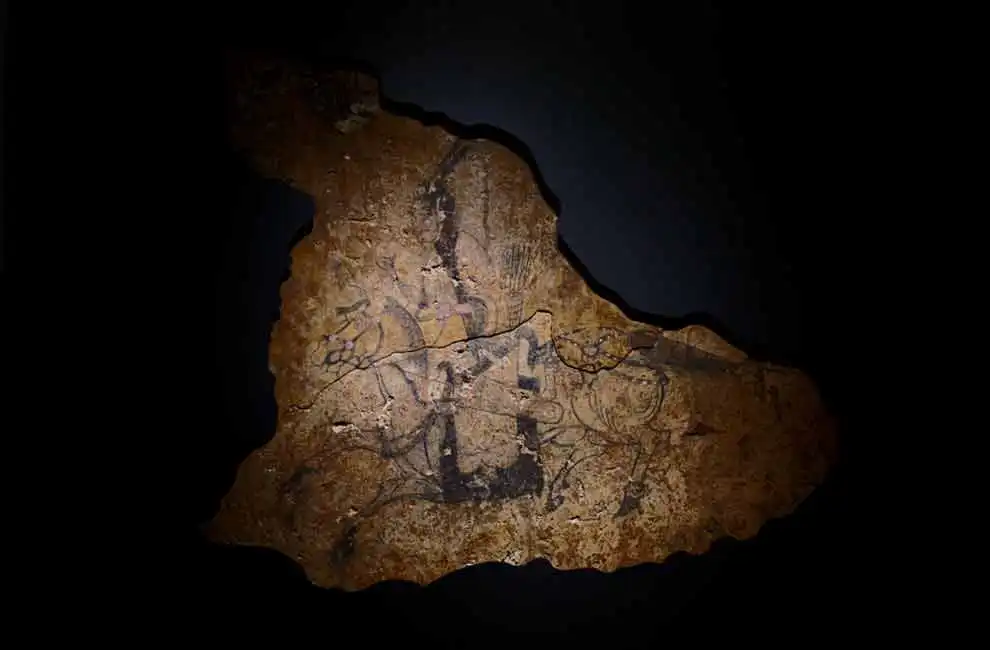
Painted on the walls of tombs more than 1,500 years ago, these murals show scenes of everyday life, hunting, dancing, feasts, and mythical creatures. They give us a rare glimpse into what people in Goguryeo believed, valued, and imagined.
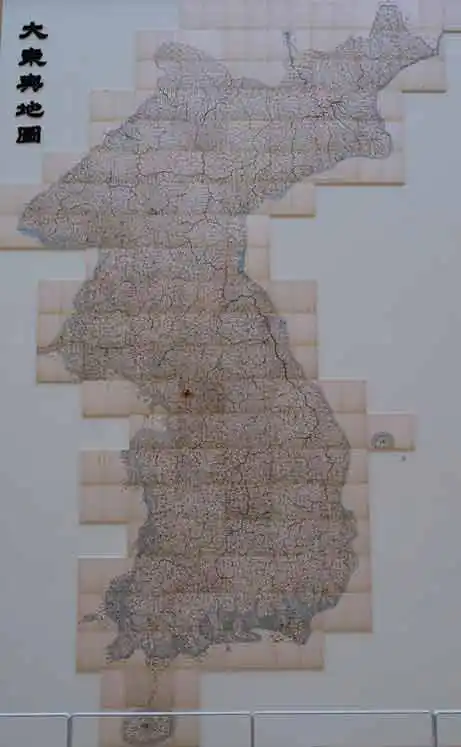
Imagine trying to map an entire country without satellites, GPS, or modern surveying equipment. That is what makes Daedongyeojido so remarkable.
Created by Kim Jeong-ho in the 19th century, Daedongyeojido is one of the most famous maps of Korea from the Joseon Dynasty.
It was made as a large, detailed map showing mountains, rivers, roads, towns, and other important geographic features across the Korean Peninsula.
What makes it especially interesting is its practical design.
The map was printed on woodblocks and divided into sections that could be folded and carried more easily than a single enormous sheet.
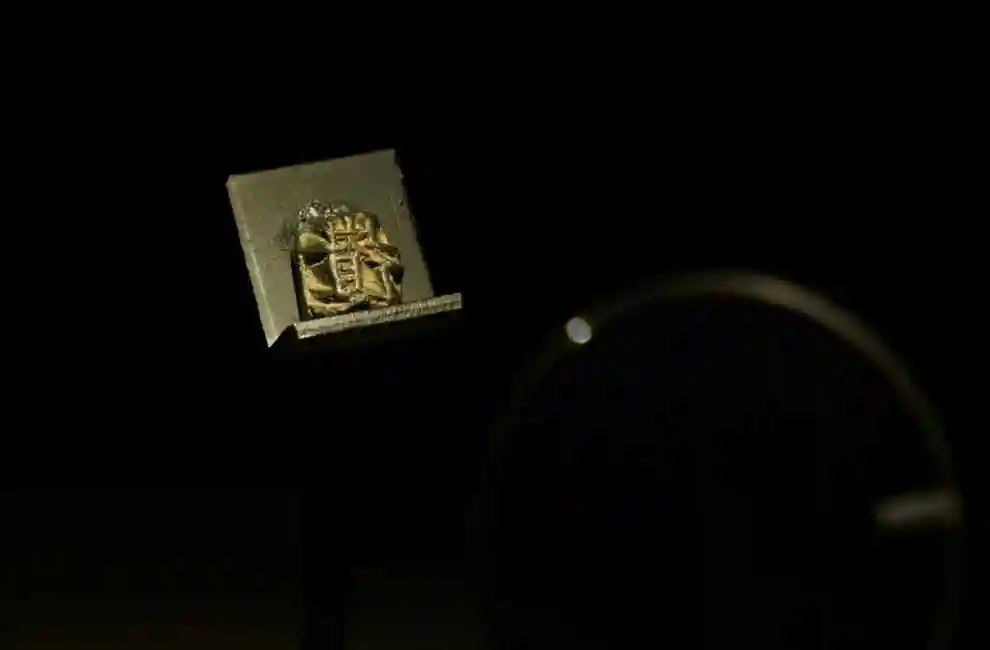
During the Goryeo Dynasty, Korean printers developed metal movable type centuries before Gutenberg’s famous printing press in Europe. The best-known example is Jikji, a Buddhist book printed in Korea in 1377. It is recognized as the oldest surviving book printed with movable metal type.
Unlike a carved woodblock, movable type uses individual characters that can be rearranged and reused to print different texts. This was a major technological achievement for its time.
Is the National Museum of Korea English-Friendly?
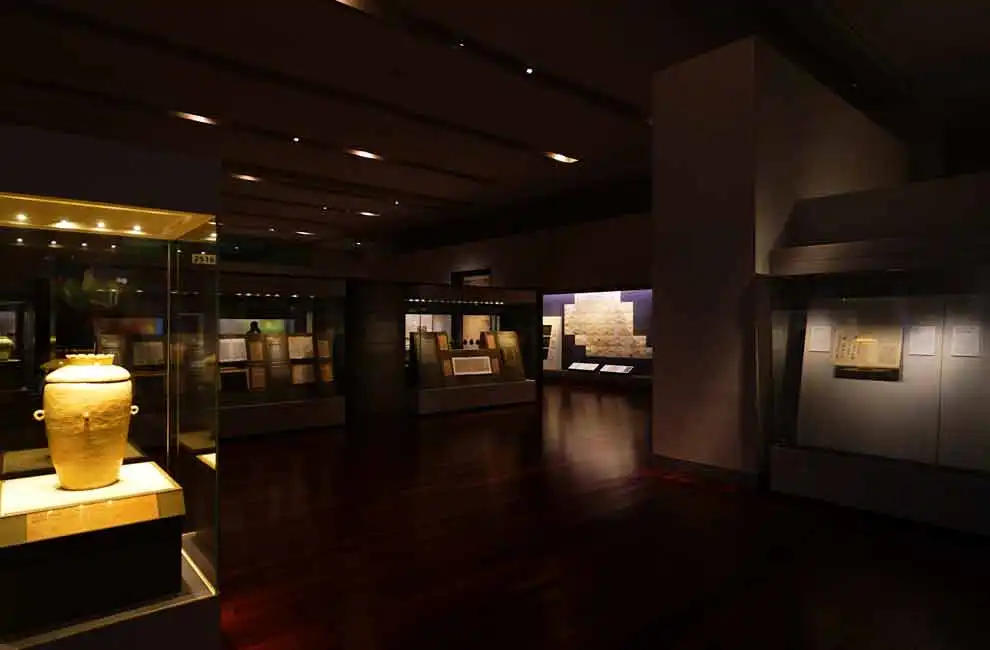
The National Museum of Korea offers several ways to learn about the exhibits, including free guided tours, smartphone guides, and an AI museum robot.
Groups of 15 or more can book a guided tour in advance, while individual travelers can join the regular tours without a reservation.
There are tours covering the 1st through 3rd floors of the Permanent Exhibition Hall, as well as tours focusing on specific galleries.
Since the schedule varies depending on the tour, it’s a good idea to check the guided tour schedule as soon as you arrive at the museum and plan your visit around the tours you’d like to join.
Don’t Miss the MU:DS Gift Shop!
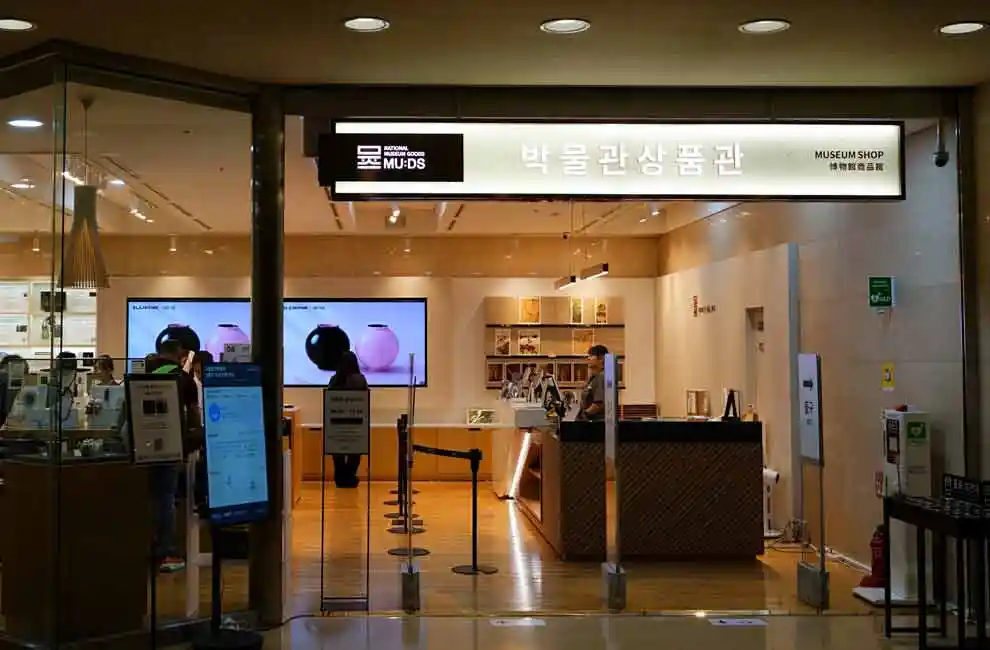
Before you leave, don’t forget to stop by the museum shop.
The National Museum of Korea’s merchandise has become surprisingly popular, especially the ‘MU:DS’ collection, which turns Korean cultural heritage into modern, everyday products.
You’ll find everything from small souvenirs and stationery to home goods, accessories, and beautifully designed replicas inspired by famous artifacts.
How do you get to the National Museum of Korea?
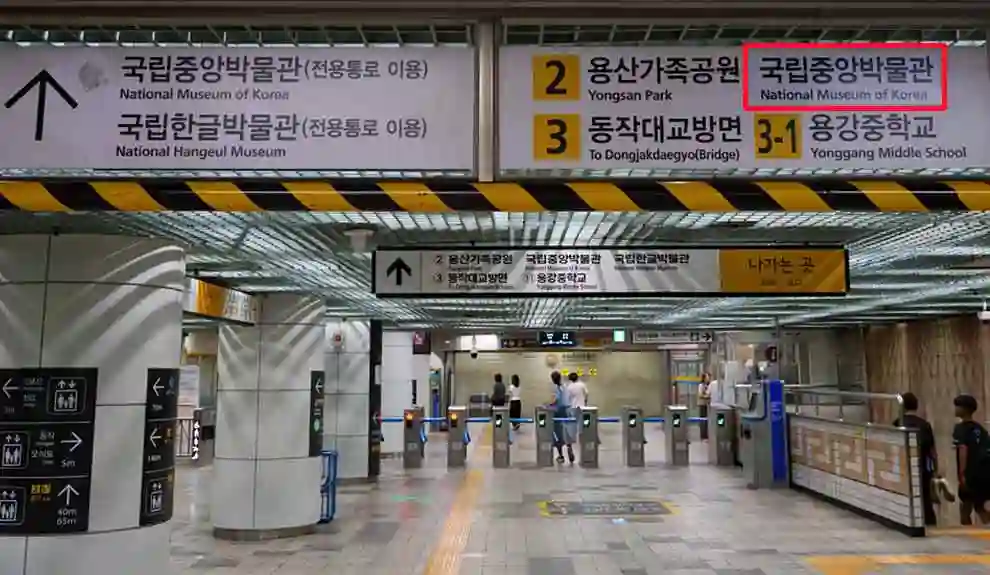
From Ichon Station
After getting off at Ichon Station, follow the signs for Exit 2.
However, you don’t actually need to go outside through Exit 2.
Instead, look for the underground passage called “Museum Nadeulgil.”
This pedestrian passage connects Ichon Station directly to the museum.
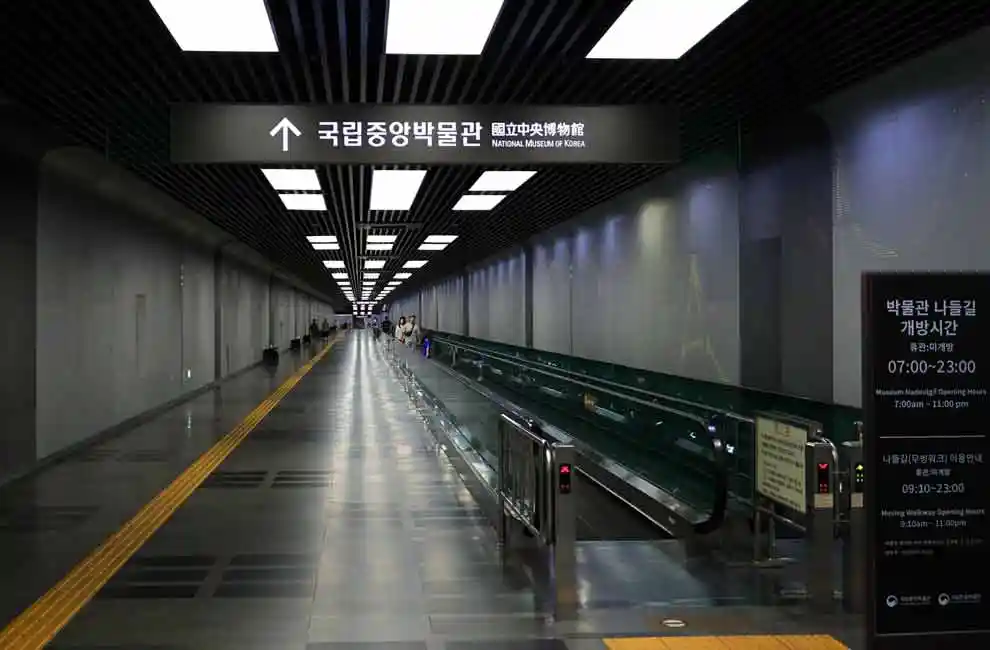
Once you enter Museum Nadeulgil, simply follow the walkway toward the museum.
The underground passage is about 250 meters long, and there is a moving walkway to make the walk easier. The passage is open from 7:00 a.m. to 11:00 p.m., while the moving walkway operates from 9:40 a.m. to 11:00 p.m.
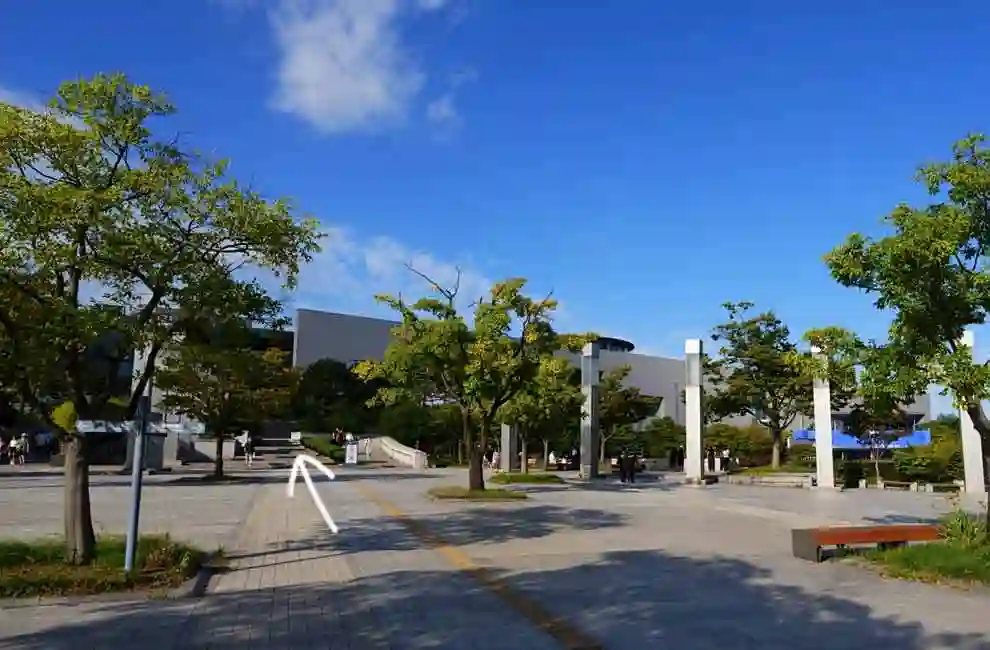
At the end of the passage, you will come out near the museum grounds. Follow the signs toward the National Museum of Korea. From Ichon Station, the museum takes about 10 minutes on foot.
If you are interested in Korean history and culture, the National Museum of Korea is definitely worth adding to your Seoul itinerary.
You could easily spend several hours exploring the National Museum of Korea from beginning to end, but you don’t have to see everything to enjoy it. If you’re short on time, picking a few highlights and taking your time with them can be just as rewarding.
If you’re a history lover, I’d also recommend combining your visit with the War Memorial of Korea in Yongsan. The two museums are close enough to visit on the same day, and that’s exactly what I did.
I visited the National Museum of Korea on a Wednesday, when it stays open until 9 p.m. I started at the War Memorial of Korea and then headed to the National Museum of Korea later in the day.
I really liked this combination because I could take my time at both museums without feeling rushed, and the extended evening hours at the National Museum made it much easier to fit everything into one day.
There is just one thing I wish I’d prepared for: the amount of walking! By the end of the day, my feet were definitely feeling it. So if you’re planning to visit both museums, do yourself a favor and wear your most comfortable shoes. You’ll be glad you did.