

What Is Cheonggyecheon?
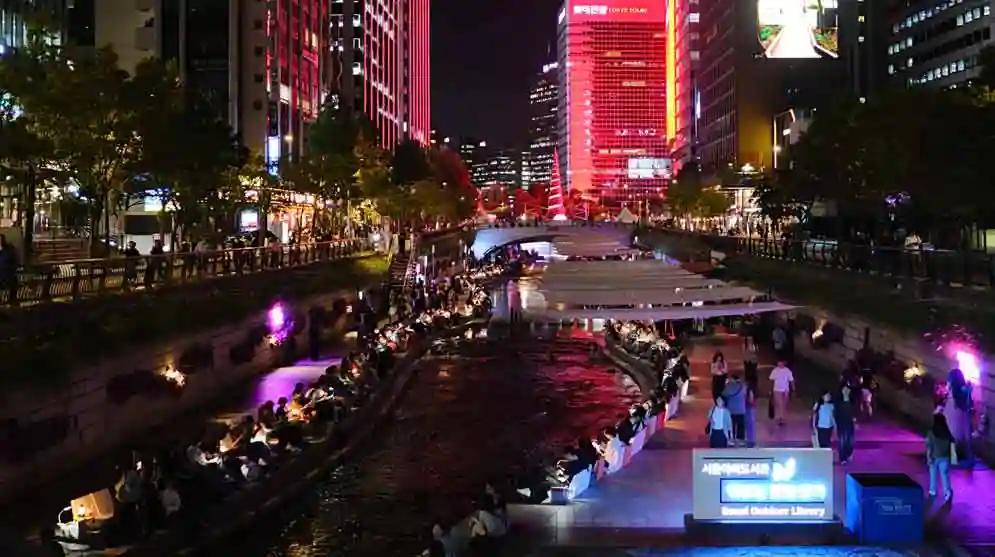
Cheonggyecheon was once just an ordinary stream, but after the Korean War, it was covered with concrete and a massive elevated highway, eventually disappearing from view.
Then in 2003, the elevated highway was torn down, and Cheonggyecheon was brought back to life as an 11-kilometer stream running right through the heart of Seoul.
How to Get to Cheonggyecheon
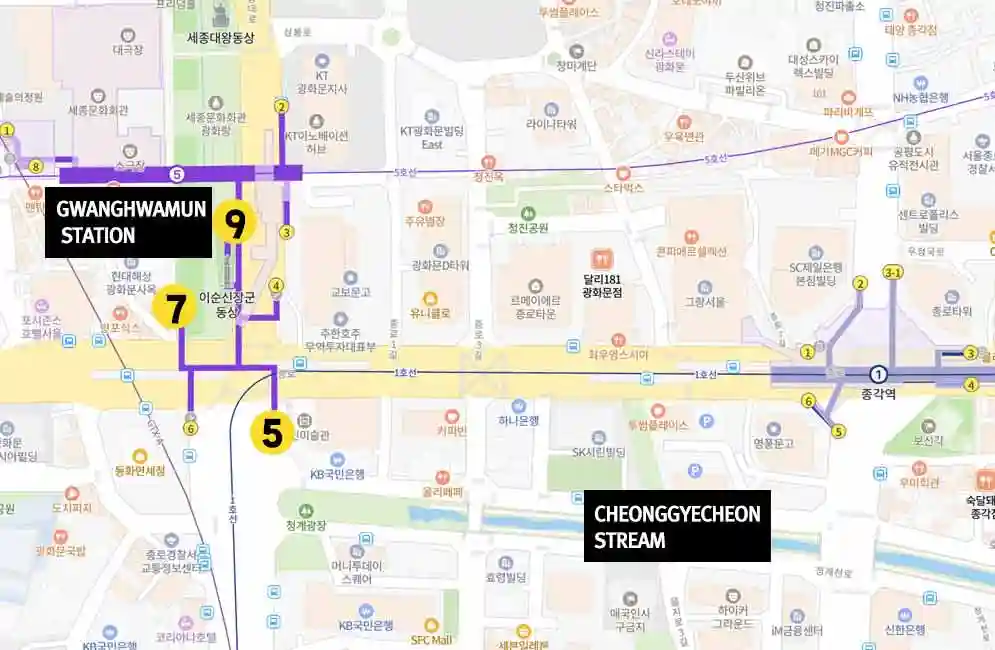
You can start your Cheonggyecheon walk from several subway stations, including Gwanghwamun, Jonggak, City Hall, and Dongdaemun.
But if it’s your first time, I’d start at Cheonggye Plaza, right outside Exit 5 of Gwanghwamun Station (Line 5). It’s super easy to find and just a short walk from the subway, making it a convenient place to begin.
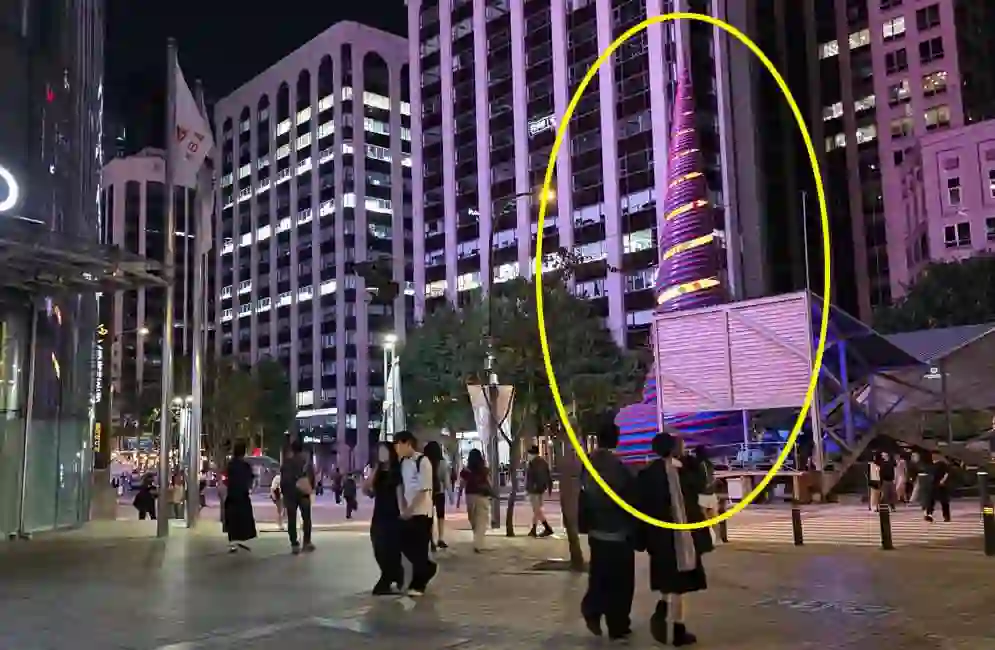
Once you come out of Exit 5, you’ll see a tall, spiral-shaped sculpture that looks like a seashell.
It’s only about a 2-minute walk from the station.
Once you reach the sculpture, you’ve arrived at Cheonggye Plaza, where the Cheonggyecheon stream begins.
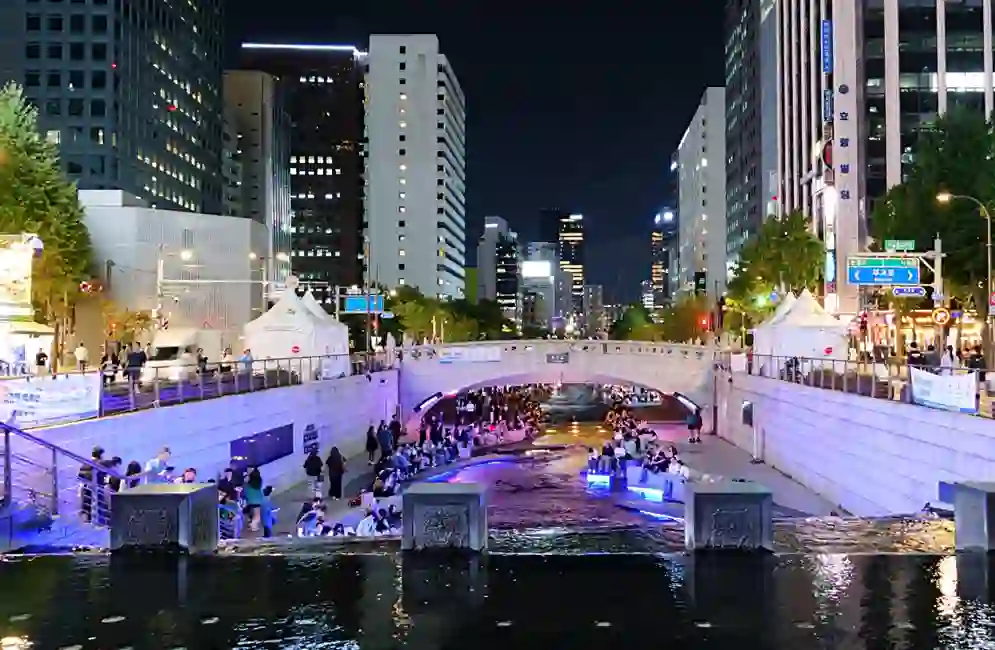
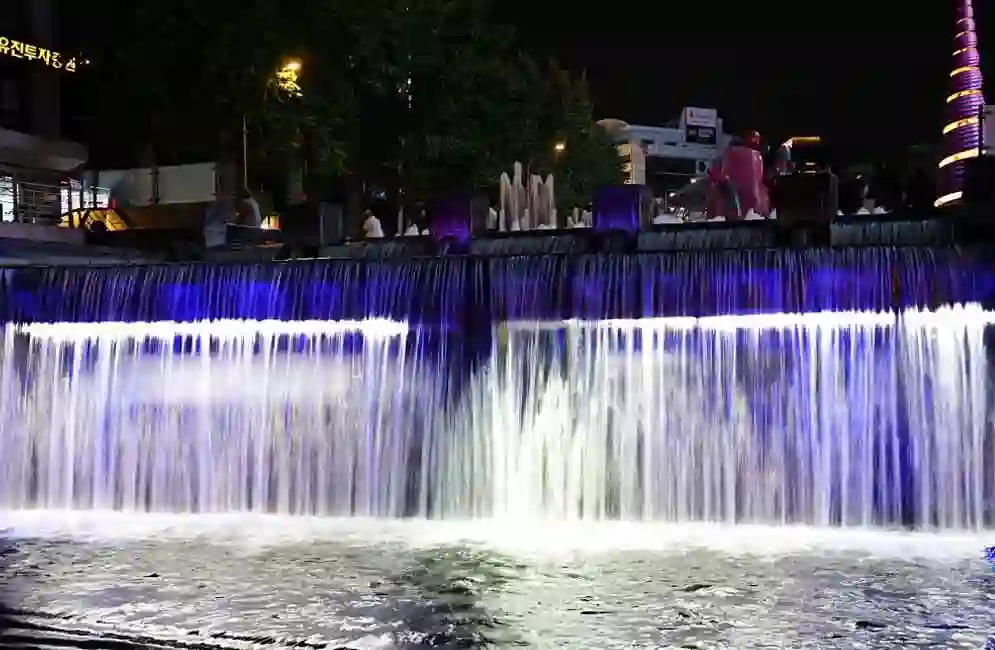
Cheonggyecheon isn’t just about walking by the water. There’s usually something going on throughout the year, from summer events to the massive light festival in winter.
The vibe can be totally different depending on the season.
For example, right now, you can stop by the Cheonggyecheon Outdoor Library, which is open every Friday, Saturday, and Sunday from September 4 through November 1.
What You’ll See Along the Way
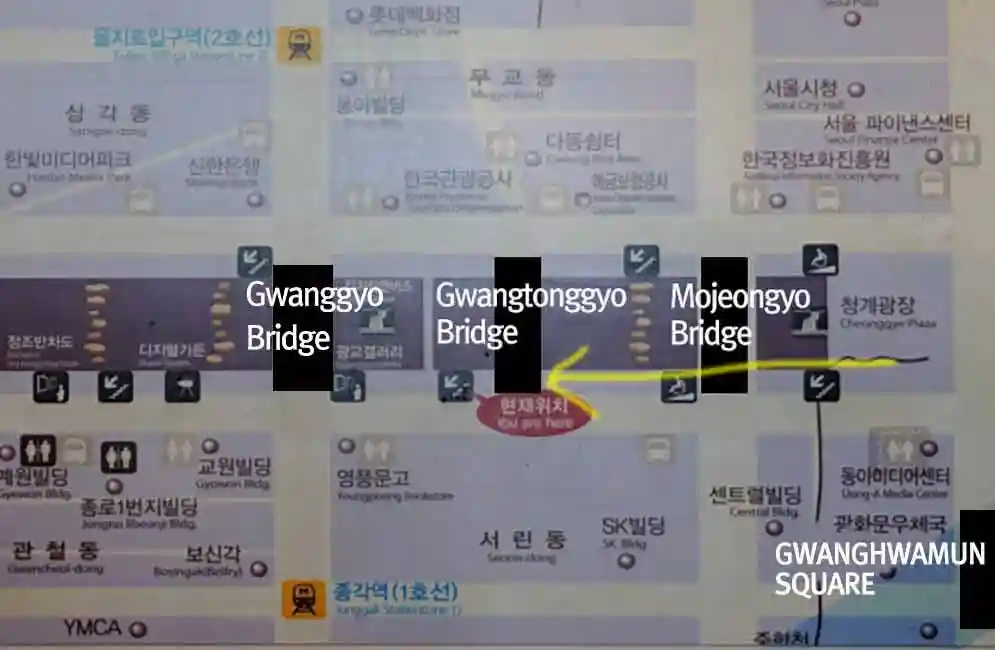
Cheonggyecheon starts at Cheonggye Plaza in central Seoul and winds its way past Dongdaemun and Seongdong-gu before joining the Jungnangcheon Stream. The entire route is about 8.1 km (5 miles) and you can walk the whole thing if you really want to.
But honestly, if you’re just stopping by for a casual walk, there’s no need to do the whole stretch.
At night, I’d recommend walking from Cheonggye Plaza to Gwanggyo Bridge. It’s only about a 10–15 minute walk, so you can easily fit this section into a Seoul itinerary without spending hours walking along the stream.
Between ‘Mojungyo Bridge and Gwangtonggyo Bridge’, you’ll find the outdoor library set up along the stream. It’s a nice little spot to sit by the water, listen to the sound of the stream, and read for a while.
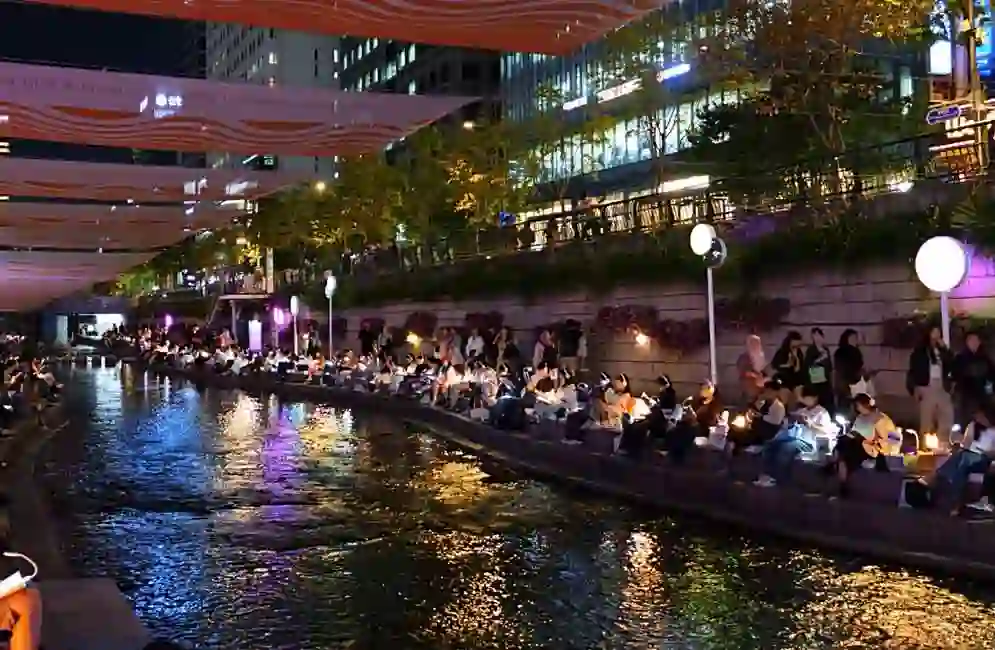
The Cheonggyecheon Outdoor Library is open every Friday through Sunday from September 4 to November 1.
You can enjoy the outdoor library for free not only at Cheonggyecheon, but also at ‘Gwanghwamun Square’ and ‘Seoul Plaza’.
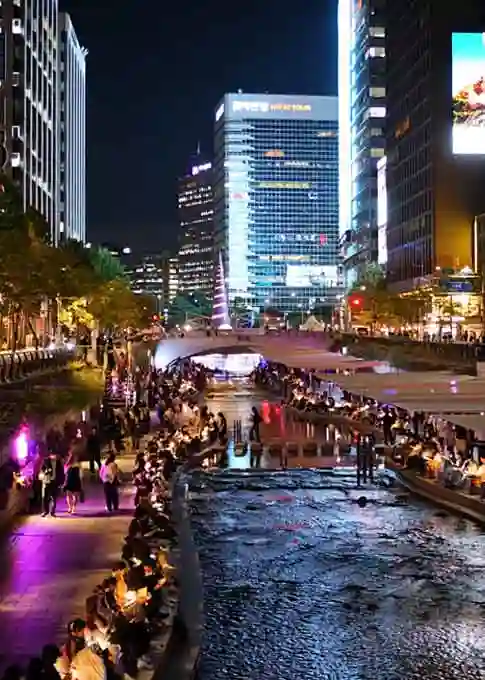
The outdoor library hours are set, but they may change depending on the weather or other events.
Daytime: 11:00 AM ~ 6:00 PM
Evening: 4:00 PM ~ 10:00 PM
How to Use the Cheonggyecheon Outdoor Library
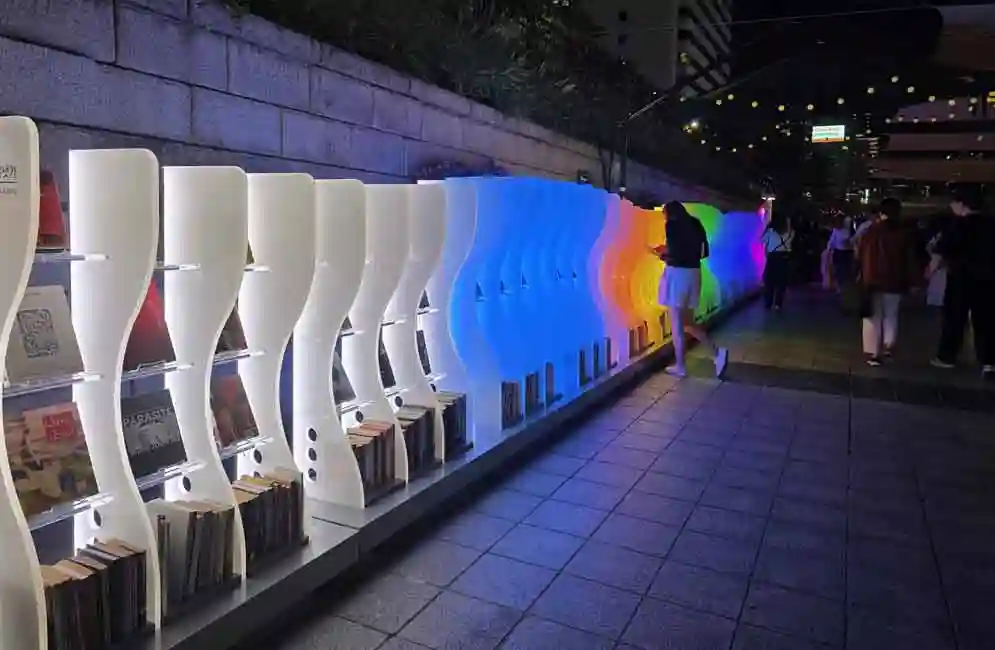
You can bring your own book and settle in by the stream, but you don’t have to.
The Cheonggyecheon Outdoor Library has a mix of books, from essays and novels to general-interest reads, so there’s plenty to browse while you’re there.
There’s also a section dedicated to ‘English-language books’. And if you scan the QR code on the signs around the library and log in, you can access ‘free e-books that are available exclusively on-site’.
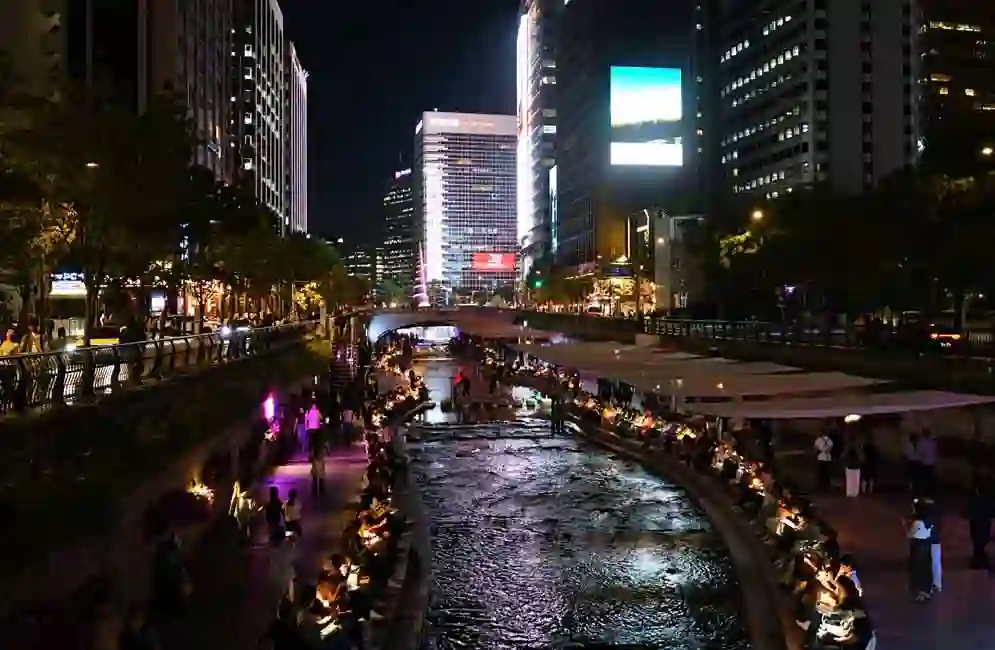
There’s no need to book a spot ahead of time. If you spot an empty seat, just take a seat and settle in with a book.
We walked around looking for an empty seat, but couldn’t find one, so we left the outdoor library area around ‘Gwangtonggyo Bridge’ and continued walking toward the next bridge, ‘Gwanggyo’.
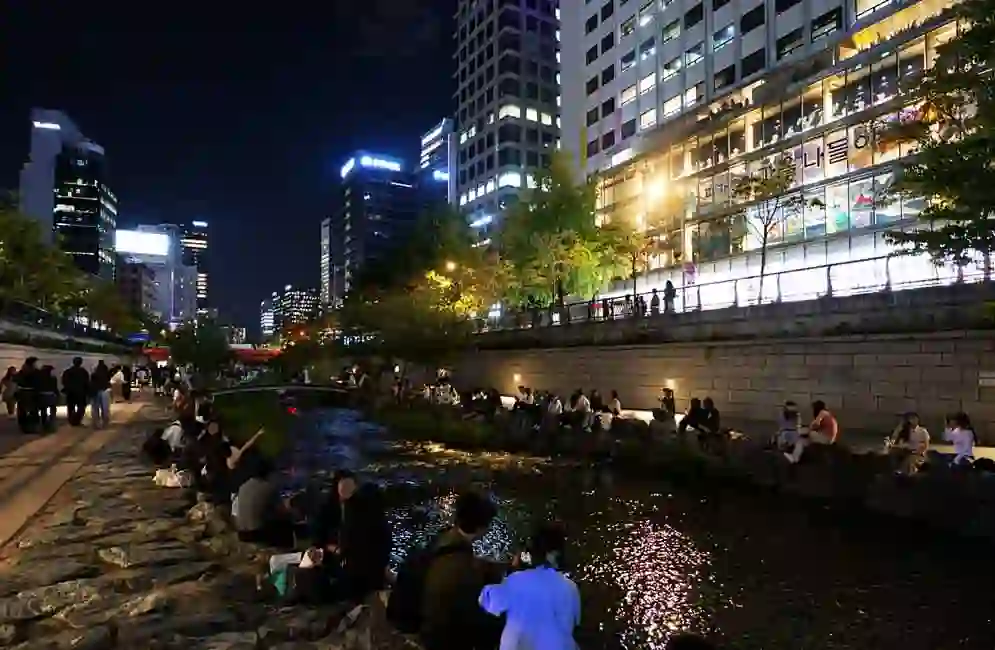
Once we passed Gwangtonggyo Bridge and left the outdoor library area, the vibe around Gwanggyo felt completely different.
Instead of people quietly reading, we started hearing little conversations here and there, seeing people grabbing a quick drink, and even dipping their feet in the water.
It felt like we were catching a whole different side of Cheonggyecheon—full of those small, everyday moments that make the stream feel so lively yet laid-back.
After walking around this section, we headed back up to the bridge and continued on.
There are stairs along the way that let you easily get back up to street level, so you can hop off the stream whenever you feel like it.
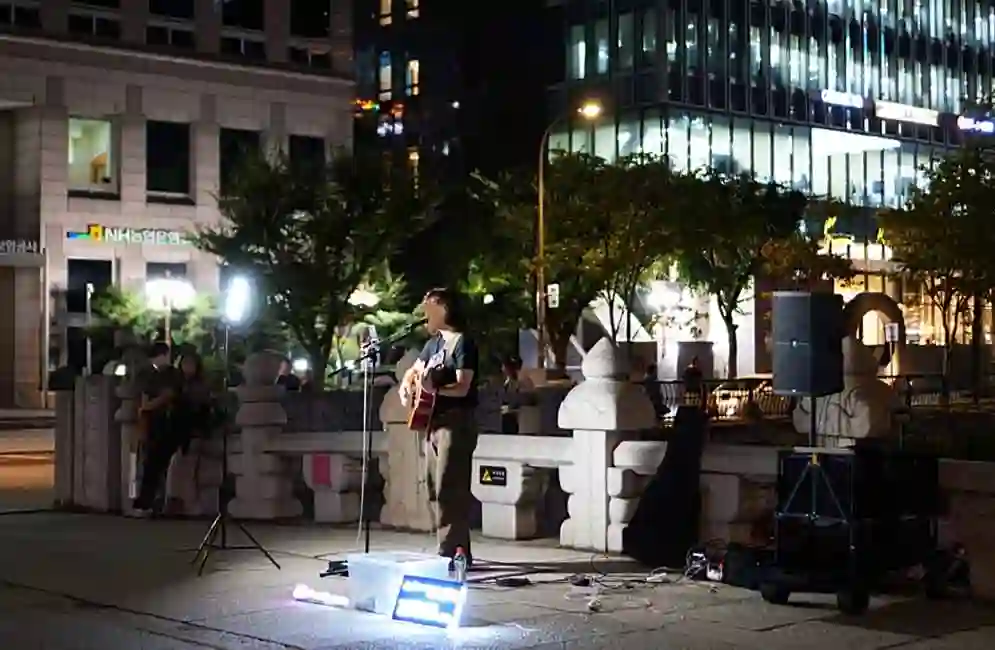
When we came back up to the street, we spotted someone busking, so we stopped for a moment to listen. After that, we continued on foot toward Gwanghwamun Square.
Walking from Cheonggyecheon to Gwanghwamun Square
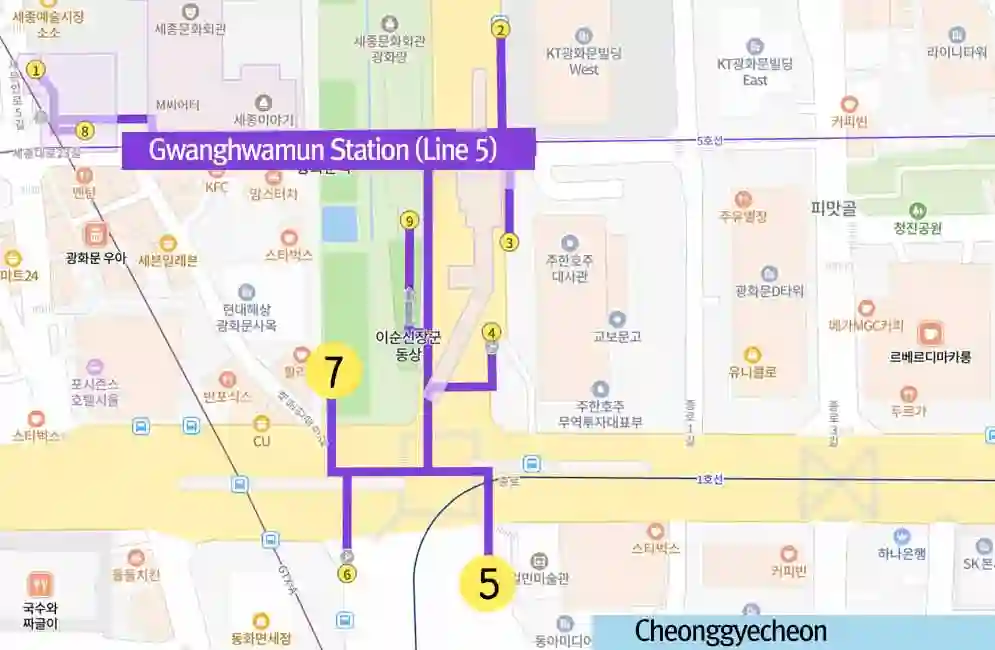
After exploring Cheonggyecheon, we head back toward the area where we started and make our way to Exit 7 of Gwanghwamun Station.
Once you come out of Exit 7, Gwanghwamun Square is right in front of you.
Exploring Gwanghwamun Square
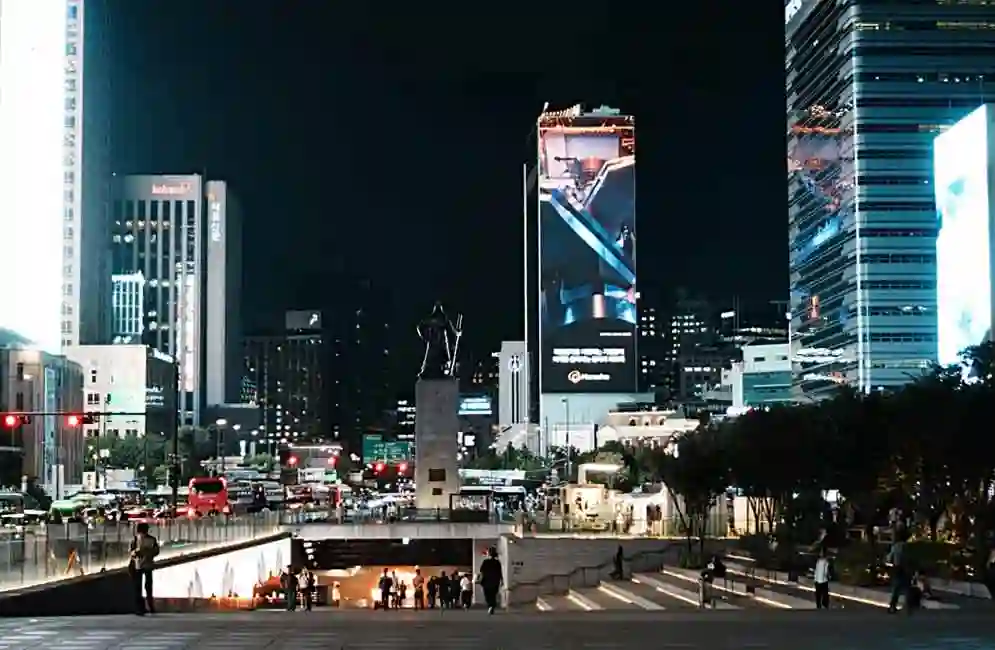
Gwanghwamun Square is one of those places where Seoul’s past and present come together.
It stretches out in front of Gyeongbokgung Palace, with the statues of King Sejong and Admiral Yi Sun-sin standing at the center.
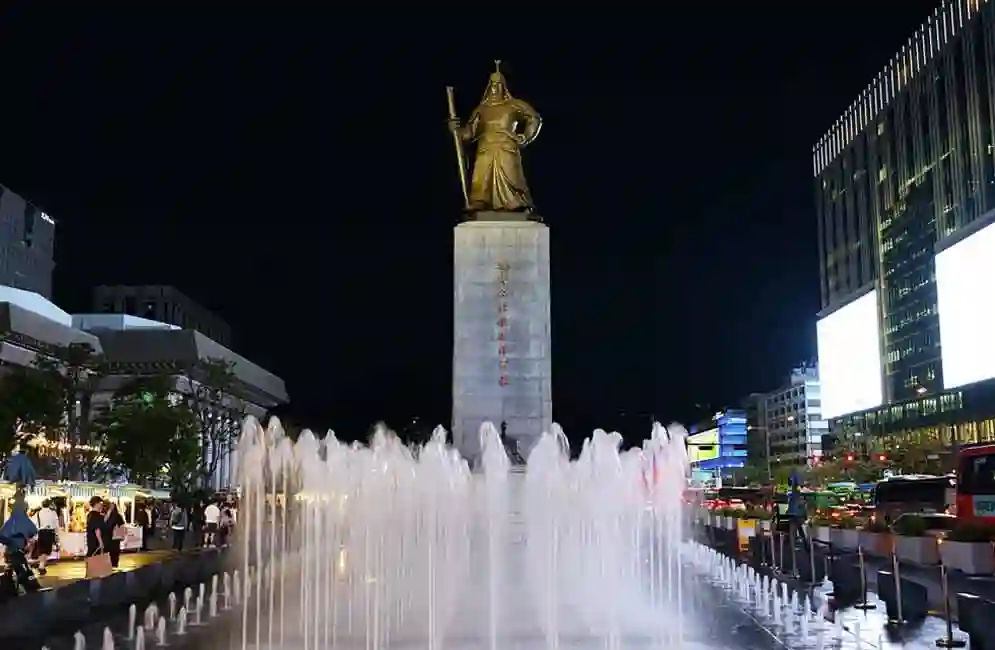
The statue in the middle of Gwanghwamun Square is ‘Admiral Yi Sun-sin’, one of the most famous military figures in Korean history.
He is best known for leading the Korean navy during the Japanese invasions of Korea in the late 16th century. He is especially famous for his victories at sea, including battles fought with the ‘turtle ship’, a heavily armored warship used by the Korean navy.
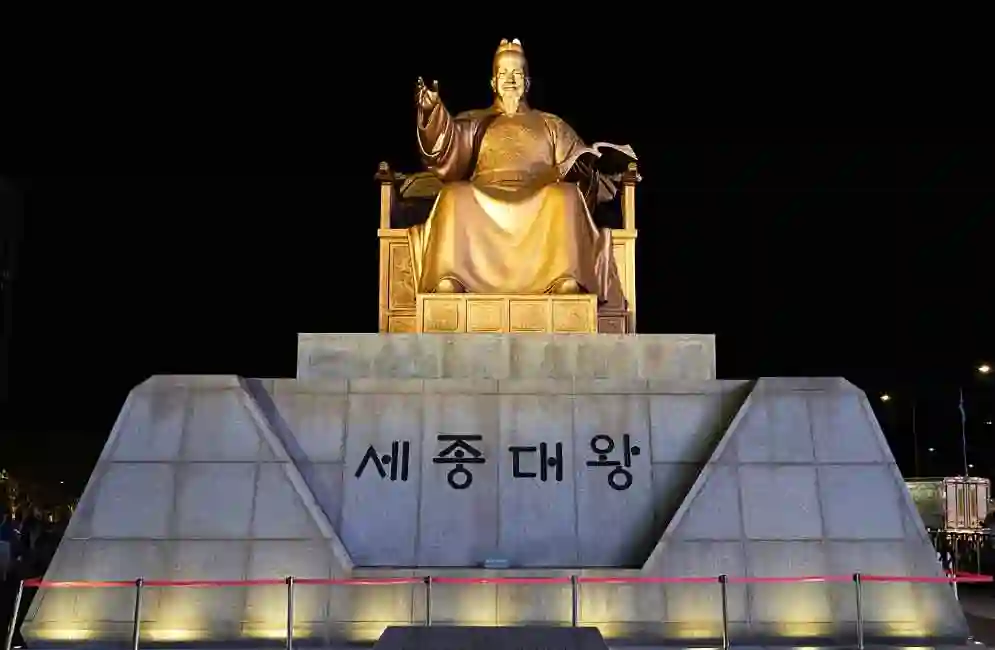
The large statue facing Gwanghwamun is ‘King Sejong the Great’, one of the most important kings in Korean history.
He is best known for creating ‘Hangul’, the Korean alphabet, in the 15th century. Before Hangul, Korean people mainly used Chinese characters, which were difficult for ordinary people to learn.
King Sejong wanted everyone to be able to read and write more easily, so Hangul was created to be simple and accessible. Today, he is one of the most respected figures in Korean history, and his statue is one of the main landmarks of Gwanghwamun Square.
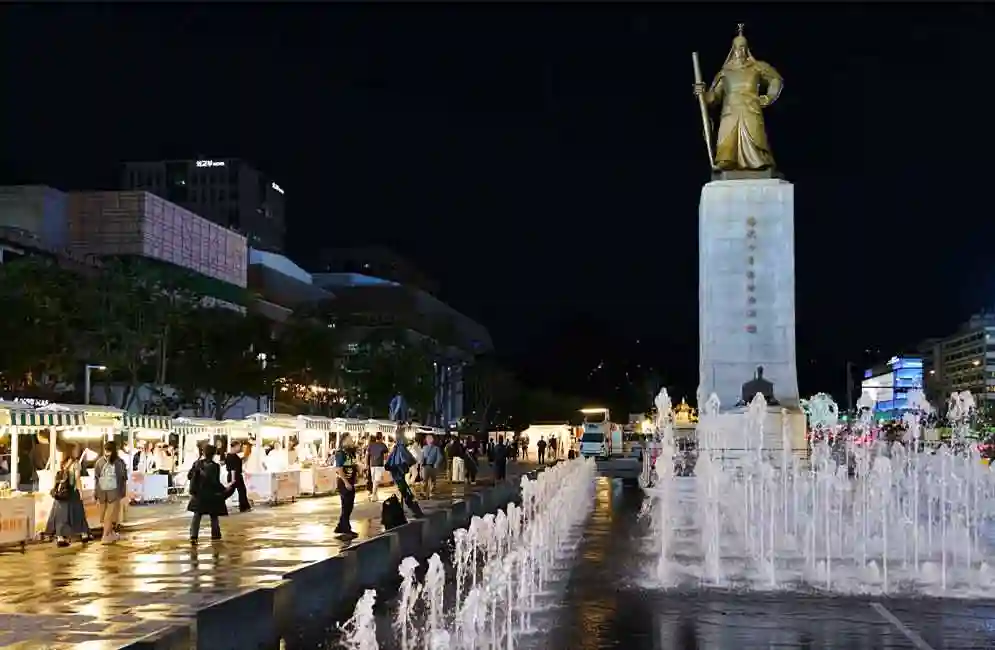
When we visited Gwanghwamun Square, a fall market was set up along the plaza.
There were small shops, food stalls, and places to sit and take a break, giving the square a more lively feel. The market runs through early November, so you may see it if you’re visiting Seoul this fall.
Just like at Cheonggyecheon, you can also find an outdoor library here on Fridays, Saturdays, and Sundays. You can grab a book, find a spot to sit, and enjoy some time outdoors with Gwanghwamun Square around you.
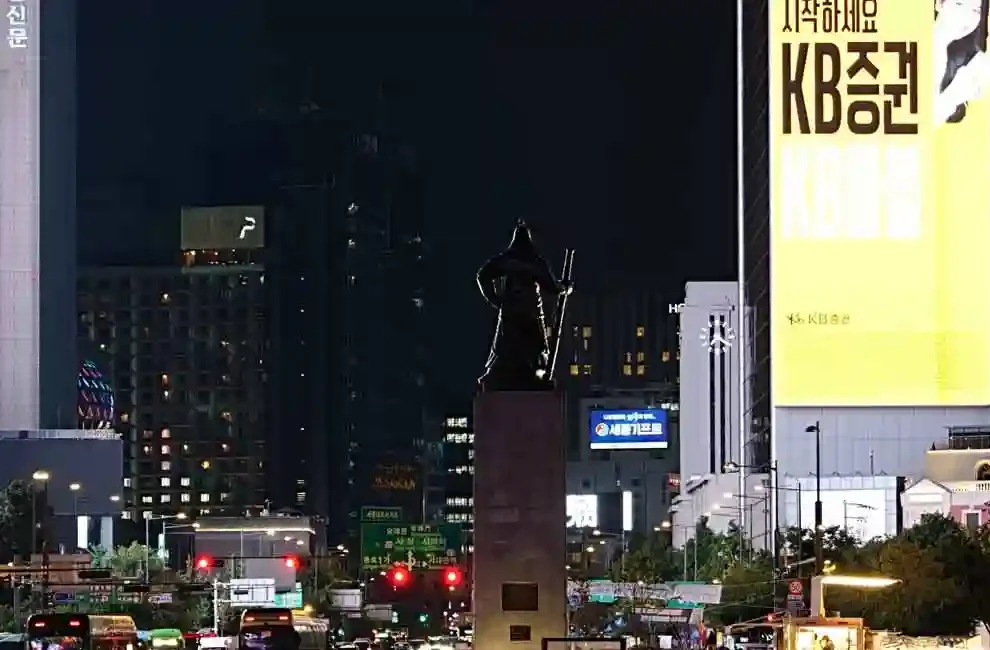
Walking from Cheonggyecheon to Gwanghwamun Square turned out to be a pretty nice way to spend an afternoon in central Seoul.
The whole walk was easy and there was always something to look at along the way, from the stream and old bridges to the busy city streets and Gwanghwamun Square.
By the time we reached the square, it felt like we’d seen a completely different side of central Seoul. What started as a simple walk along Cheonggyecheon turned into a relaxed afternoon of scenery, history, and a little bit of everyday city life.
Cheonggyecheon and Gwanghwamun Square feel completely different at night, so even if you’ve already seen them during the day, it’s worth coming back after dark.
[…] So next time you’re at Gyeongbokgung, don’t just leave after seeing the palace. Walk across Gwanghwamun Square, head up to the rooftop, and see the palace from a completely different angle.👉️ Heading toward Cheonggyecheon? I wrote a separate guide to the walk, so you can check it out before… […]