

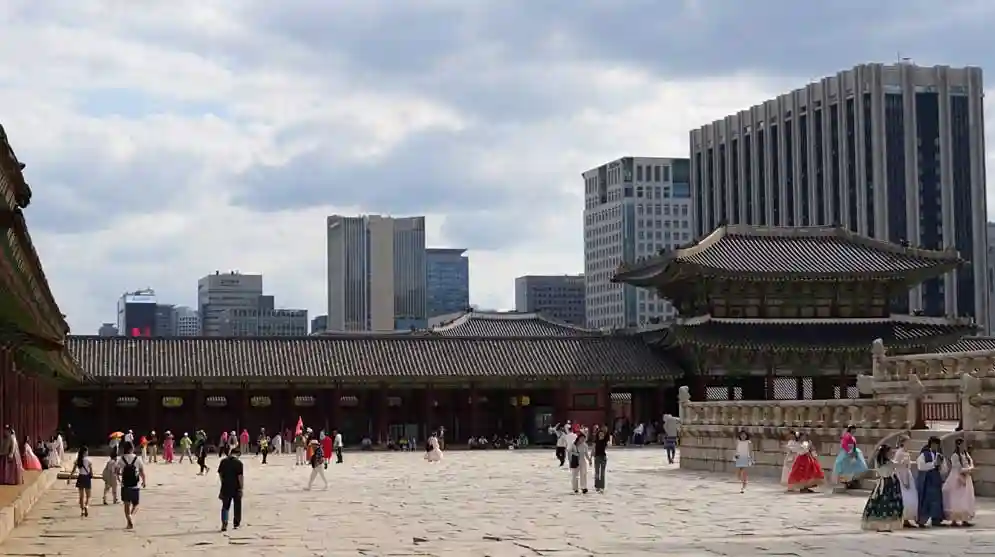
Right in the middle of modern Seoul, surrounded by busy streets and high-rise buildings, Gyeongbokgung Palace can feel like you’ve suddenly stepped into a completely different part of the city.
Built in 1395, Gyeongbokgung was the ‘first and largest of the royal palaces built during the Joseon Dynasty’ and served as the main royal palace in the early Joseon period. It stood at the heart of Hanyang, the capital of the newly established dynasty.
Why Do So Many People Wear Hanbok at Gyeongbokgung?
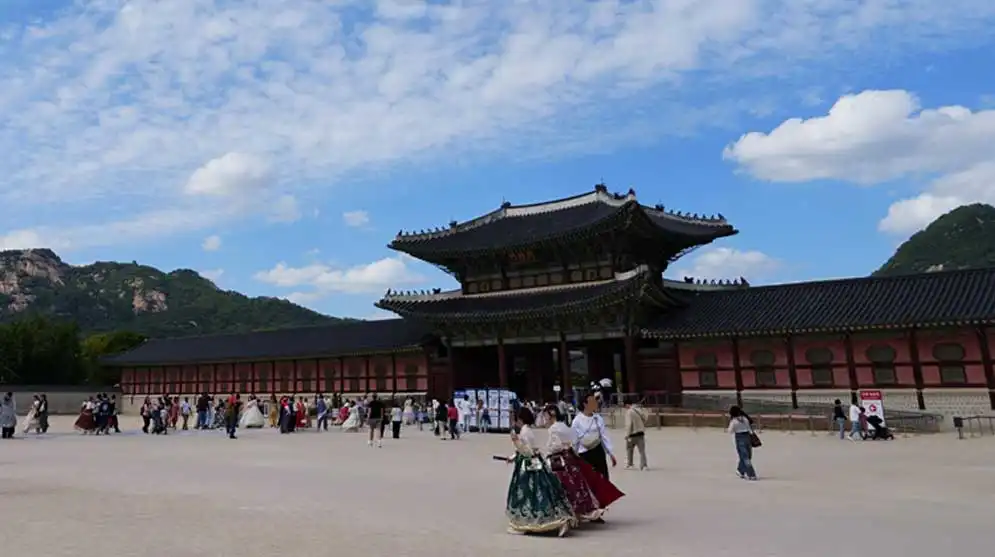
Gyeongbokgung was the center of royal life in Joseon, and walking through its gates in traditional Korean clothing makes the palace feel very different from when you visit in everyday clothes.
And there’s a practical bonus: visitors wearing a complete hanbok can enter Gyeongbokgung for free under the current admission rules.
You don’t have to wear a hanbok to enjoy Gyeongbokgung, of course. But if you’re curious about trying one during your trip to Seoul, this is probably the palace where the whole experience comes together most naturally.
Where to Start: The Best Subway Exit for Hanbok Rental
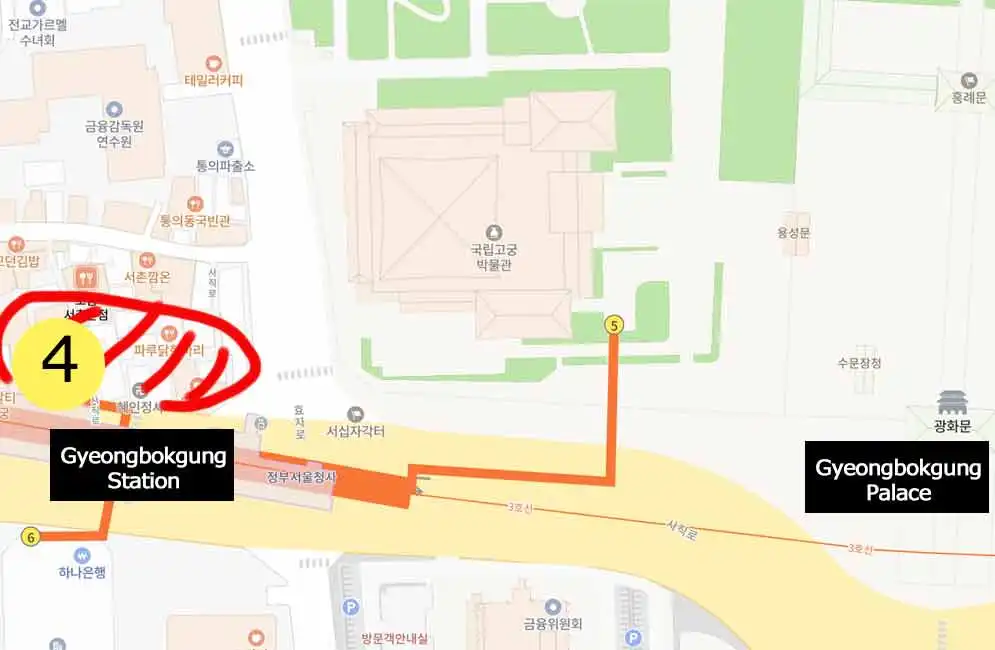
If you’re heading straight to Gyeongbokgung Palace, Exit 5 of Gyeongbokgung Station (Line 3) is the closest, with the palace just a couple of minutes away.
If you’re planning to try on a hanbok, Gyeongbokgung Station Exit 4 is probably the easiest place to start. As soon as you come out of the station, you’ll find a bunch of hanbok rental shops nearby, so you can pick one out before heading to the palace.
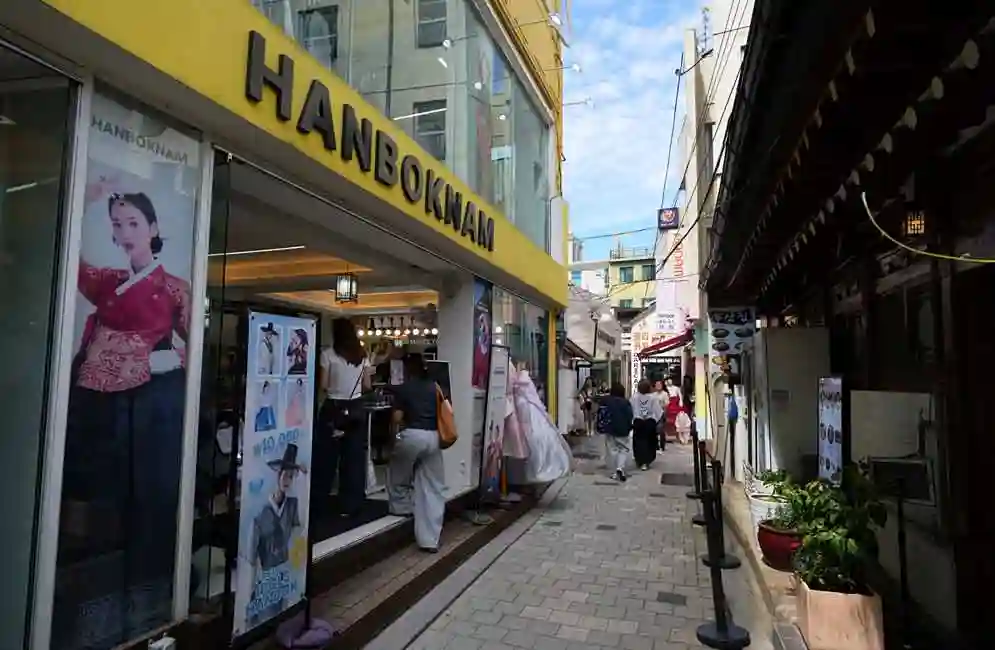
One thing to keep in mind: some shops choose hanboks on a first-come, first-served basis, so walking in without a reservation can mean a longer wait when things get busy.
Booking a voucher online ahead of time can make the whole process a lot easier—you can skip the extra time spent figuring out packages and paying at the shop, and get straight to choosing your hanbok.
If you’d rather spend less time waiting and more time finding a hanbok you actually love, you can check out the rental options below and book a voucher ahead of time.
📌 Check Hanbok Rental Options & Book Ahead
Traditional vs Fusion: Which Hanbok Style Should You Choose?
Traditional Hanbok
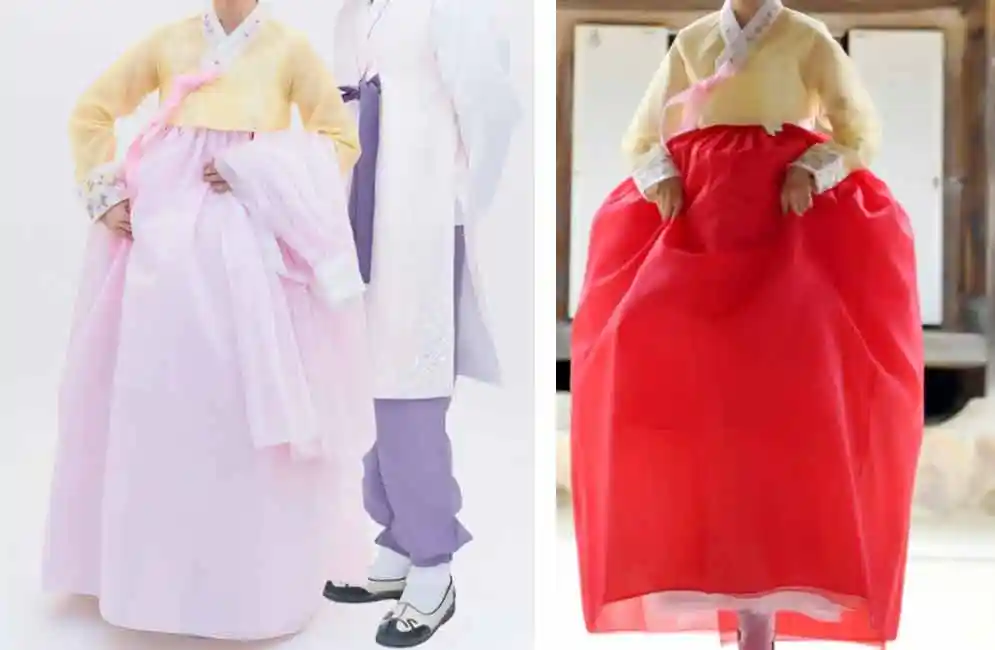
Traditional hanbok is the more classic-looking option. It keeps the traditional shape and details of Korean clothing, giving you that instantly recognizable hanbok look.
The colors and designs can still vary quite a bit, but overall, the style feels more timeless and traditional rather than fashion-forward. If you’re picturing yourself walking around Gyeongbokgung in a classic Korean outfit, this is probably the look you’re imagining.
Fusion Hanbok
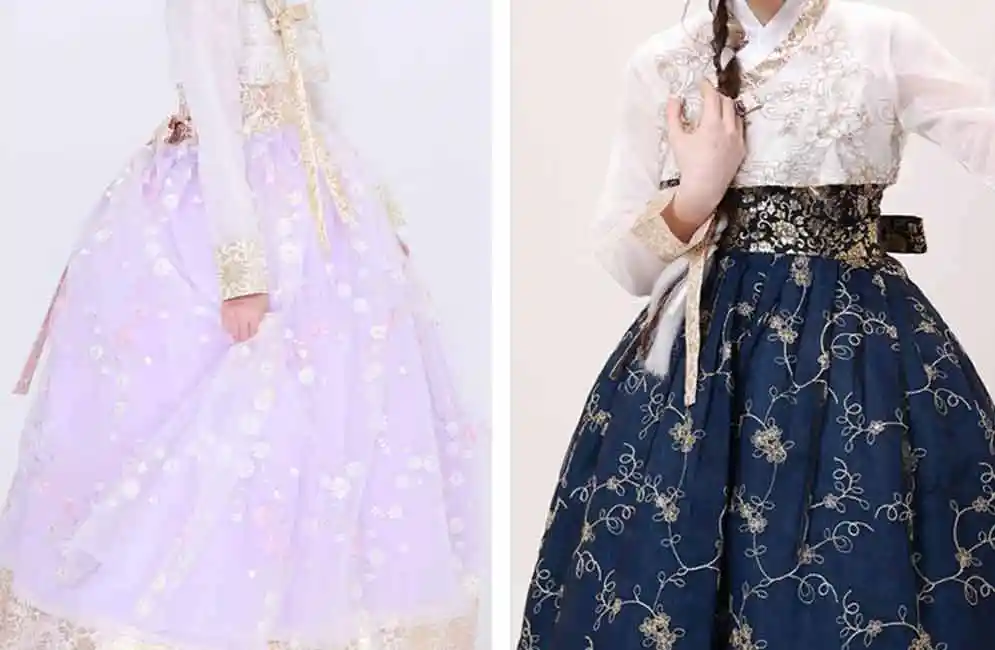
Fusion hanbok is a modern take on traditional Korean clothing. It keeps the basic look and feel of hanbok but adds more contemporary touches through different fabrics, colors, patterns, and silhouettes.
You’ll often see fusion styles with gold or silver detailing, floral patterns, and lace, making them a little more elaborate and eye-catching than traditional hanbok.
If traditional hanbok feels classic and elegant, fusion hanbok has a more playful, statement-making vibe. It’s a popular choice if you want to experience hanbok while still wearing something that feels a little more like your own style.
| Feature | Traditional Hanbok | Theme / Fusion Hanbok |
| Vibe | Classic, Royal, Sophisticated | Trendy, Flashy, K-drama Princess |
| Colors | Rich solid colors | vibrant mixes, shiny metallics |
| Details | Minimal design, focus on silhouette | Gold/Silver foil, lace, embroidery |
| Best For | Authentic cultural experience | Stunning Instagram photos |
👉 Find the Right Hanbok Voucher for Your Style
What Should You Wear Under a Hanbok?
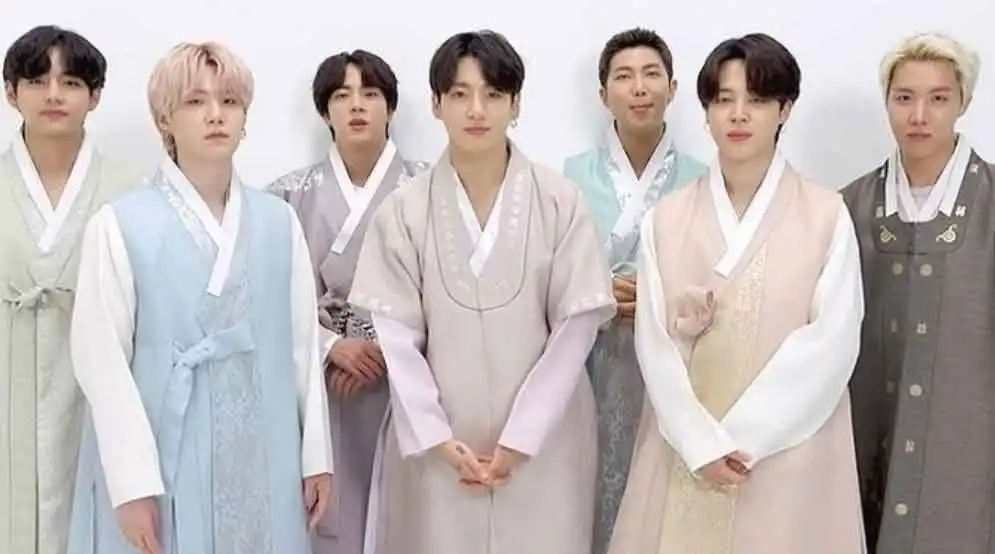
Top
Both men’s and women’s hanbok jeogori have a soft V-shaped neckline called a ‘git’. For the cleanest look, it’s best if your undershirt doesn’t peek out above the jeogori.
But if you can see a little bit of your T-shirt underneath, ‘don’t stress about it at all.’
There’s no need to get too caught up in getting every detail perfect.
Koreans are generally happy to see visitors embracing the culture and having fun wearing hanbok.
How Women Wear Hanbok
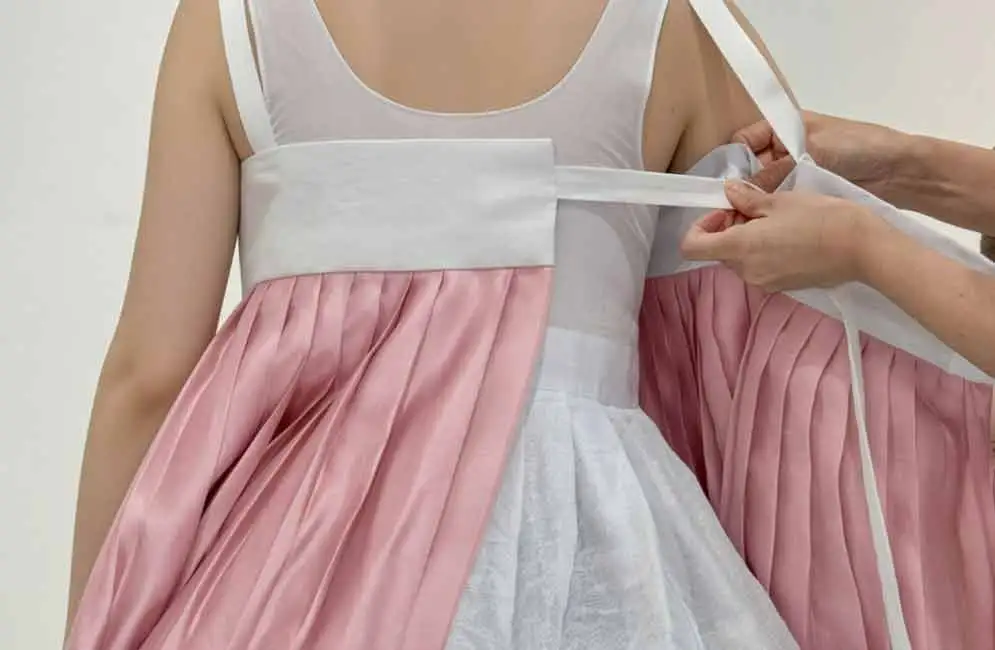
For women, you’ll usually put on bloomers and a petticoat first, followed by the hanbok skirt and then the jeogori, the top.
A little tip about the bloomers: You don’t necessarily need to rent a pair from the shop.
You can wear lightweight shorts or leggings you brought from home, or even layer them over the pants you’re already wearing. Once the full hanbok skirt is on, everything underneath is completely covered anyway, so there’s really no need to overthink it.
How Men Wear Hanbok
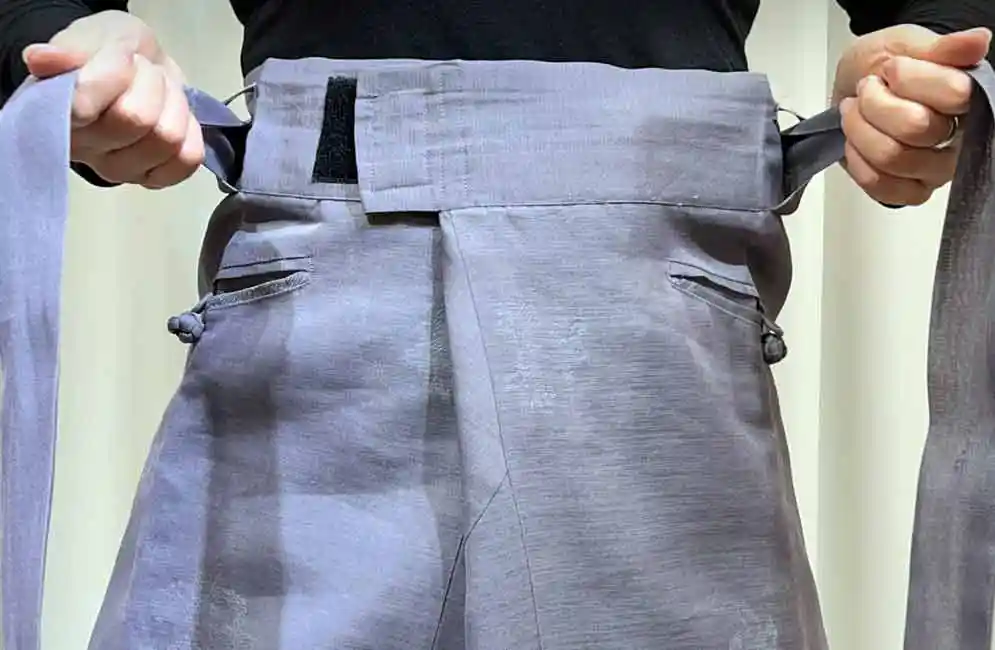
Men’s Pants: The first time you see hanbok pants, you might wonder if they’re supposed to be that wide and long. They have a super loose fit, so don’t let the extra fabric throw you off.
Traditional hanbok pants are usually tied at the waist and ankles, but rental versions these days often use Velcro or elastic waistbands, which makes them much easier to put on.
One thing to remember: don’t wear them like regular jeans. Pull the pants up to around your belly button, then fasten the Velcro or waistband. Once they’re on properly, the loose fit will make a lot more sense.
No Ticket Needed? Enter Gyeongbokgung in a Hanbok
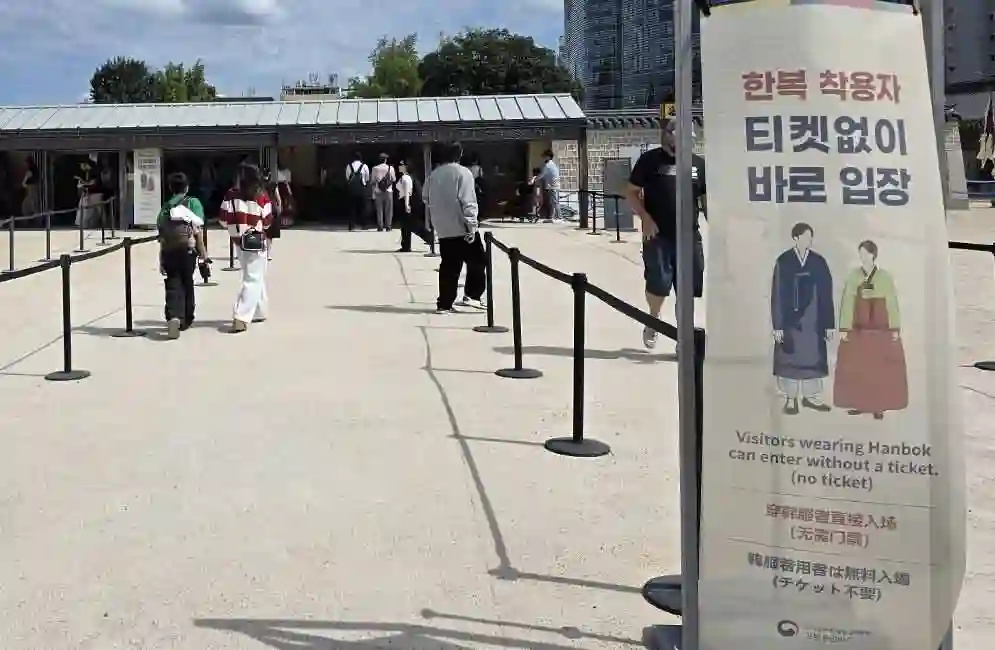
If you’re wearing a hanbok, you don’t need to buy an admission ticket.
Instead of stopping at the ticket booth, you can head straight to the entrance.
Staff will check that you’re wearing a hanbok, and you can enter without buying a ticket.
So if you’re wearing a hanbok, there’s no need to wait in line at the ticket booth first.
Taking Photos at Gyeongbokgung in a Hanbok
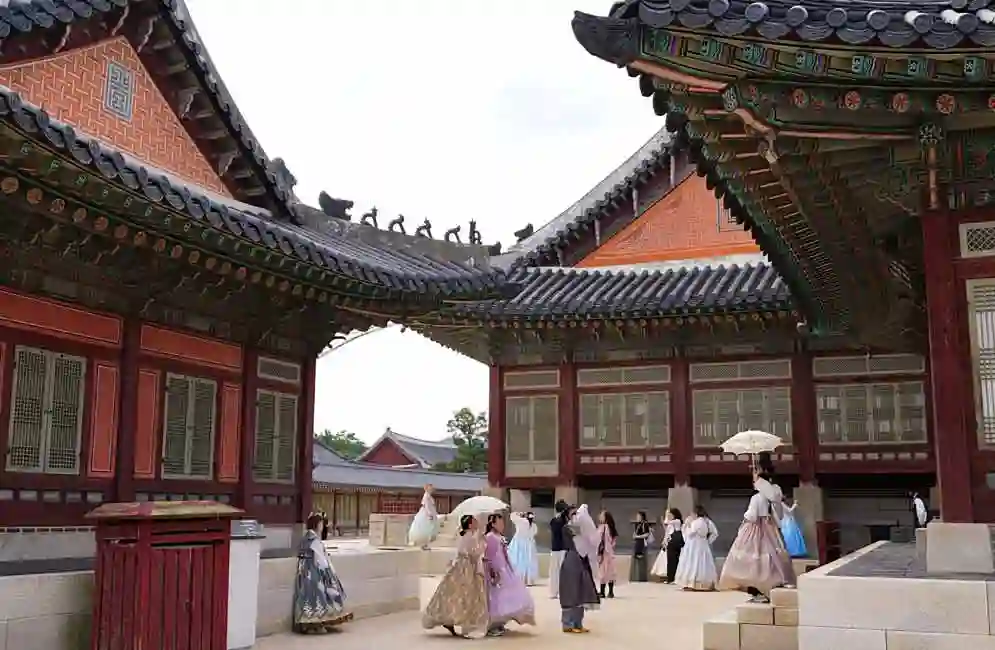
One of the best things about wearing a hanbok at Gyeongbokgung is how well it fits the setting.
Of course, you can take great photos in your everyday clothes, but there’s something different about wearing a hanbok against the palace buildings, traditional gates, and stone paths.
The colors and details of the hanbok really seem to belong there, so even a simple photo can feel much more special.
And honestly, as a Korean, it’s also really nice to see visitors from other countries wearing hanbok and enjoying it. Seeing someone from another part of the world happily trying on Korean traditional clothing and taking photos around the palace feels like a genuine way of experiencing Korean culture.
So if you’re wondering whether wearing a hanbok is worth it just for the photos, I’d say it definitely changes the whole experience. You’re not just taking pictures at Gyeongbokgung — you become part of the scene.
Best Hanbok Photo Spots at Gyeongbokgung
Guhyeonmun Gate
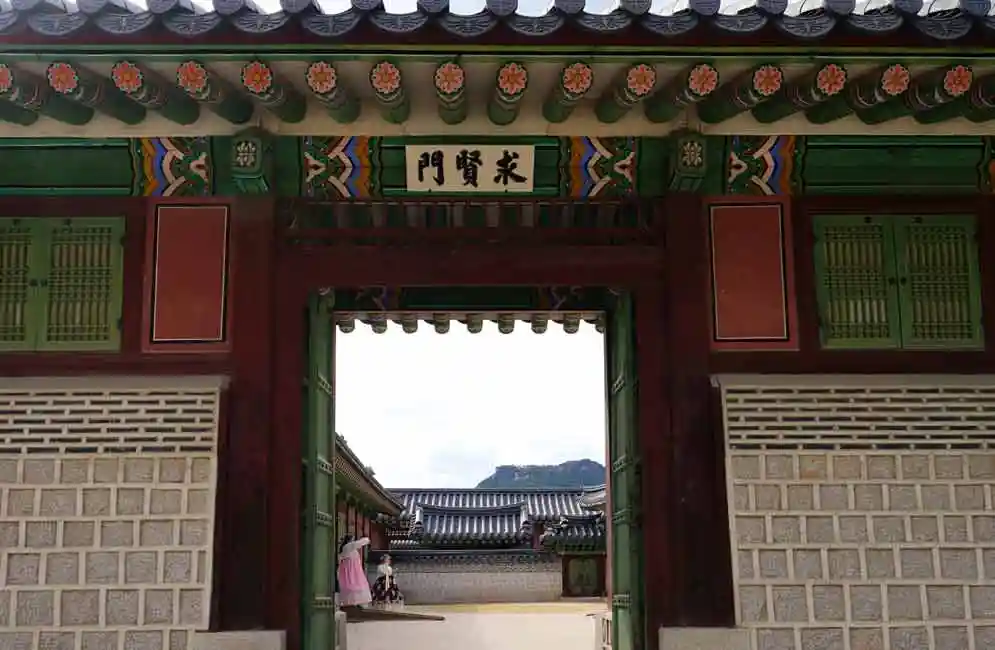
For a photo like the one above, have your photographer stand outside Guhyeonmun Gate while you walk into the courtyard. The wooden frame creates a perfect natural border for your Hanbok look!
Geunjeongjeon Hall
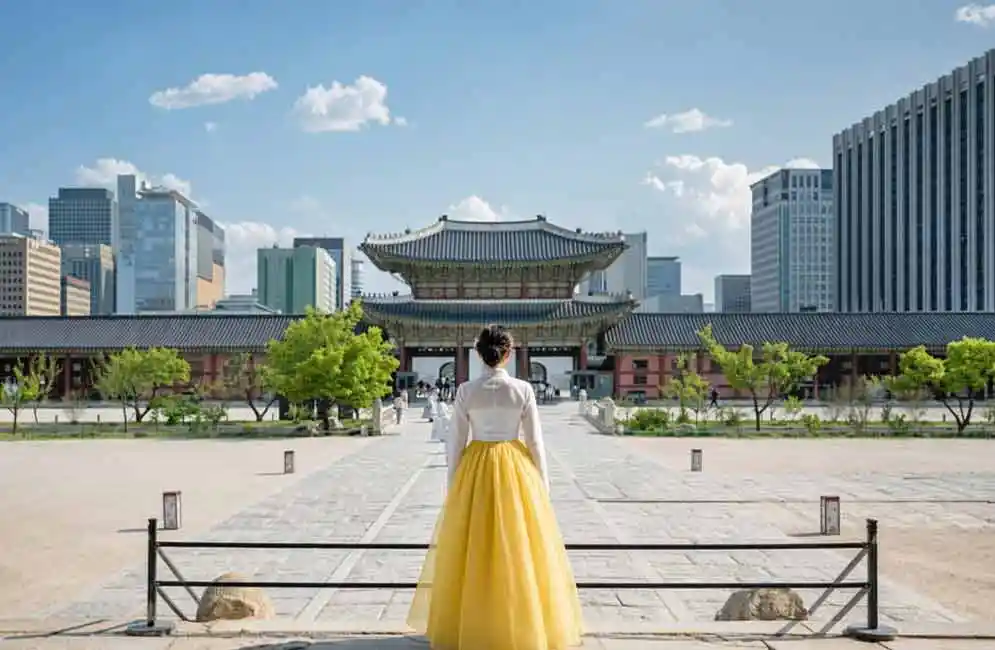
It also looks great to take a photo from the steps of Geunjeongjeon, with your back to the camera as you look out over the palace grounds.
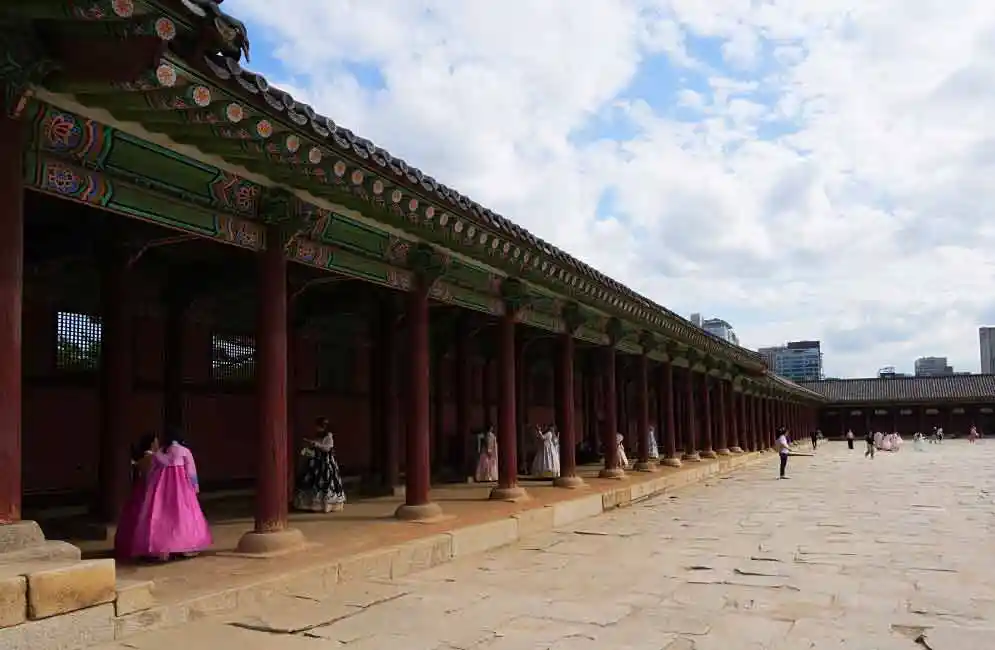
Another nice option is to use the long covered walkway beside Geunjeongjeon.
The rows of red wooden columns create a really cool perspective in photos.
Gyeonghoeru Pavilion
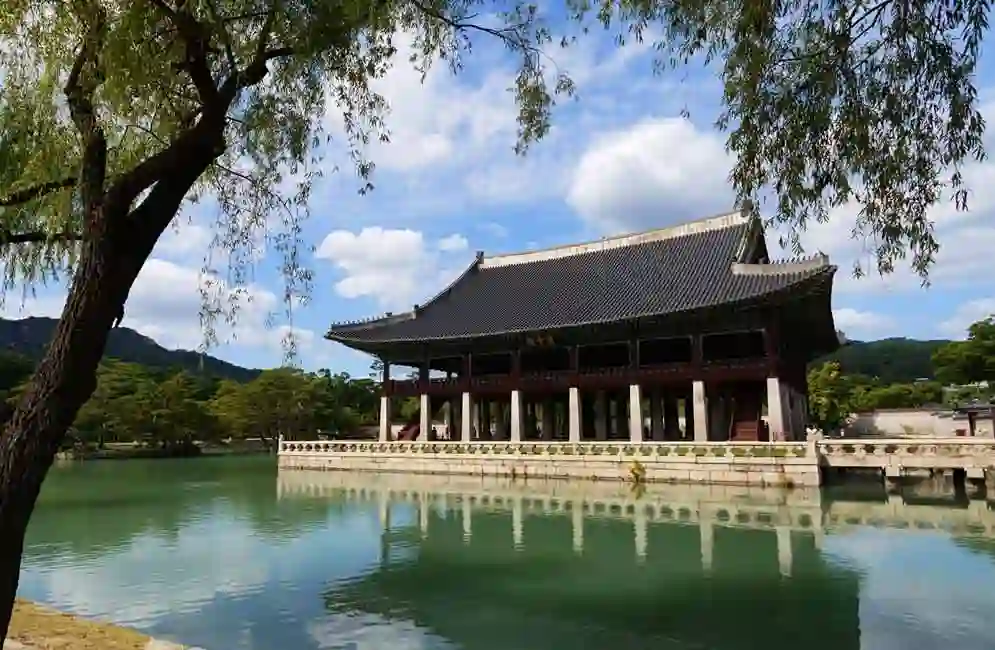
You can also get a really pretty shot of Gyeonghoeru reflected in the calm pond, with a few willow branches hanging into the frame. It gives the photo a really nice, peaceful feel.
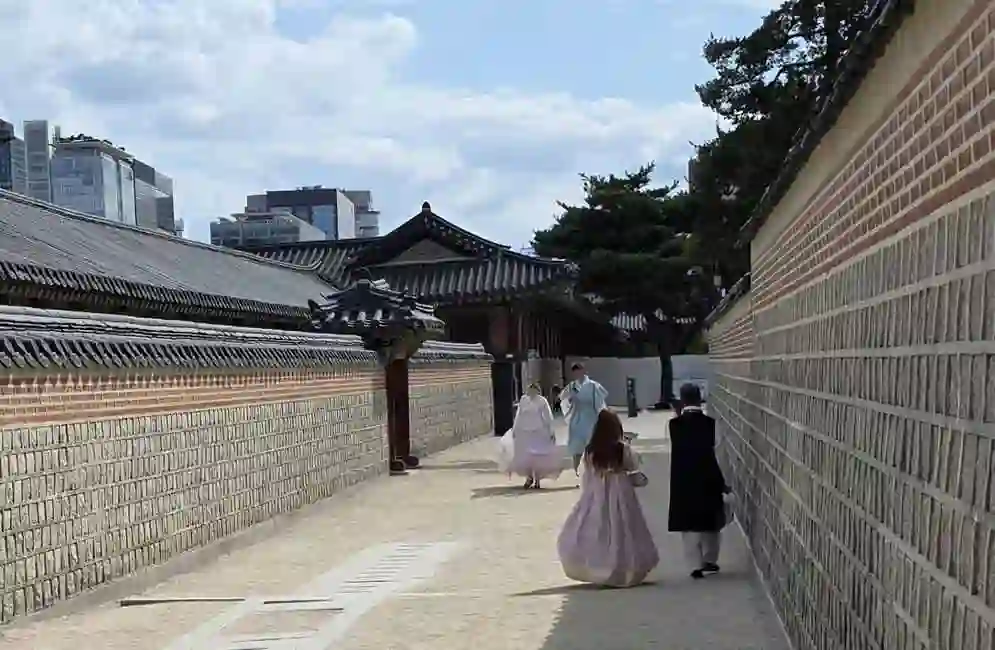
Honestly, you don’t even have to look for the famous photo spots at Gyeongbokgung.
Sometimes, a simple photo of you walking along the stone walls in a hanbok can turn out just as nice.
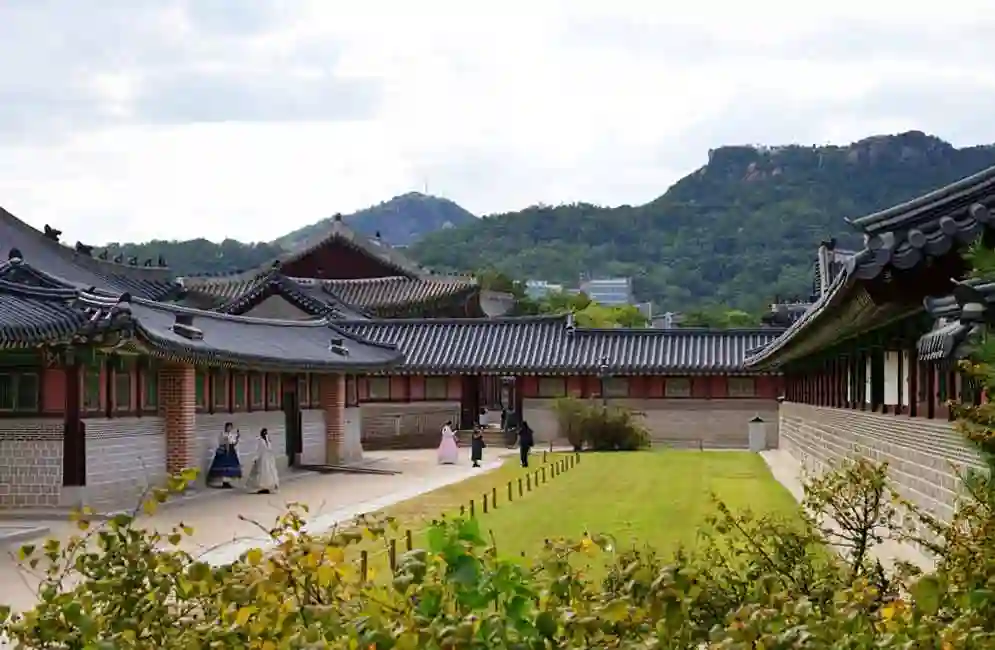
Right in the middle of Seoul’s modern skyline, Gyeongbokgung can feel like stepping back 600 years.
Wandering around the palace in a hanbok and stopping whenever I found a nice spot for a photo ended up being one of my favorite parts of the visit.
I didn’t really have a set route or plan for the photos—I just walked around and took pictures whenever something caught my eye.
If you’re planning to visit Gyeongbokgung, I’d definitely consider renting a hanbok for a few hours. Just pick a rental time that works with your schedule.
It makes the visit feel a little different, and there’s something pretty special about walking through a 600-year-old palace dressed in traditional Korean clothing.
👉️ Check Hanbok Rental Options for Gyeongbokgung