

What Is Deoksugung Palace?
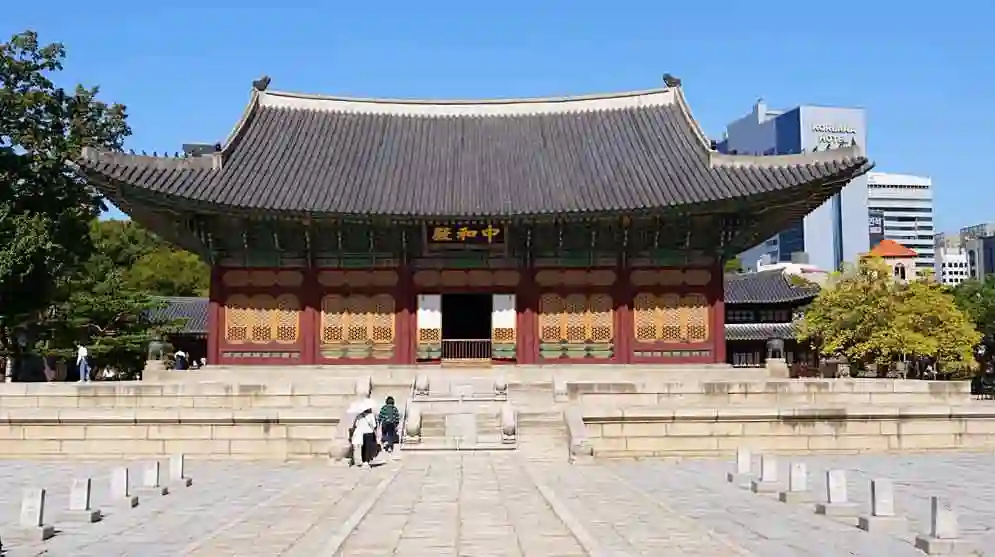
If you are planning a trip to Seoul, you’ve probably heard of Gyeongbokgung Palace. But did you know there is another royal palace that offers a completely different vibe?
Deoksugung Palace is nestled right inside Seoul’s modern skyscrapers, showcasing a unique blend of traditional Korean hanok and 19th-century Western-style architecture.
In this complete guide, I will share why Deoksugung is worth your time, how it differs from Gyeongbokgung, and essential visitor tips (including how to get free admission and book the secret interior tour!).
Right in the middle of Seoul’s towering skyscrapers, Deoksugung Palace is one of the city’s Five Grand Palaces from the Joseon Dynasty.
It’s the smallest of Seoul’s five royal palaces, but it has quite a story to tell.
Deoksugung wasn’t originally built to be a royal palace. It was once the residence of Grand Prince Wolsan, the older brother of King Seongjong. After the Japanese invasions of Korea in the late 16th century destroyed Seoul’s palaces, King Seonjo used this place as a temporary royal residence.
In 1897, King Gojong declared the Korean Empire and became its first emperor. Deoksugung then became the imperial palace, and the grounds were expanded with Western-style buildings alongside traditional Korean palace architecture.
Today, Deoksugung feels like a place where Korea’s past and present meet. Walking around the palace, you get a glimpse of a turning point in Korean history, when the country was trying to find its place in a rapidly changing world.
Deoksugung Palace: Location, Admission & Visitor Information
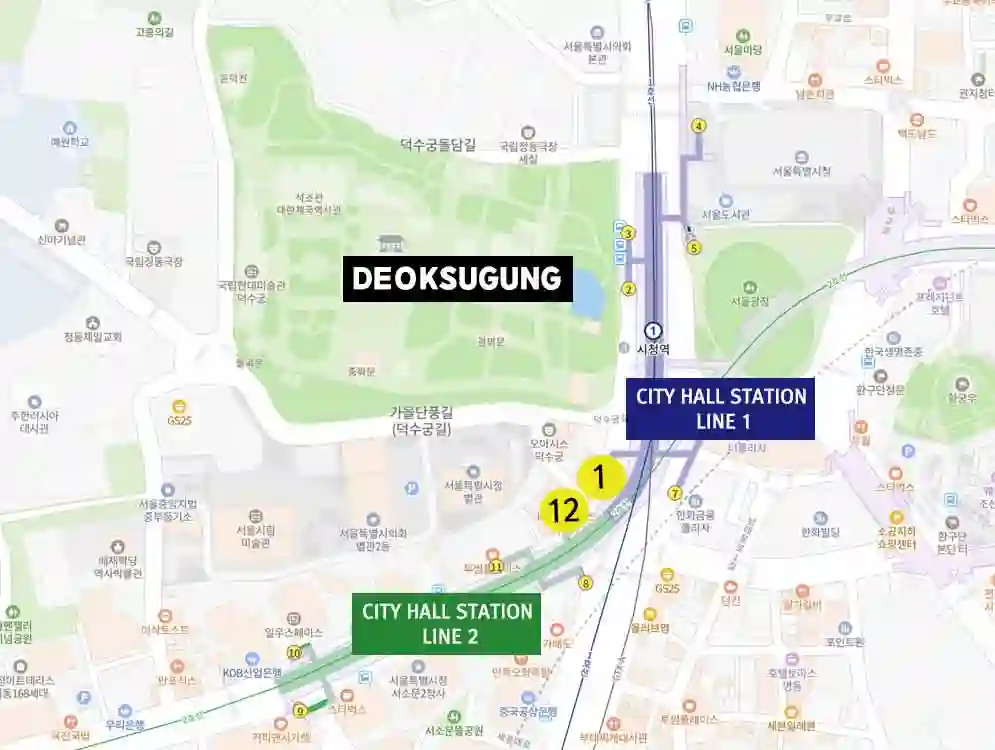
Deoksugung Palace sits right across from Seoul City Hall and Seoul Plaza, on the corner of one of the busiest intersections in downtown Seoul.
The easiest way to get there is by subway. Take Line 1 or Line 2 to City Hall Station and head out of Exit 1 or 12. From there, it’s just a 3-minute walk to the palace entrance.
| Operating Hours | Tuesday–Sunday 9:00 AM–9:00 PM (Last Admission 20:00) |
| Regular Closing Day | Monday |
| Admission Fee | ₩1,000 per adult |
| Free Admission Day | Every Wednesday |
| Free Admission | Visitors under 19 and adults aged 65 and over; free admission also applies to visitors wearing qualifying hanbok |
| Combination Ticket | ₩10,000 – Includes admission to Gyeongbokgung, Changdeokgung, Changgyeonggung, Deoksugung, and Jongmyo Shrine – Valid for 3 months from the date of purchase |
- Ticket Purchase: You can easily buy your entry tickets at the ticket booth next to Daehanmun Gate (the main entrance). Credit cards and cash are both accepted.
- Inside the Palace: Separate online reservations may be required to tour the inside of the Western-style Seokjojeon Hall, but walking the palace grounds and viewing its exterior is fully included in your general admission.
What Makes Deoksugung Different from Gyeongbokgung?
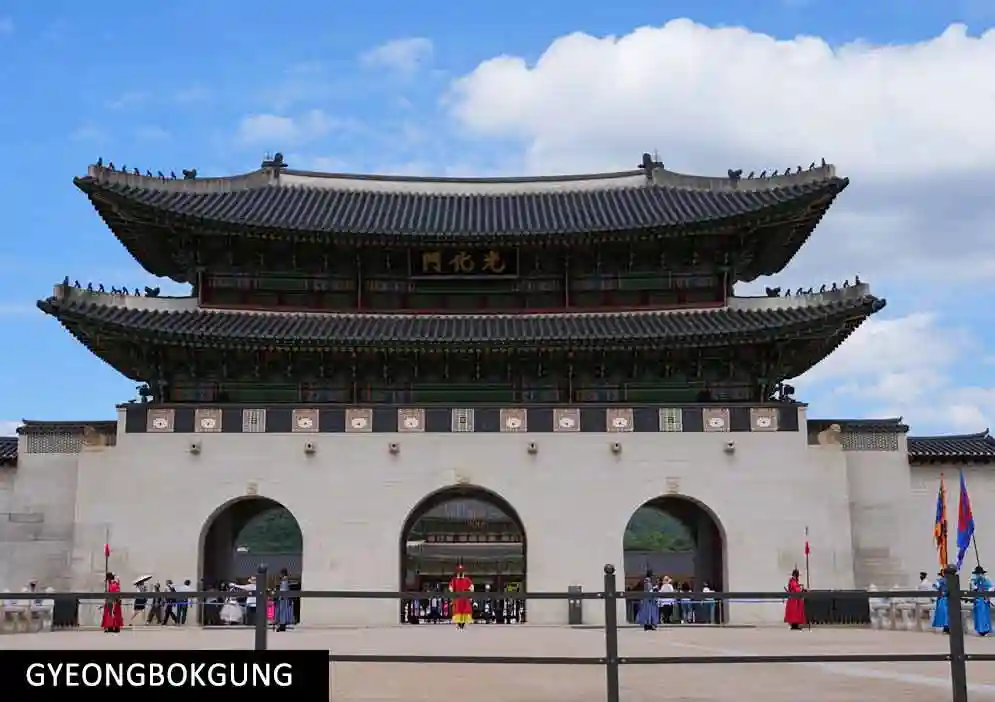
If you have already visited Gyeongbokgung Palace, you might wonder if Deoksugung is worth your time. The answer is a resounding yes. While Gyeongbokgung represents the peak of traditional Joseon Dynasty architecture, Deoksugung offers a completely different story—one of modernization, tragedy, and resilience.
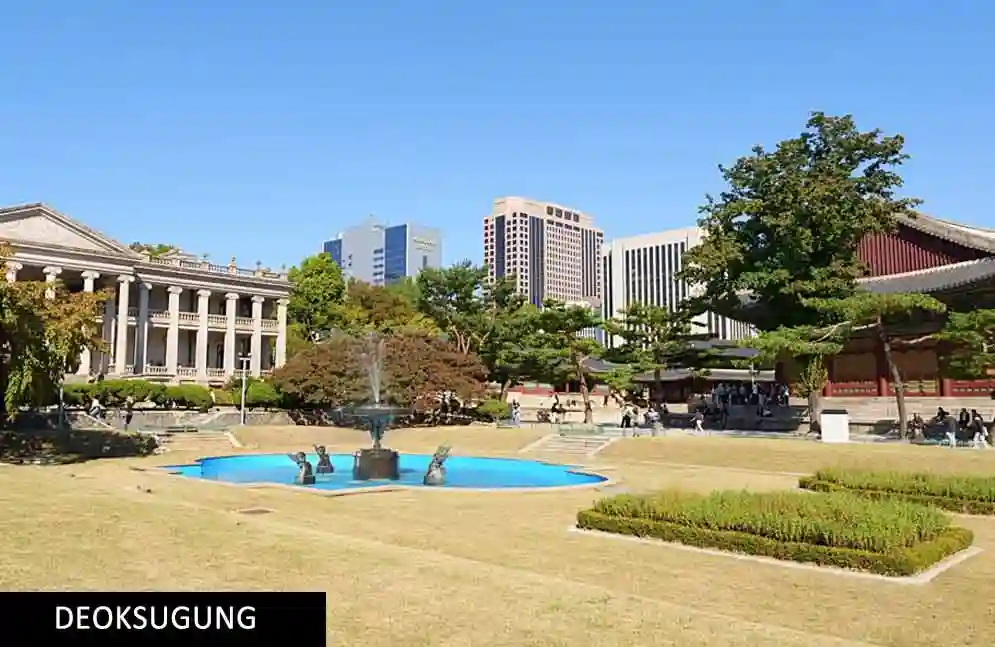
Gyeongbokgung vs. Deoksugung
| Gyeongbokgung | Deoksugung | |
| Historical Period | Early Joseon Dynasty (1395) | Late Joseon Dynasty & The Korean Empire (1897) |
| Architectural Style | 100% Traditional Korean Wooden Architecture | Traditional Wooden Halls + Western Neo-Classical Stone Buildings |
| Historical Symbolism | Symbol of Royal Power & Confucian Dynasty | Center of Modernization & Struggle for Sovereignty |
| Palace Scale & Time | Requires 1.5 to 3 hours | Requires 45 mins to 1 hour |
| Key Highlights | – Gwanghwamun Gate & Royal Guard Changing Ceremony – Gyeonghoeru Pavilion (Floating Banquet Hall) – Hyangwonjeong Pavilion | – Seokjojeon (European-style Stone Palace) – Deoksugung Stonewall Walkway (Romantic Street) – Jeonggwanheon (King’s Teahouse) |
| Night Access | Limited (Requires seasonal ticket reservation) | Open Daily until 9:00 PM (No reservation needed) |
| Vibe & Setting | Majestic palace with Mount Bugaksan in the background | Historical oasis nestled inside Seoul’s modern glass skyscrapers |
What to See at Deoksugung
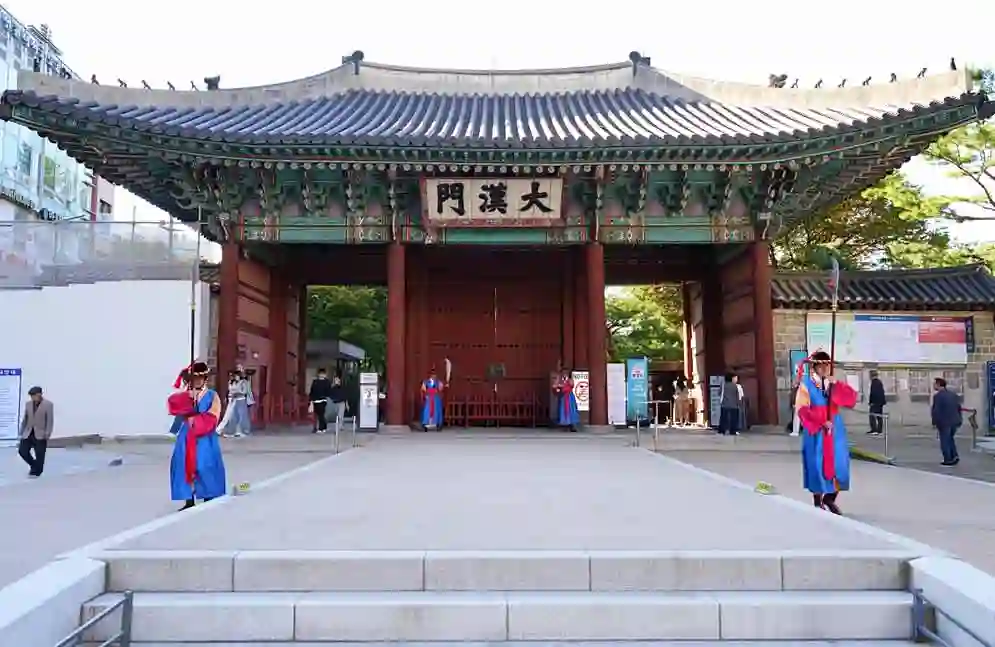
Daehanmun Gate & the Changing of the Guard
Deoksugung’s main gate today is Daehanmun, right across from Seoul Plaza. But when King Gojong declared the Korean Empire, the palace’s main entrance was actually Inhwamun, on the south side.
As new roads were built and the area around Wongudan Altar developed, the city center gradually shifted east. So in 1898, a new gate called Daeanmun was built on the eastern side, and it eventually became the palace’s main entrance.
In 1906, the gate was repaired and renamed Daehanmun. The new name carries the meaning of the nation’s fortunes flourishing high into the heavens—a pretty fitting name for a palace closely tied to the Korean Empire.
The Royal Guard Changing Ceremony takes place in front of Daehanmun Gate, the main entrance to Deoksugung Palace.
- Ceremony times : 11:00 AM and 2:00 PM, Tuesday through Sunday
- Days off : Mondays
- Weather Cancellations : The ceremony may be canceled during extreme heat, cold waves, heavy rain or snow.
- Location : In front of Daehanmun Gate
- Admission: Free
Junghwajeon Hall : The Throne Hall of the Korean Empire
Junghwajeon is the main hall of Deoksugung Palace and one of its most important buildings. It served as the emperor’s throne hall, where major state ceremonies were held, officials came to pay their respects, and foreign ambassadors were received.
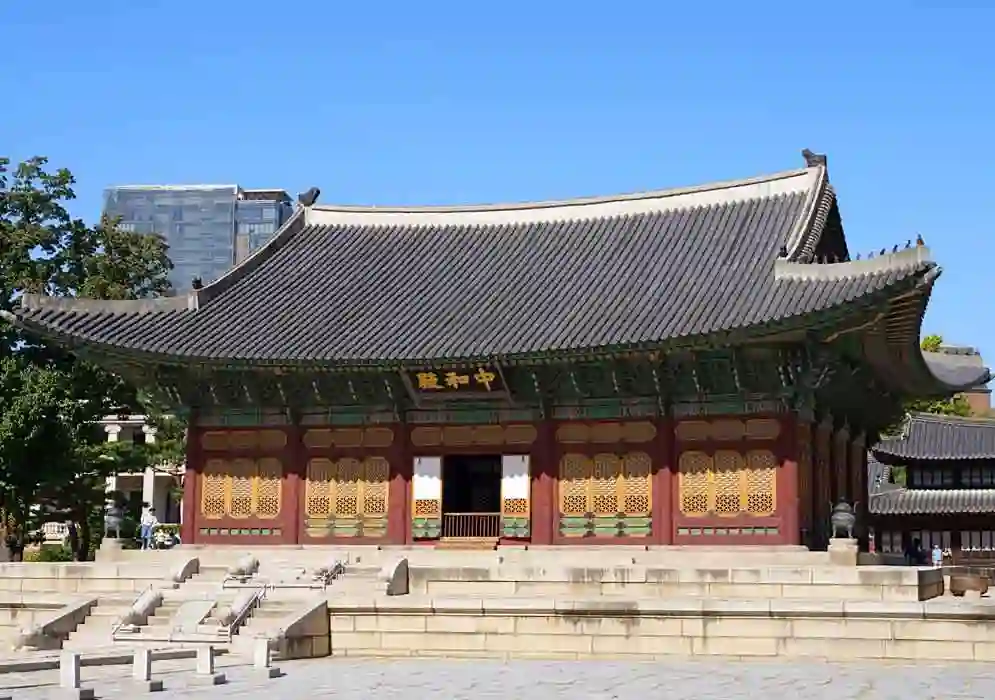
Red was traditionally associated with kings, while gold was a symbol of imperial power. When Gojong declared the Korean Empire in 1897, Junghwajeon took on a more imperial look, with gold details reflecting the palace’s new status.
The Courtyard Stones (Pumgyeseok)
The stone markers standing in two lines across the open courtyard in front of Junghwajeon.
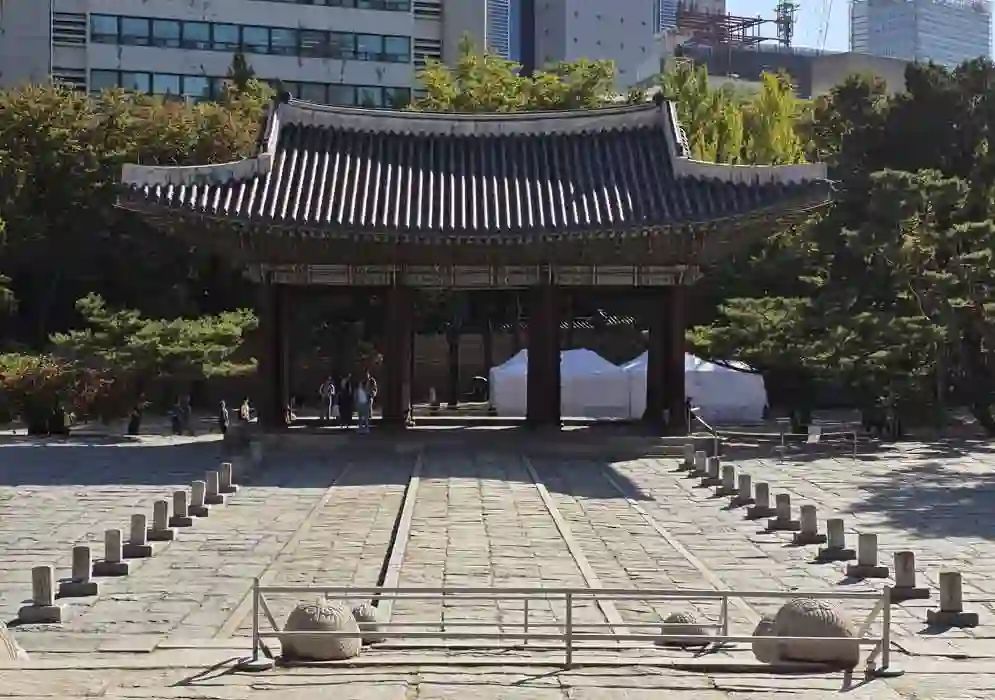
During official ceremonies, government officials stood in designated spots according to their rank. The stones helped show where each official was supposed to stand, keeping everyone in the proper order.
Think of them as position markers for royal ceremonies. They might look like simple stones today, but back then, they reflected the strict hierarchy of the royal court. An official’s position wasn’t random — it depended on their rank and role in the government.
Look for Dragons on the Steps and Ceiling
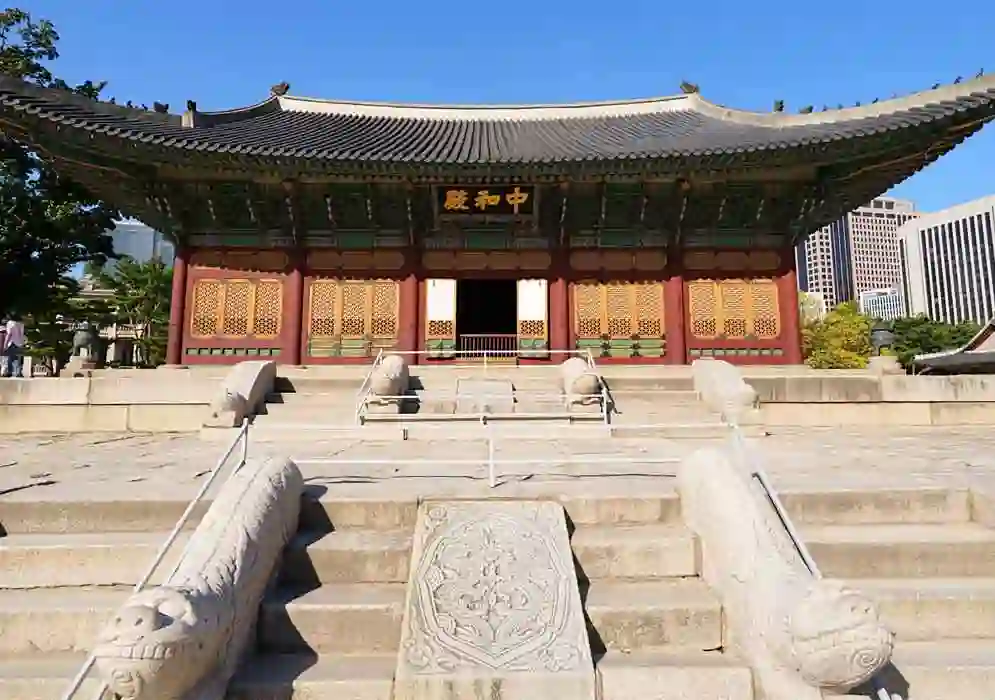
As you approach Junghwajeon Hall, take a look at the stone staircase leading up to the main hall. The central stone panel, known as the dapdo, features two dragons facing each other.
There are four dragons inside Junghwajeon Hall, and the easiest two to spot are on the ceiling. The other two are tucked higher up, inside the ornate wooden canopy hanging directly above the emperor’s throne. We tried looking for them, but honestly, we couldn’t find them! 😂
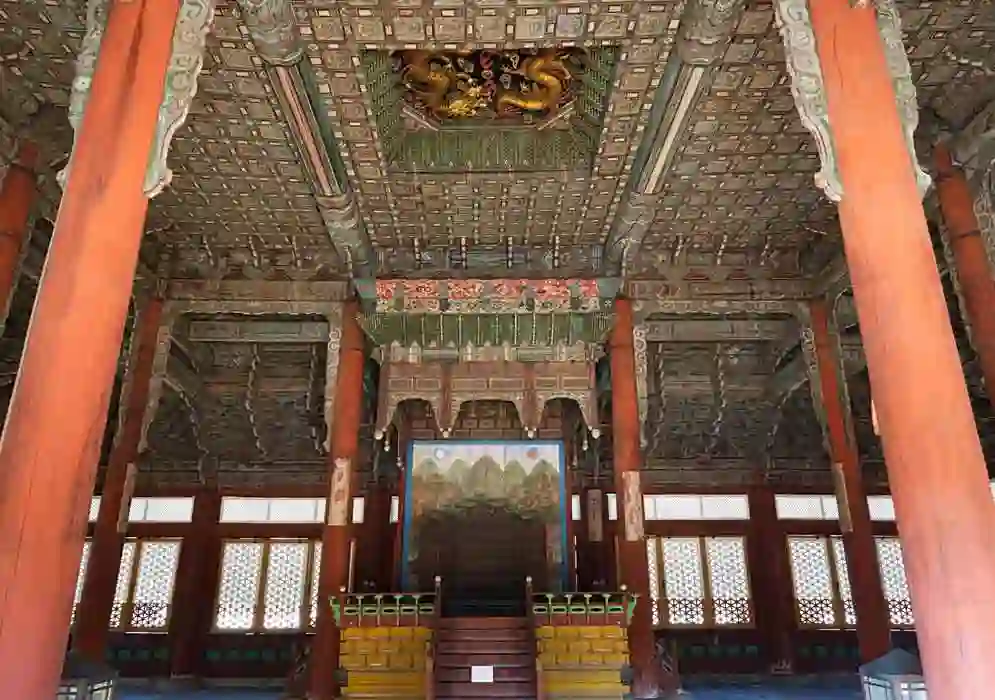
In East Asian tradition, dragons were powerful symbols of authority and good fortune. They were also closely associated with emperors, making them a fitting symbol for Junghwajeon, the main hall of Deoksugung during the Korean Empire.
Seogeodang: The Unpainted Two-Story Palace Hall
Seogeodang is completely unpainted. You can see the natural, aged brown grain of the timber.
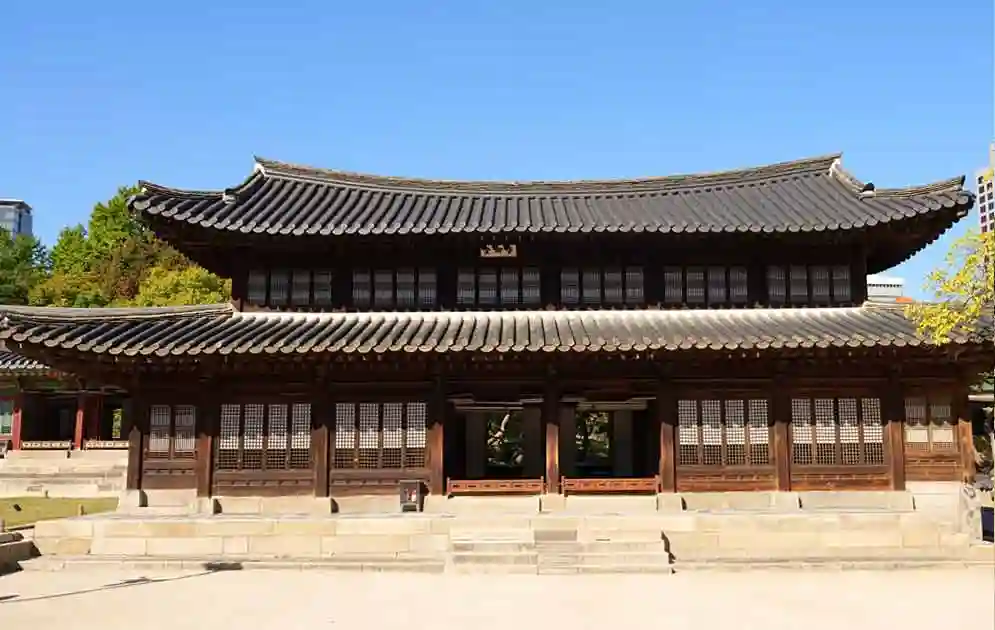
During the Japanese invasion of 1592 (Imjin War), King Seonjo had to flee the capital. When he returned to a destroyed Seoul, he resided right here in this modest wooden house for 16 years.
In 1623, after a political coup (the Injo Restoration), the ousted King Gwanghaegun was forced to kneel in the courtyard of Seogeodang to face judgment for his rule.
Jeokjodang and Junmyeongdang: More Than Just Palace Buildings
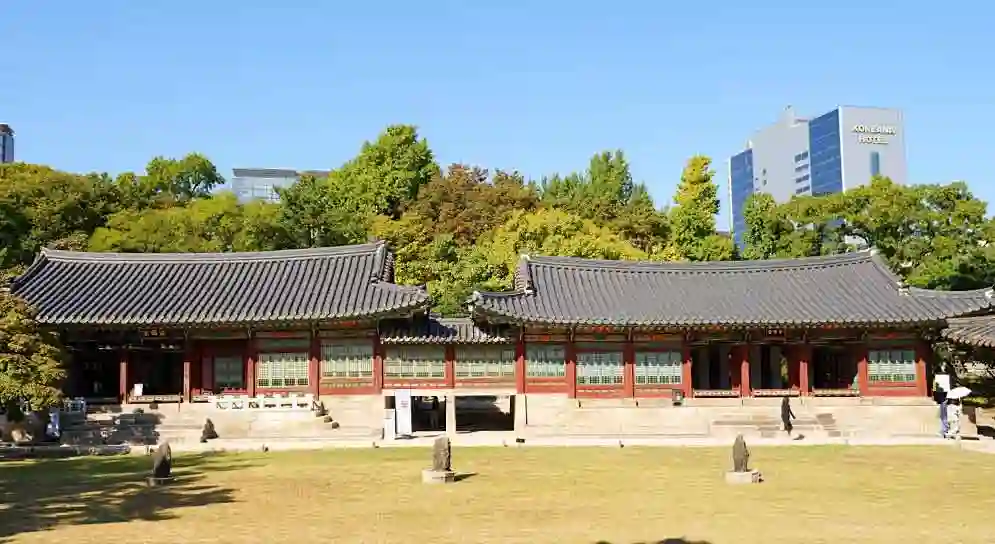
The building on the right, Jeokjodang, played a big role in the story of Deoksugung. When the Japanese invaded Korea in 1592 and Seoul’s main palaces were burned down, King Seonjo had to use a former royal residence as his temporary palace. This is how Deoksugung’s story began.
The name Jeokjo is associated with ascending the throne, and two kings in Korean history are said to have been enthroned here.
The building on the left, Junmyeongdang, has a different story.
It was originally used by Emperor Gojong to receive foreign envoys, but later, he turned it into a royal kindergarten for his youngest daughter, Princess Deokhye, whom he had when he was 60.
If you look at the wooden veranda, you can still spot traces of the railings designed to help keep little children from falling. It’s a small detail, but it gives you a glimpse of a much more personal side of palace life.
What Is Seokjojeon Hall?
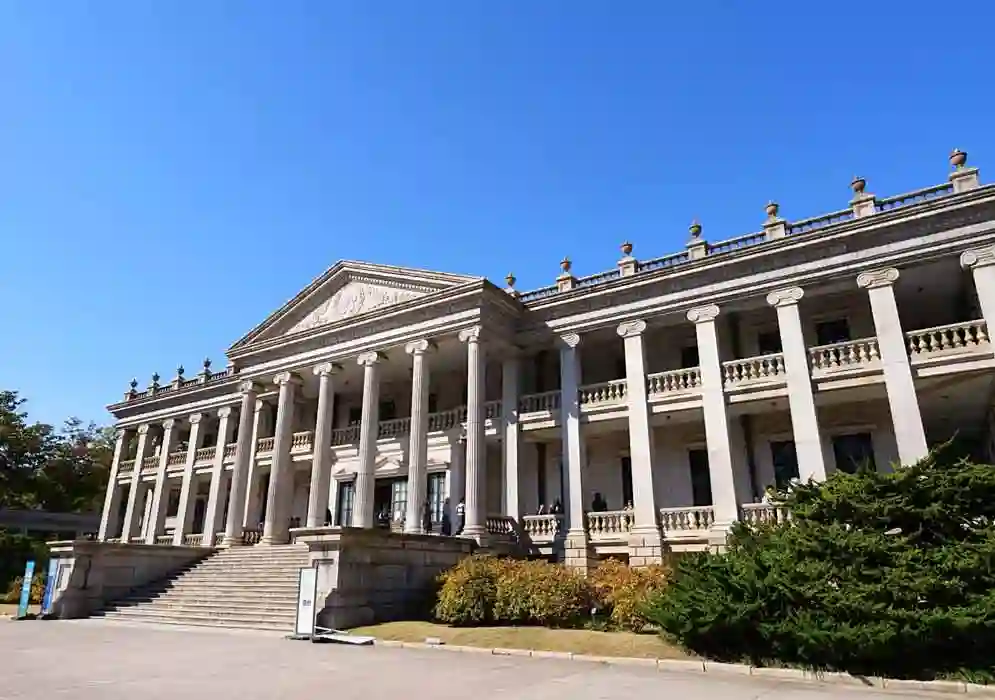
Seokjojeon was built after Emperor Gojong declared the Korean Empire in 1897. He wanted Korea to be seen as a modern, independent nation, and this Western-style palace was part of that vision. Designed by British architect John Reginald Harding, it was intended for official imperial business and meetings with foreign envoys, as well as living spaces for the royal family.
But there’s a sad side to its story. Seokjojeon was finally completed in 1910, the very year Korea came under Japanese colonial rule. It never got to serve as the imperial palace Gojong had hoped for. Instead, the building’s purpose was changed, and its spaces were later used for entertainment and exhibitions — a painful reminder of how Korea’s history took a very different turn from what the emperor had envisioned.
The Plum Blossom Emblem: A Symbol of the Korean Empire
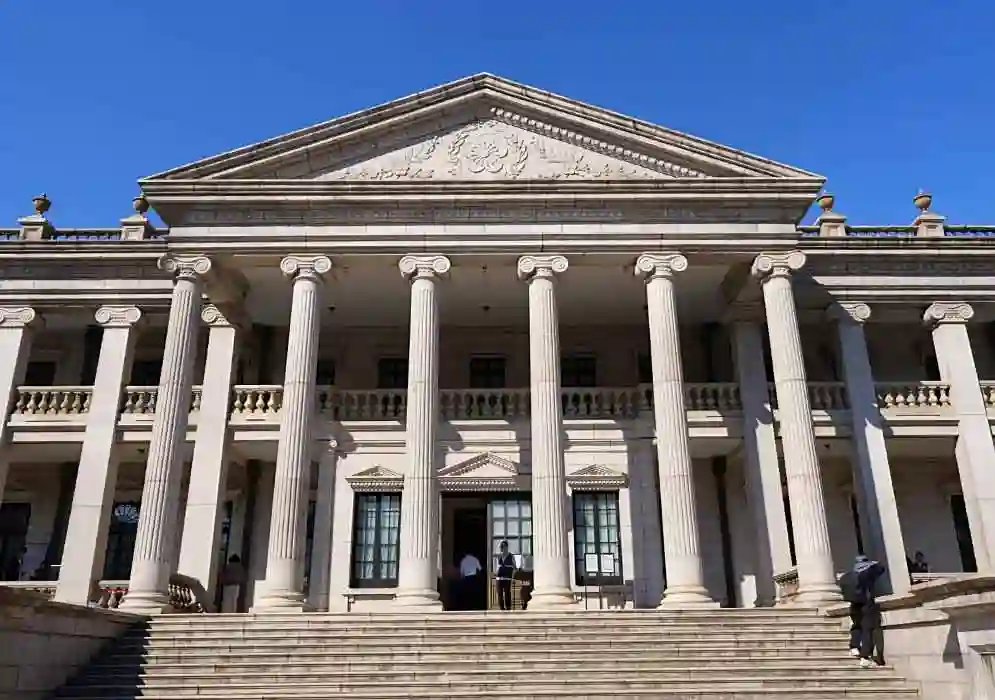
Look up at the triangular section above the front entrance of Seokjojeon Hall. See that five-petaled flower carved at the top? That’s the ihwamun, or plum blossom emblem, a symbol of the Korean Empire and the Yi royal family.
Here’s the interesting part: the Korean royal family’s surname was Yi (李), a Chinese character associated with the plum tree. When Gojong declared the Korean Empire in 1897, the plum blossom became an important symbol of the imperial family and its new status. Think of it as a royal emblem that helped give the empire its own identity.
And it’s not just on the outside.
The same flower motif appears throughout Seokjojeon’s interior, including on furniture, cushions, and other decorative details. So while you’re exploring, keep an eye out for it. Once you know what to look for, spotting these little details makes the visit even more interesting.
Want to See Inside? Here’s How to Visit
If you want to see inside Seokjojeon Hall, you’ll need to join a guided tour of the first and second floors. You can’t explore these floors on your own, so here’s how to book a spot.
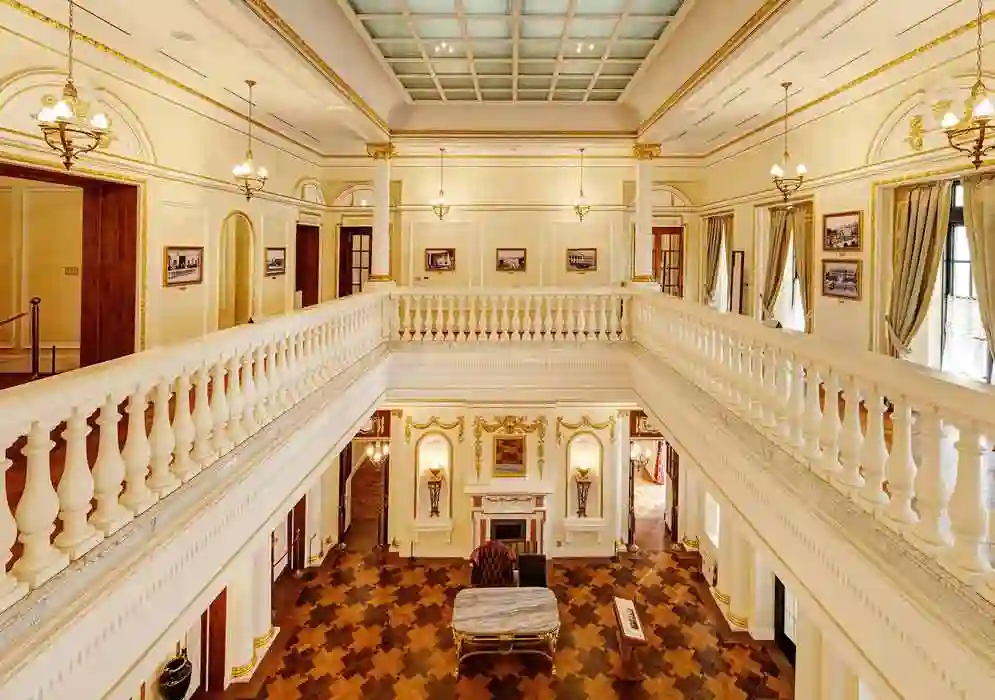
- On-site Sign-up (Easiest & Highly Recommended for Foreigners)
International tourists have a special privilege to get tickets on the spot without booking days in advance.
Option A: English Guided Tours
– Tour Times: 11:50 AM and 2:50 PM daily.
– How to book: Go directly to the information desk inside the 1st floor of Seokjojeon.
– Capacity: Up to 20 people per session on a first-come, first-served basis.
– Korean Companions: 1 foreign visitor can bring up to 1 Korean friends.
Option B: General Korean Tours
– If you just want to see the interior and don’t mind the Korean commentary, 5 on-site spots are held for foreigners/seniors at every general tour session.
⚠️ Required: You must present your Physical Passport or Alien Registration Card (ARC) at the desk.
- Online Advance Reservation
– Where to Book: Royal Palaces Integrated Reservation Website
– When to Book: Tickets open exactly 7 days before your visiting date at 10:00 AM KST (First-come, first-served).
– Ticket Limit: Up to 5 tickets per person.
– Note: The online booking system requires identity verification, which can be complicated for foreigners.
- Admission Fee: The Seokjojeon interior tour itself is FREE.
However, you must buy a general admission ticket for Deoksugung Palace (1,000 KRW) at the main palace gate.
A Modern Art Museum Inside Deoksugung Palace
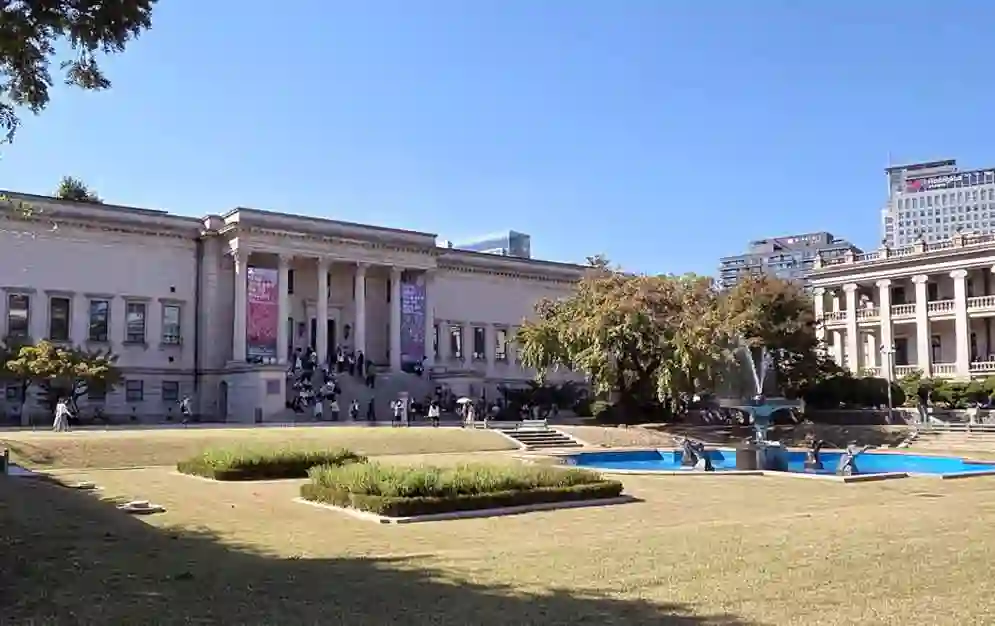
Right next to Seokjojeon Hall, you’ll find MMCA Deoksugung, a museum featuring Korean modern art. But there’s a bit of history behind the building, too.
It first opened in 1938 as the Yi Royal Family Museum, during the Japanese colonial period. Designed by Japanese architect Yoshihira Nakamura, the building was constructed at a time when Deoksugung was being reduced in size under Japanese rule. Today, it serves a very different purpose, hosting exhibitions of Korean modern art.
Thinking of stopping by?
Museum admission is separate from your Deoksugung Palace ticket. A standard ticket costs ₩2,000 though the price may vary depending on the exhibition. Admission is free on Wednesdays and Saturdays from 6 to 9 PM. Just keep in mind that Deoksugung’s main gate closes at 8 PM, so you’ll need to enter the palace before then.
If you enjoy art as well as history, it could be a nice addition to your palace visit.
Where to Take Photos at Deoksugung Palace
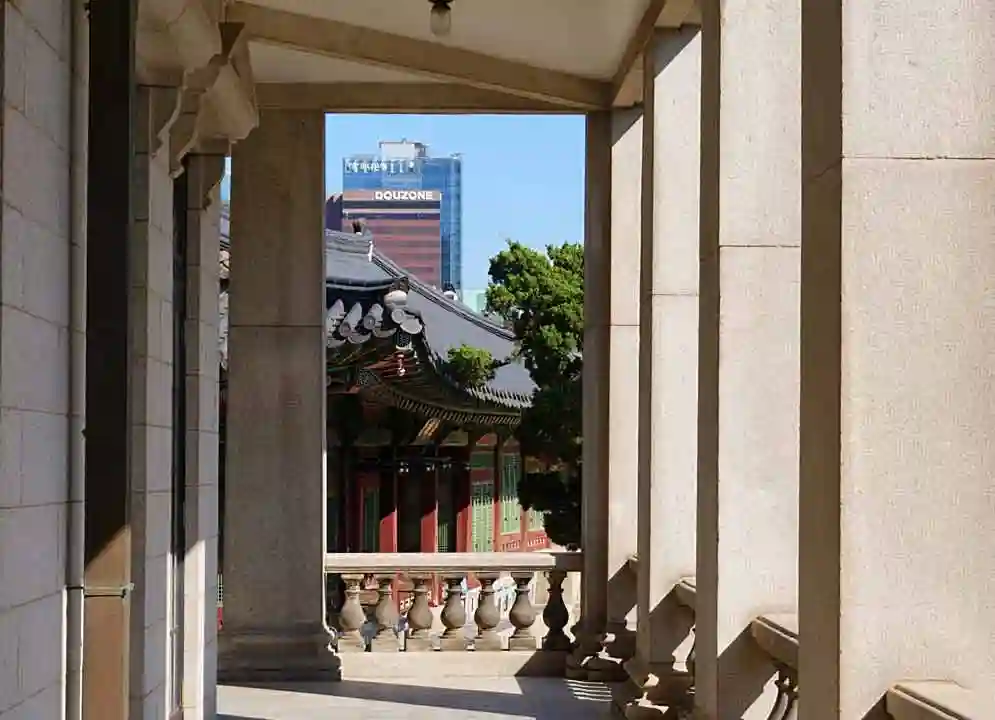
Head up to the Seokjojeon terrace and take a photo from the far right, where you can see Junmyeongdang in the background. The contrast between the elegant Western-style stone columns and the traditional Korean tiled roof peeking through them is such a cool mix of old and new—and a shot that really captures what makes Deoksugung unique.
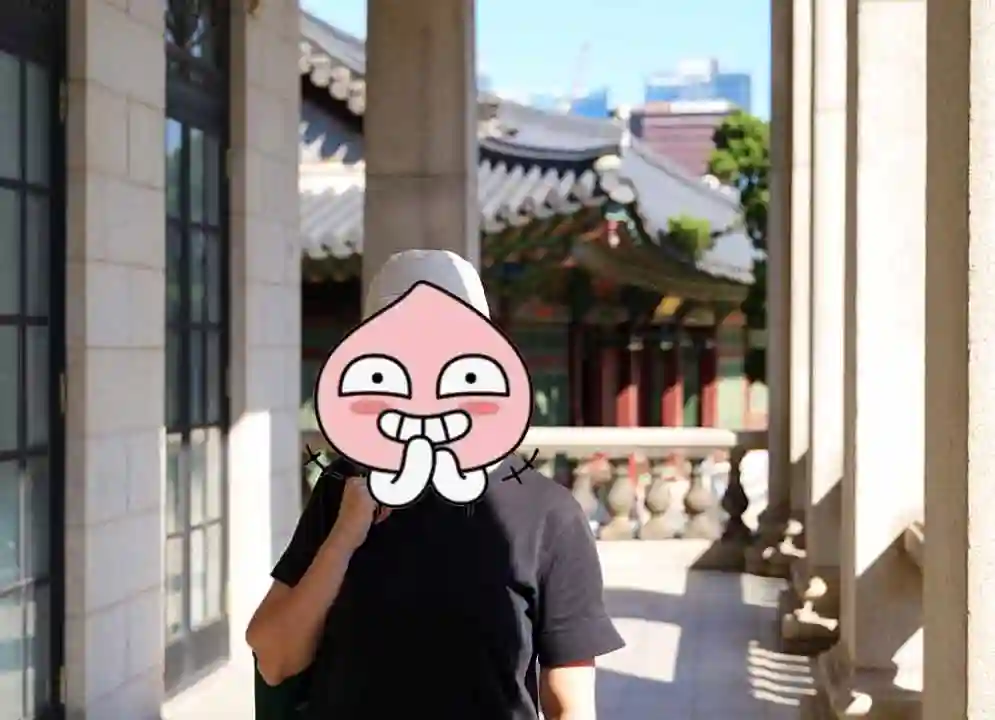
I’m still a little shy about showing my face here, so I’ll keep it hidden for now, but this gives you an idea of the kind of shot you can get here. Honestly, this was my favorite photo spot in all of Deoksugung Palace!
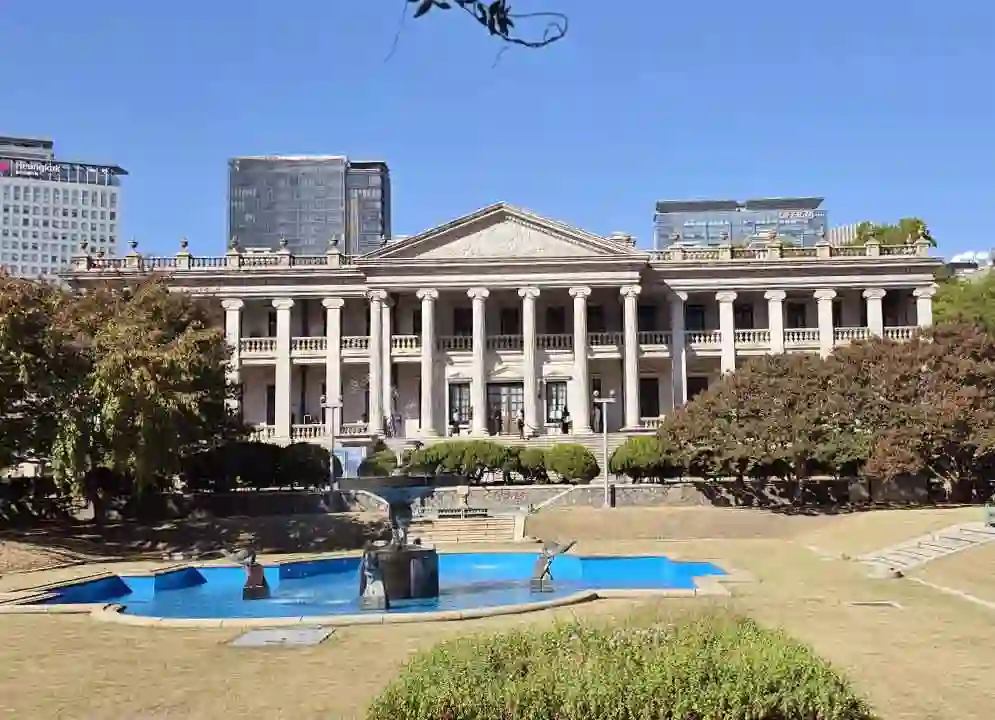
The spot facing Seokjojeon Hall head-on is another great photo spot at Deoksugung. It’s actually one of the most popular places to take pictures here, and there’s even a designated photo spot where you can get that classic shot of the building.
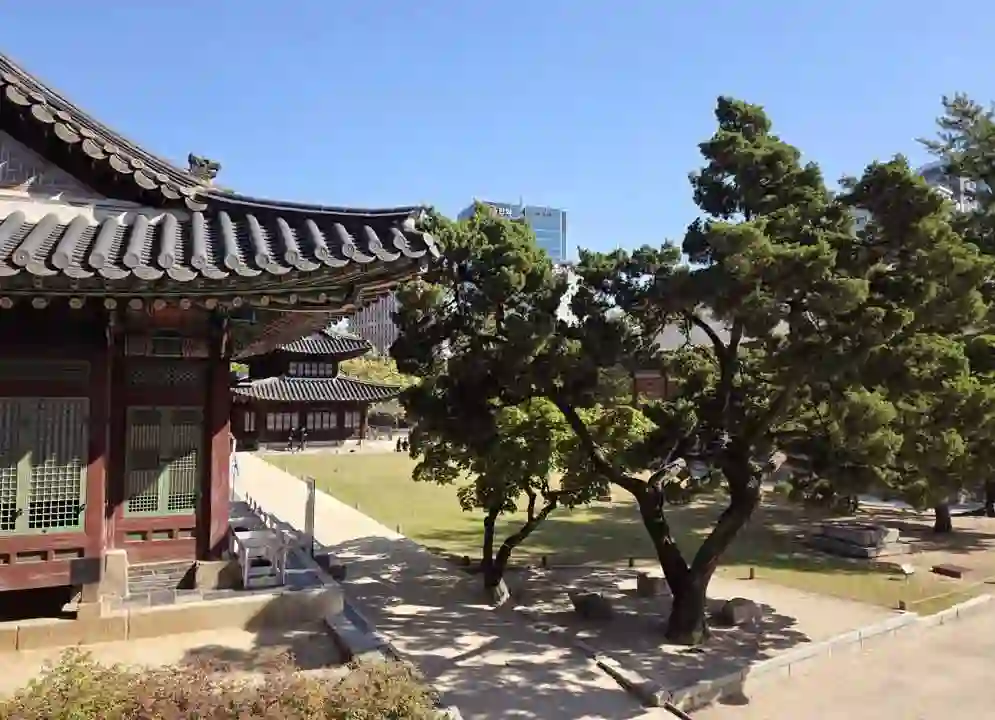
Deoksugung is such a fun place to take photos because you get a mix of totally different vibes in one spot. You’ve got the elegant Western-style architecture of Seokjojeon, traditional Korean rooftops peeking through the columns, and plenty of little details worth capturing along the way. Don’t just snap a few photos and leave—take a little time to look around.
You might end up finding a favorite spot you weren’t even looking for!
Conclusion: Wrap-up Your Deoksugung Visit
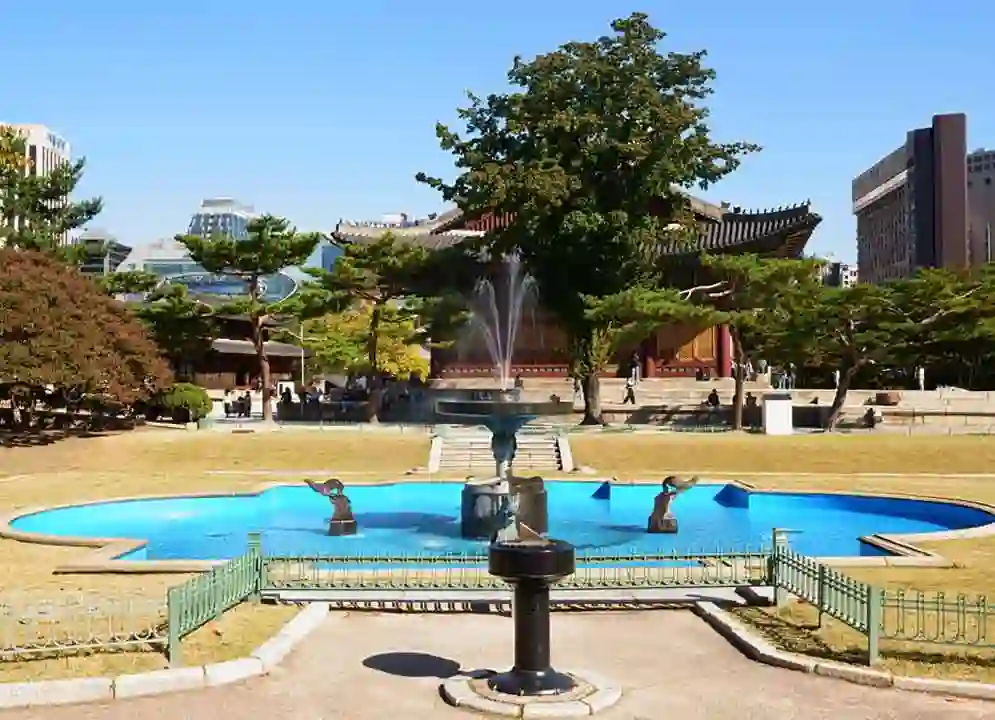
After visiting a few of Seoul’s five royal palaces, even Koreans can start to feel like they’re seeing the same thing over and over. But besides Gyeongbokgung, I’d say Deoksugung and Jongmyo Shrine are two places worth checking out.
What makes Deoksugung special is the mix of traditional Korean architecture and early Western-style buildings. Plus, it stays open until 9 PM, so you can come by in the evening and enjoy a completely different vibe, almost like taking a peaceful night stroll through a palace.
Since Deoksugung is right in the heart of Seoul, it’s easy to fit into your itinerary. So if you’re looking for a palace experience that feels a little different from the usual royal palace tour, Deoksugung is well worth a visit. It may be smaller than some of Seoul’s other palaces, but it has a character all its own—and sometimes, those are the places that end up being the most memorable.
Quick Tips for Your Visit:
- Check the Royal Guard Changing Ceremony times (11:00 AM / 2:00 PM, Tue-Sun) before you head out.
- If you are an international tourist, take advantage of the on-site sign-up for the Seokjojeon interior tour.
- Come after sunset to enjoy the stunning palace night views without any seasonal reservations.
Want to explore more around Deoksugung Palace?
Take a stroll along Deoksugung Stonewall Road and discover the historic Jeong-dong neighborhood. Check out my guide to Deoksugung Stonewall Road for walking tips and places to visit along the way.