

What Is Horogoru Fortress?
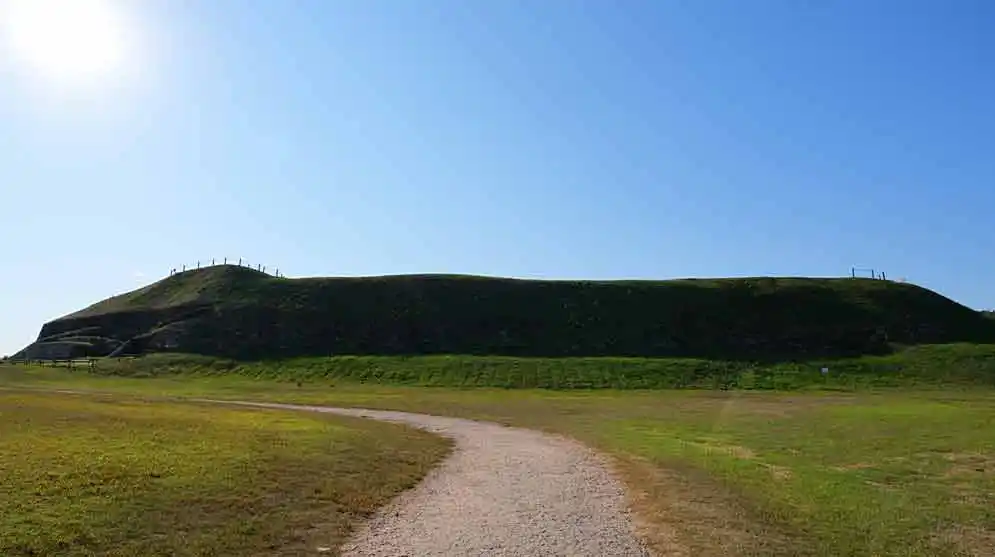
Horogoru is an ancient Goguryeo fortress in Yeoncheon, about a One to two-hour drive from Seoul.
But if you’ve never heard of Goguryeo, here’s the quick version: it was one of the most powerful kingdoms in ancient Korean history, controlling parts of what are now northern Korea and northeastern China.
One of the best-known reminders of its power is the Gwanggaeto Stele, a massive stone monument built in 414 and still standing in Jian, China.
Horogoru was built between the 5th and 7th centuries at a strategic crossing along the Imjin River.
Today, you can walk along the old fortress walls with wide-open views of the river and countryside.
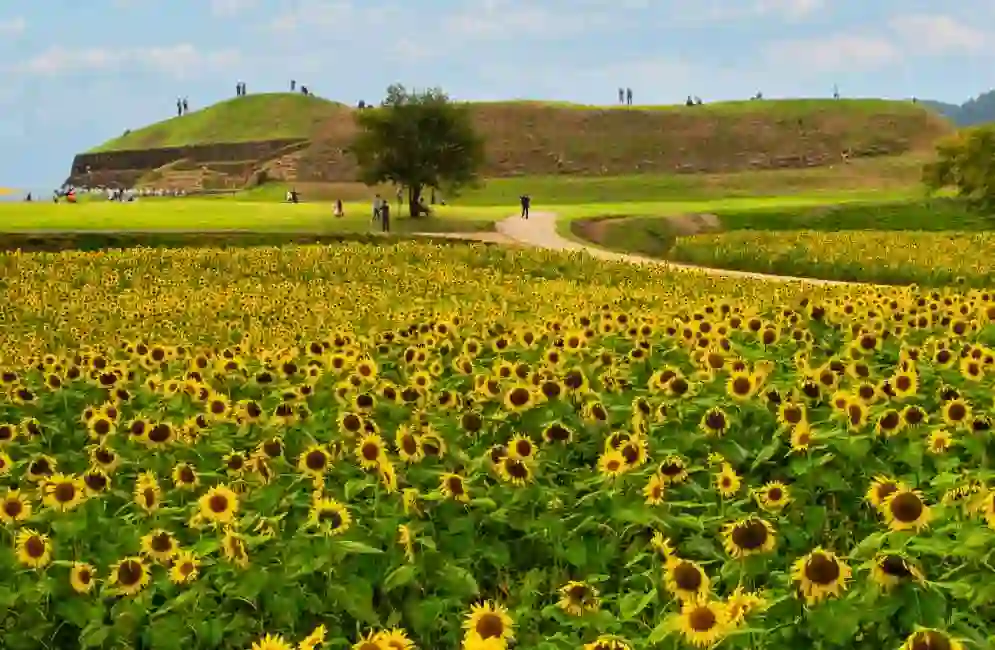
Visit in late August or early September, and the fields around the fortress turn bright yellow with sunflowers. And since Horogoru sits near the DMZ, you’re also exploring an area where ancient Korean history and the modern division of the Korean Peninsula meet in a pretty unique way.
A Closer Look at Horogoru
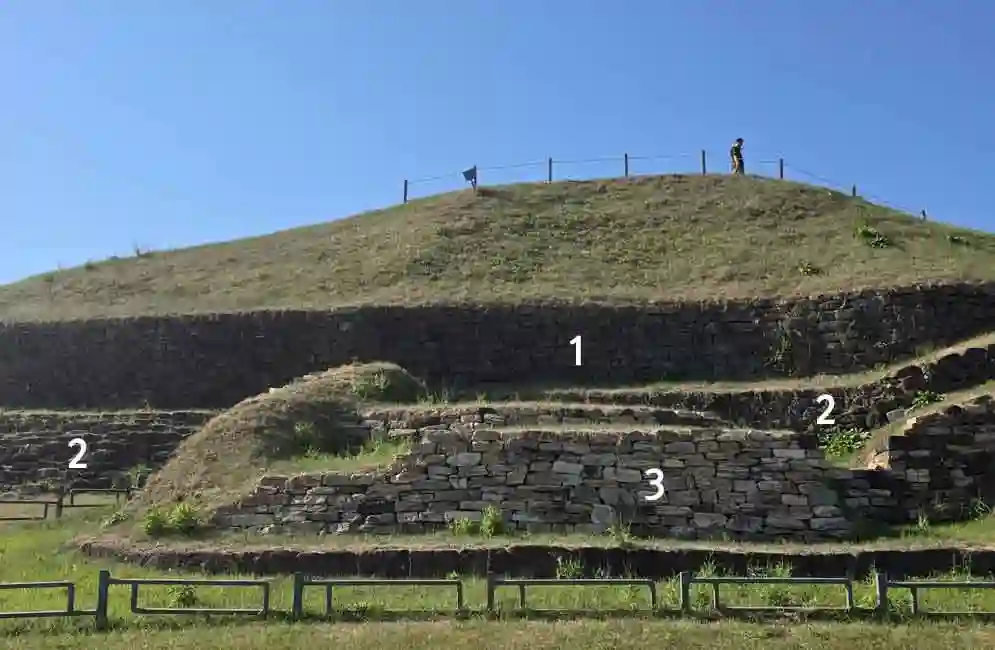
Back in the 6th century, the Goguryeo built the fortress walls with packed earth and then lined the outside with neatly stacked pieces of the dark basalt that was easy to find in the area.
After Goguryeo fell, Silla took control of the fortress from the 7th century onward. They reinforced the existing Goguryeo walls by adding another layer of schist stone to the outside.
In the photo above, Nos. 1 and 2 show the original Goguryeo wall, while No. 3 is the additional layer added by Silla.
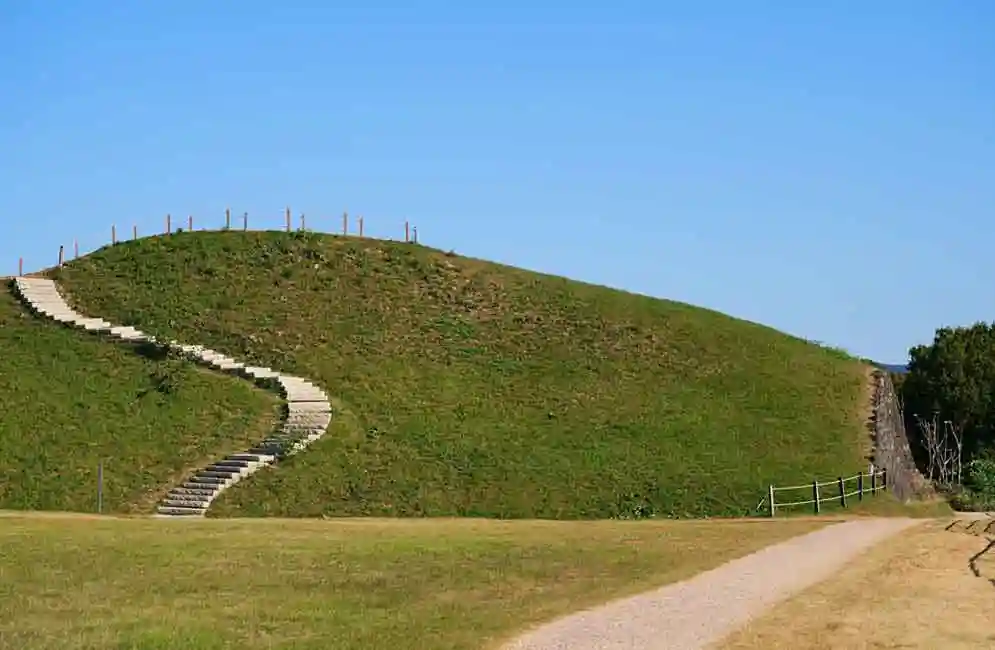
The stairs along the eastern fortress wall seem to lead straight up into the sky.
They became known as the “Sky Stairs” after appearing in the Korean drama ‘VIP‘.
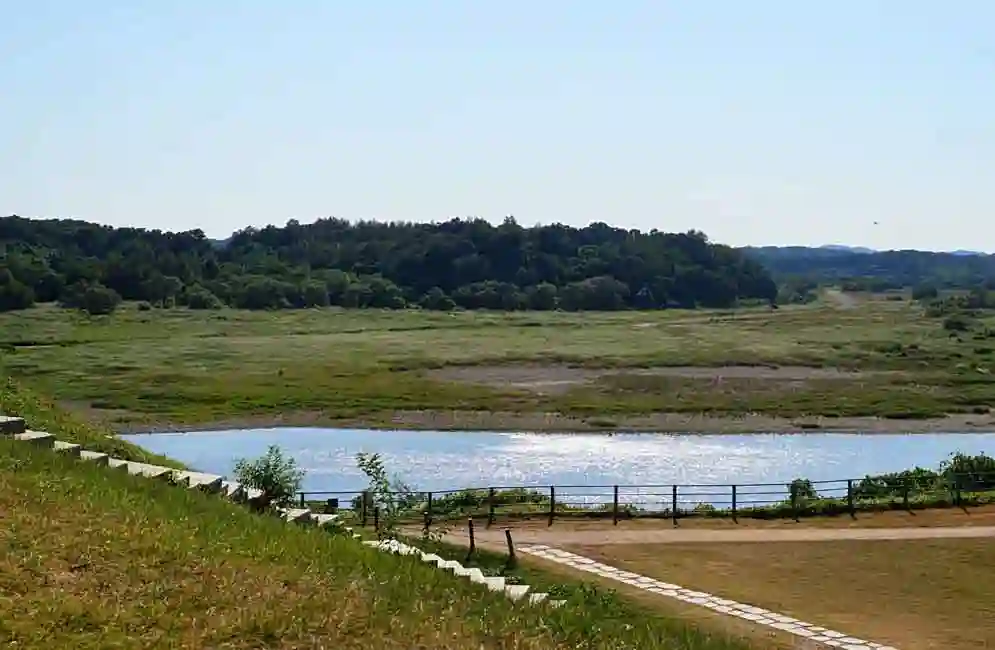
At the top, you’ll be greeted with wide-open views of the blue sky and the Imjin River, making this one of the best spots at Horogoru for a memorable photo.
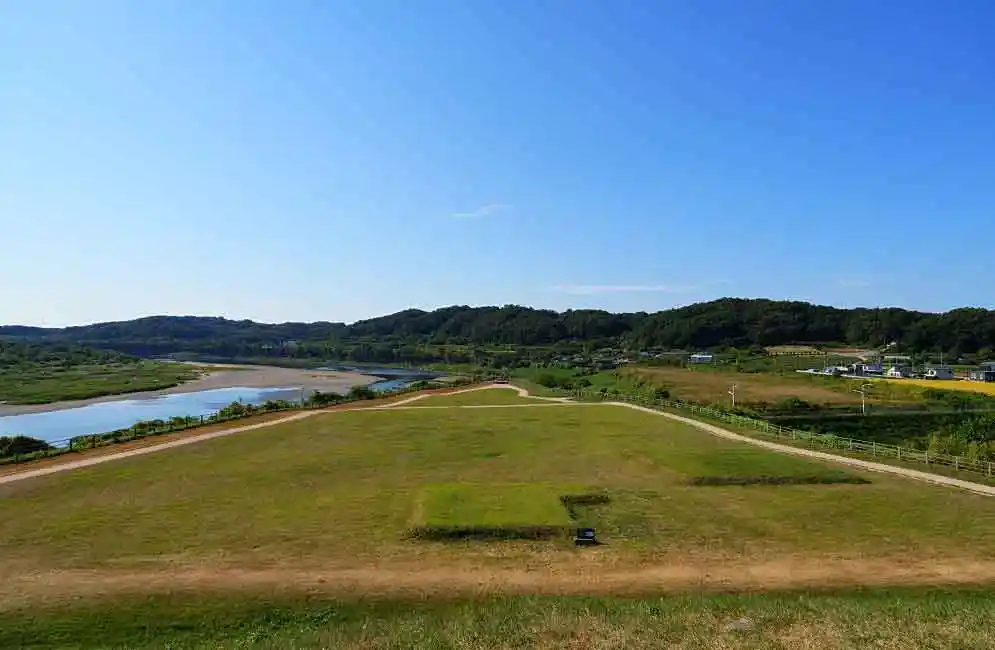
Horogoru Fortress was built on a naturally formed, triangular plateau of basalt.
The steep columnar basalt cliffs along the north and south sides acted as natural walls, so the fortress only needed a thick defensive wall on the eastern side, where the plateau connects to the mainland.
Climb up the eastern wall, and you can look down over the triangular-shaped grounds that the Goguryeo soldiers once guarded.
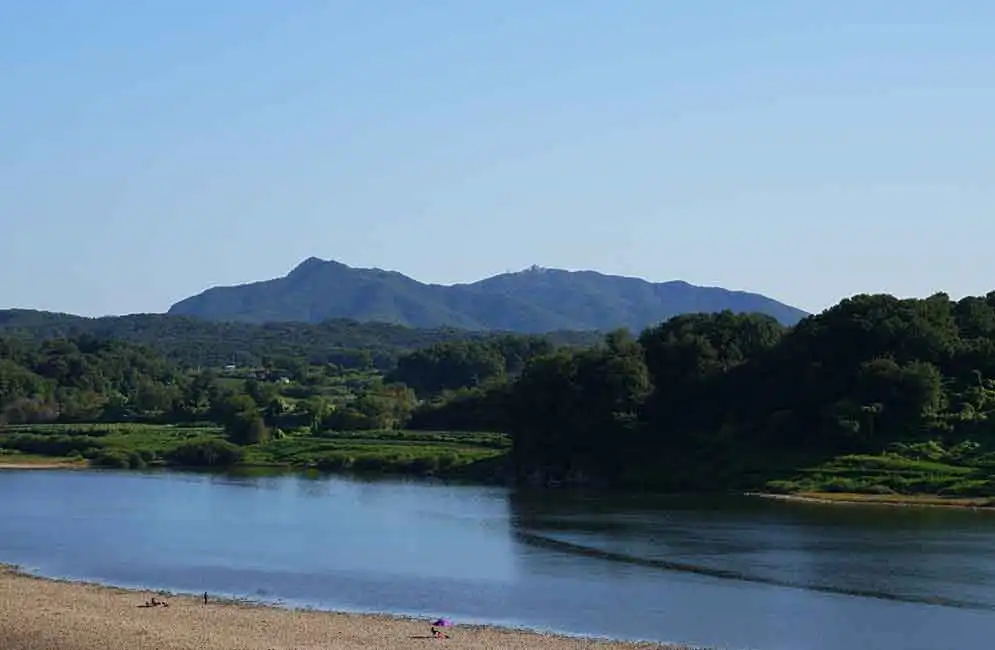
The Imjin River you see from Horogoru Fortress flows down from North Korea before making its way through northern South Korea.
What makes this spot especially interesting is that the river here was once affected by the tides. When the water was low, there was a shallow natural crossing where people could make their way across the river without a boat.
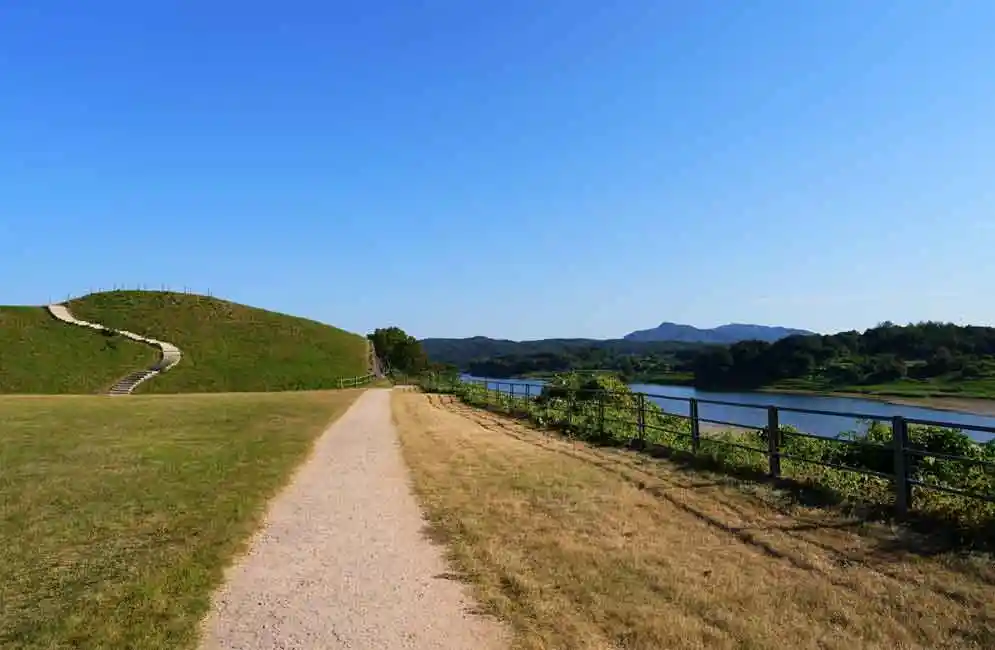
That made this area an important crossroads for both land and water routes. And that’s a big part of why Goguryeo built a fortress here—the location offered a strategic point for controlling movement along the Imjin River and defending its northern border.
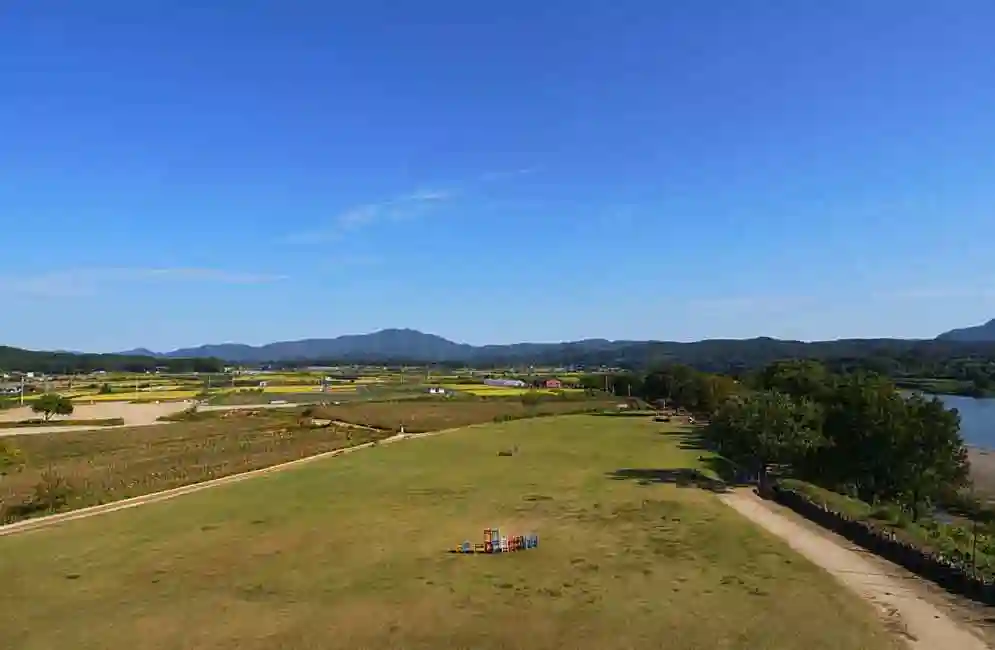
If you visit between mid-August and early September, the fields in front of Horogoru are covered in bright yellow sunflowers, making for an amazing view. If you can, I’d definitely try to time your visit around sunflower season.
We visited at the end of September, so unfortunately, the sunflowers had already wilted.
Even without them, though, we still really enjoyed walking around Horogoru and taking in the scenery.
Before You Visit Horogoru
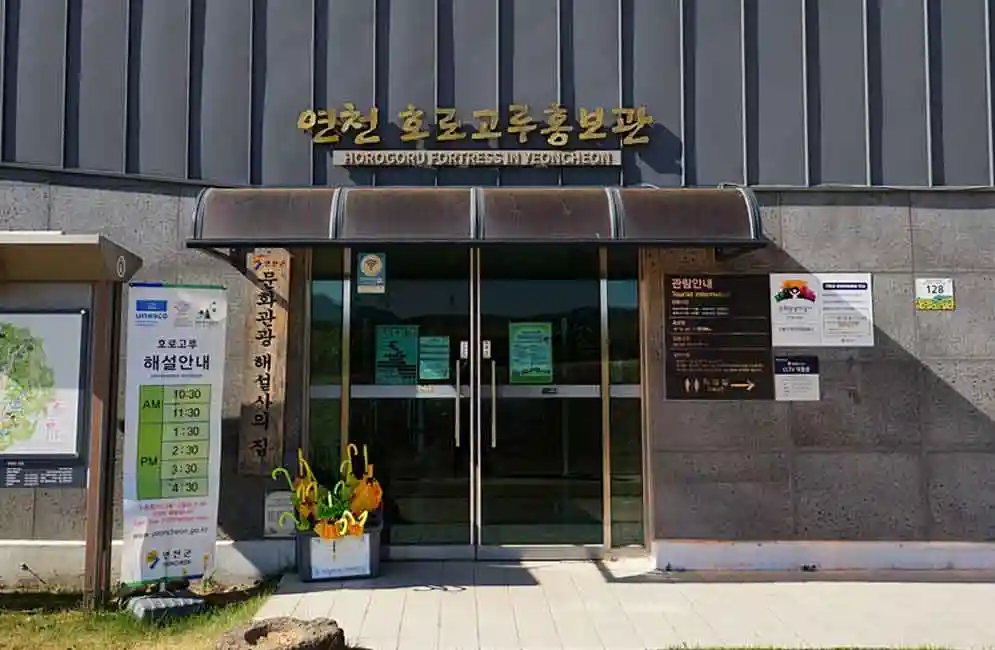
Opening Hours : Open 24 hours
Admission : Free
Parking : Free parking available on site
Restrooms : Available
Location : 1257-1, Wondang-ri, Jangnam-myeon, Yeoncheon-gun
The fortress itself is an open outdoor site, so you don’t need to worry about closing hours. The visitor center has separate operating hours.
How to Get to Horogoru Fortress
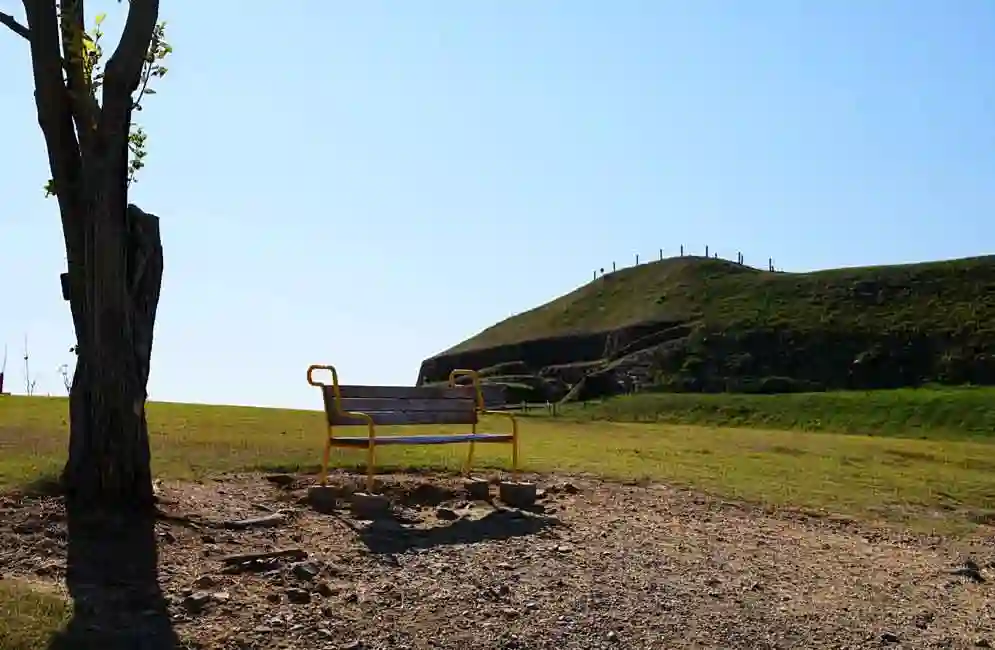
Getting to Horogoru by public transportation can be a little tricky.
You can take Line 1 from Seoul to Yeoncheon Station, then take a local bus or taxi to the fortress. The problem is that buses only come about every 90 minutes, and taking a taxi both ways can get pretty expensive.
For an easier and more budget-friendly option, consider the Yeoncheon City Tour Bus, which includes Horogoru on its Wednesday ‘History & Nature Tour’.
Since it’s a guided tour, you can also check out several other popular spots around Yeoncheon instead of making the trip just for Horogoru.
👉️ Book a Yeoncheon City Tour
If you’re looking for somewhere a little different from the usual Seoul itinerary, Horogoru is definitely worth the trip. You’ll get a mix of ancient Korean history, wide-open river views, sunflower fields, and the unique atmosphere of being near the DMZ—all in one surprisingly peaceful spot.
It’s not the easiest place to get to, so if you’re taking public transportation, I’d recommend joining the Yeoncheon City Tour and checking out a few other nearby spots along the way.
If you’re driving, it makes more sense to combine Horogoru with some of the other attractions in the area and make a day of it.