

Why Is Gwanghwamun Mijin So Famous?
If you’re exploring Gwanghwamun, you’ve probably walked past plenty of places to eat. But Mijin is one spot worth knowing about.
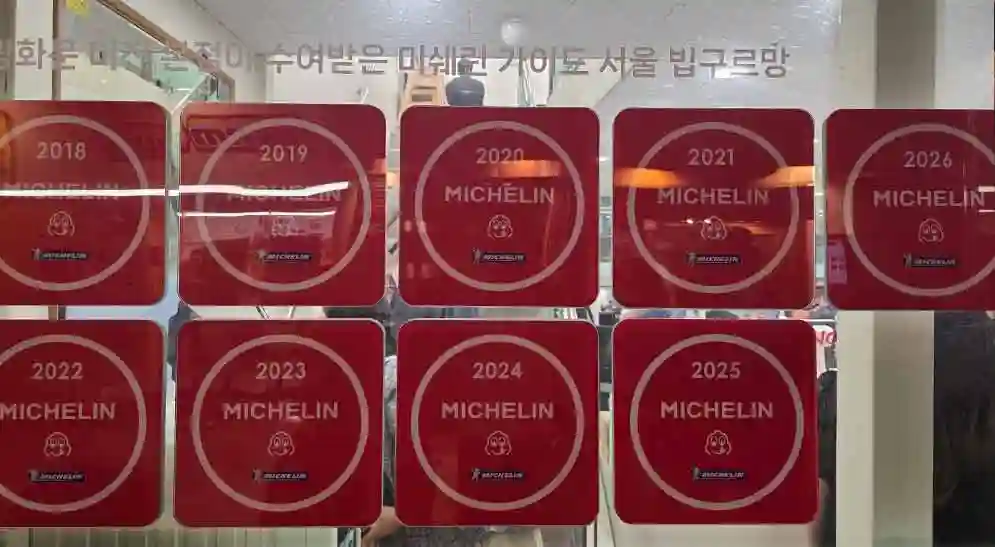
It’s been around since 1952 and is known for its cold buckwheat noodles, which have also earned it a place in the MICHELIN Guide. Instead of getting your noodles in a bowl of broth, you get a separate pot of chilled dipping sauce and add your own toppings, like green onions, seaweed, grated radish, and wasabi.
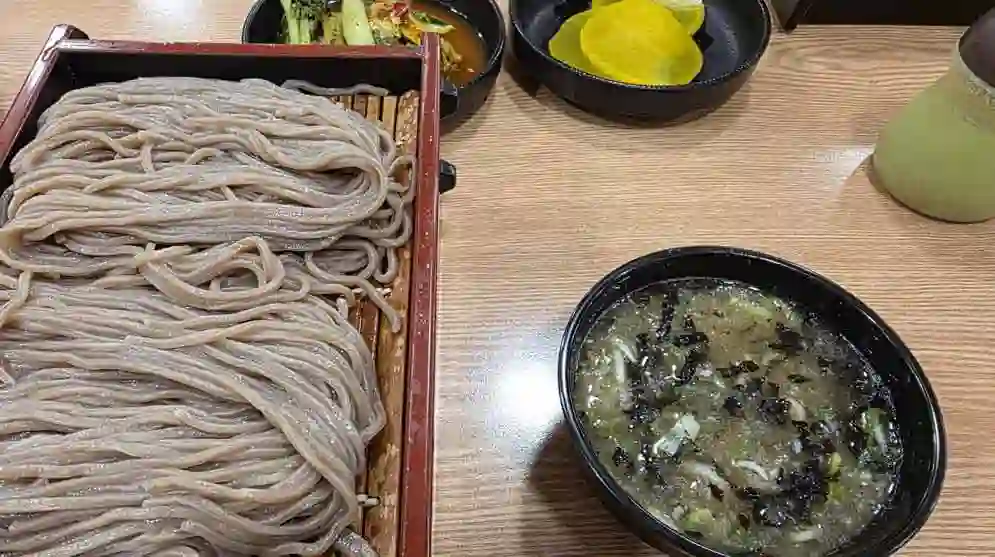
It’s a little different from the noodle dishes you might be used to, and that’s part of the appeal. Plus, Mijin is right in the Gwanghwamun area, so you can easily stop by after visiting Gyeongbokgung Palace without making a special trip across Seoul just for lunch.
How to Get to Mijin from Gyeongbokgung Palace
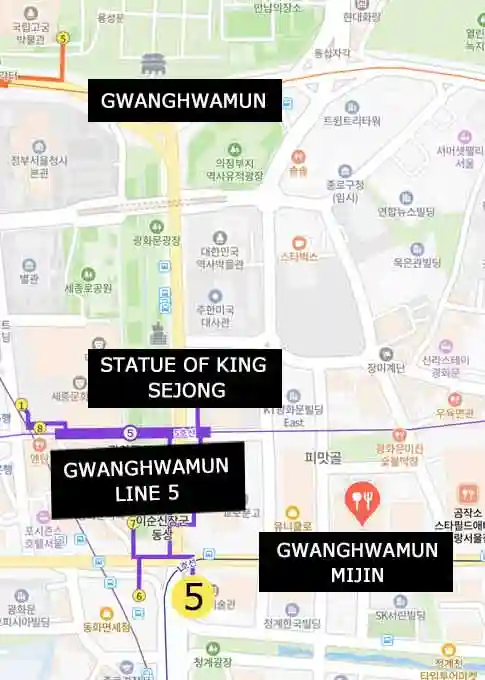
Mijin has been featured in the MICHELIN Guide for nine years in a row, but its location is another big plus. Right in the heart of Gwanghwamun, it’s an easy spot to stop by for a casual meal while exploring nearby attractions like Gyeongbokgung Palace, Insadong, and Cheonggyecheon Stream. It’s one of those places you can come back to whenever you’re in the neighborhood and craving a simple, satisfying meal.
- Walking Distance : Approx. 10 to 15 minutes on foot from the main palace grounds.
- Route: Exit Gyeongbokgung Palace through the main gate, Gwanghwamun, and head straight down the wide Gwanghwamun Square pedestrian walkway.
Continue walking past the statue of King Sejong until you reach the major intersection near the Seoul City Hall / Cheonggyecheon area.
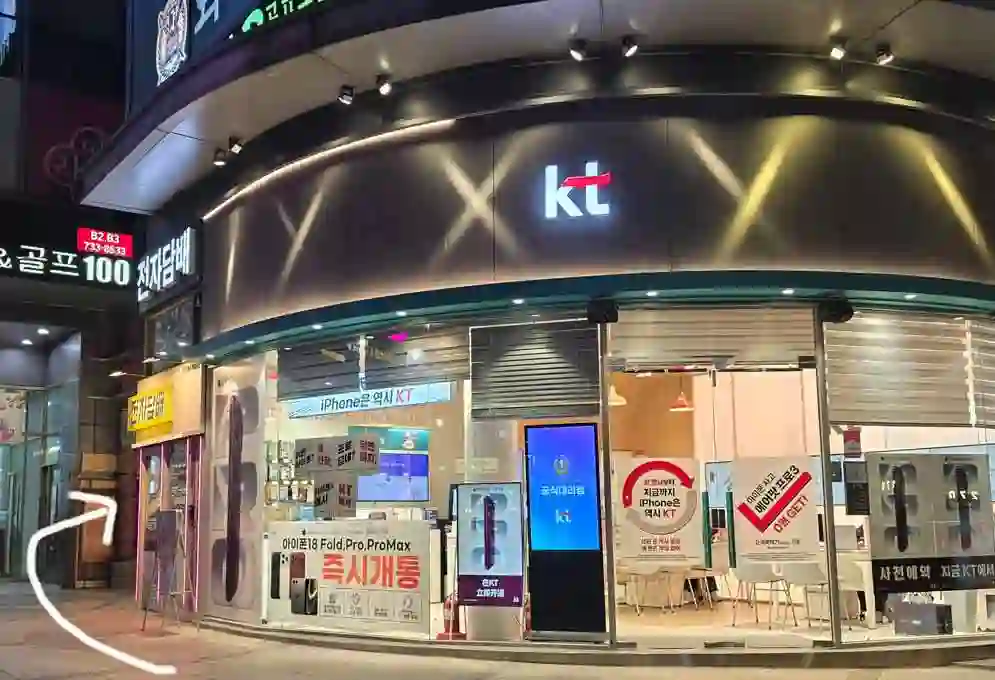
Gwanghwamun Mijin is tucked into a quiet alley just behind the D-Tower, easily accessible on foot.
- Gwanghwamun Mijin (광화문 미진)
- Address: 서울 종로구 종로 19 르메이에르종로타운1 1층
- View on Naver Map
- View on Google Maps
What to Do When You Arrive at Gwanghwamun Mijin
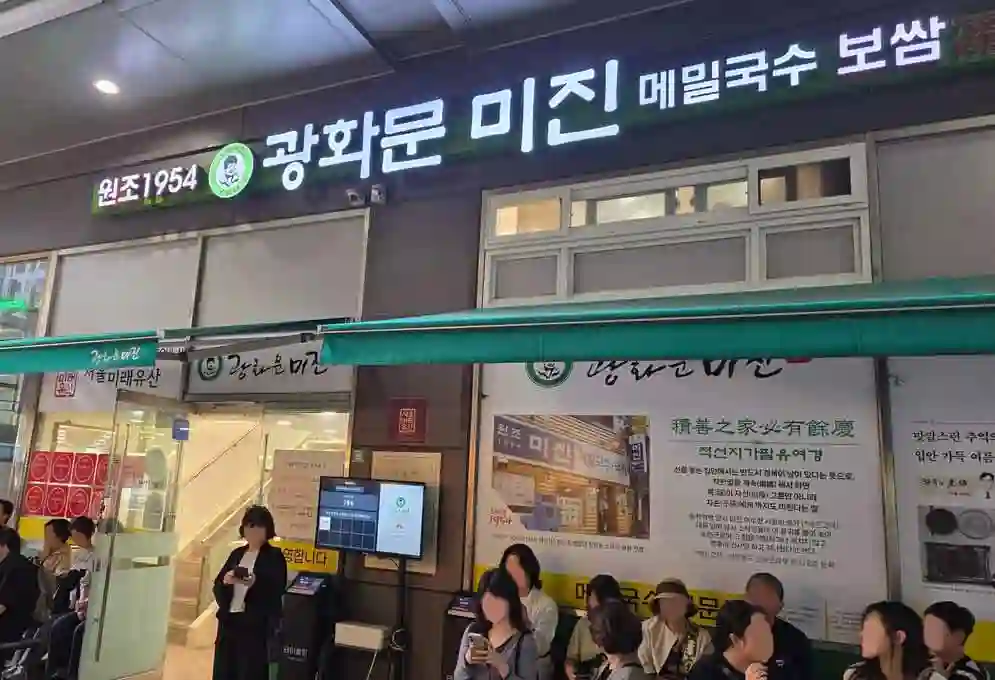
Mijin is a popular spot, so don’t be surprised if you see a bunch of people sitting outside, especially locals. Don’t let the crowd throw you off! Just head straight to the waiting list kiosk and sign up first. Once you’re on the list, you can take your time checking out the storefront or exploring the area while you wait for your turn.
How to Sign Up at the Waiting List Kiosk
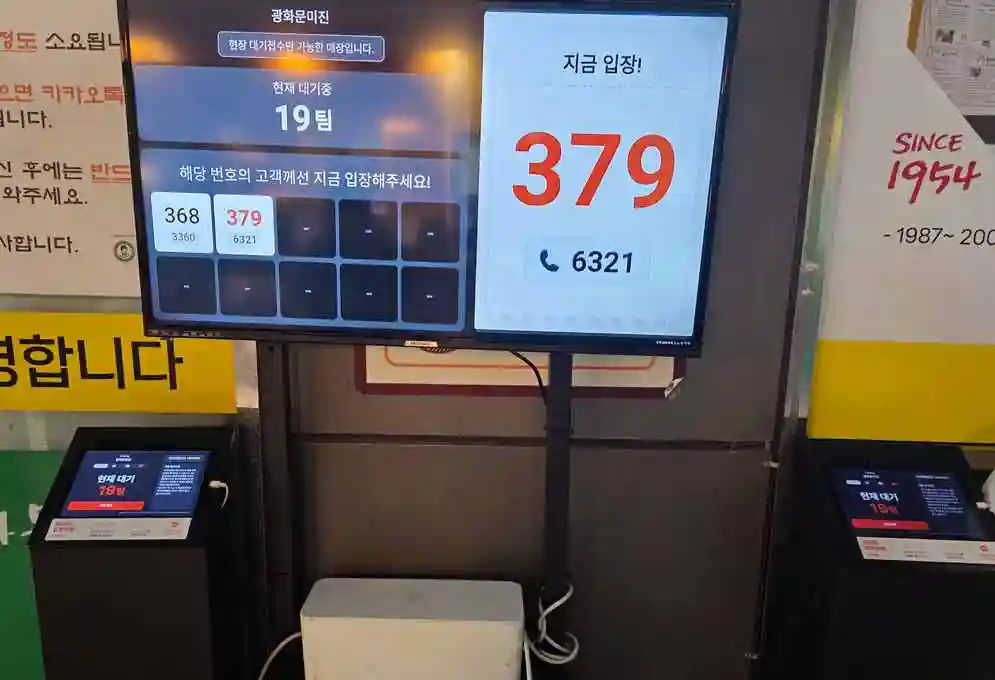
You’ll find two kiosks right next to the entrance, just below the digital display.
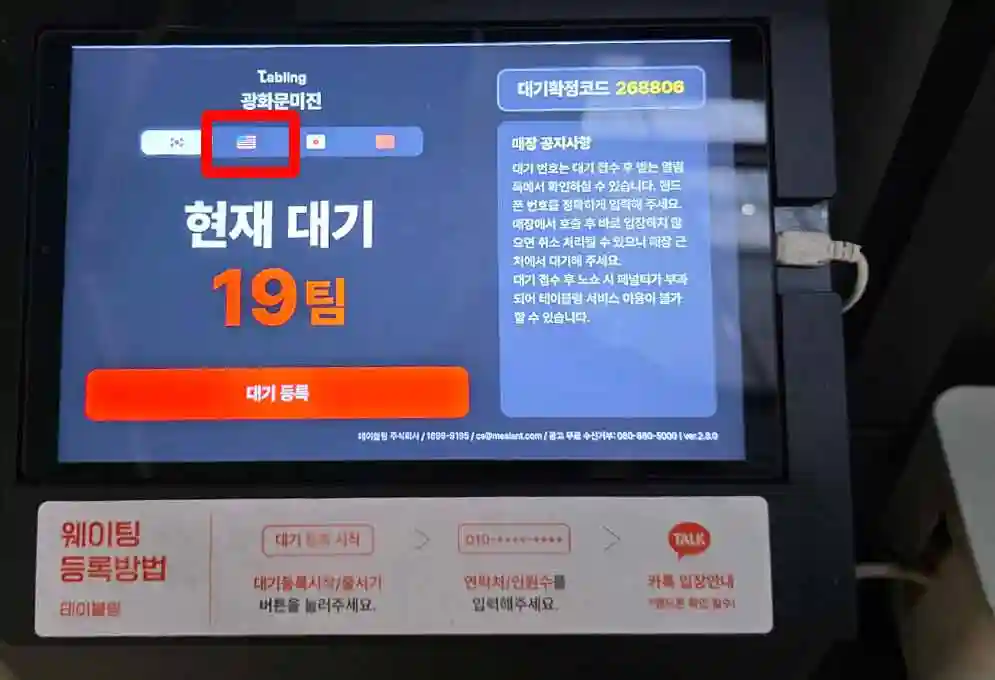
The number on the display shows how many groups are ahead of you. You can switch the language on the kiosk and sign up for the waitlist.
Most locals enter their phone number to get notified when their table is ready, but if you’re visiting from abroad, you can use your email address instead.
Once you’ve signed up, you’ll get an estimated wait time. If it turns out to be over an hour and throws off your plans, you can cancel your spot through the email you receive.
Even outside peak meal times, a wait of around 30 minutes seems pretty normal here, so it’s worth signing up first before exploring the area.
The display also shows which number is being called. Once your number pops up, you’re good to head inside!
What to Order at Gwanghwamun Mijin
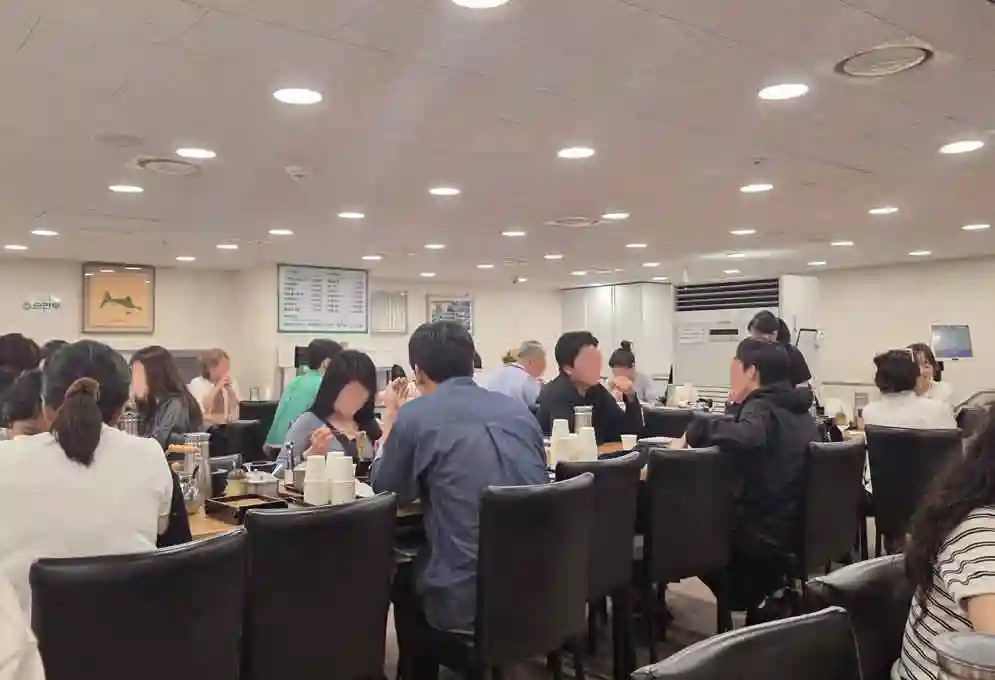
The restaurant has two floors, and the tables are a little close together, so it can feel a bit crowded. This isn’t really the kind of place where you sit back and enjoy a long, fancy meal. It’s more of a casual, no-fuss spot for a quick, satisfying bowl of noodles, so expect things to get a little noisy, especially when it’s busy.
Mijin’s Menu and Prices
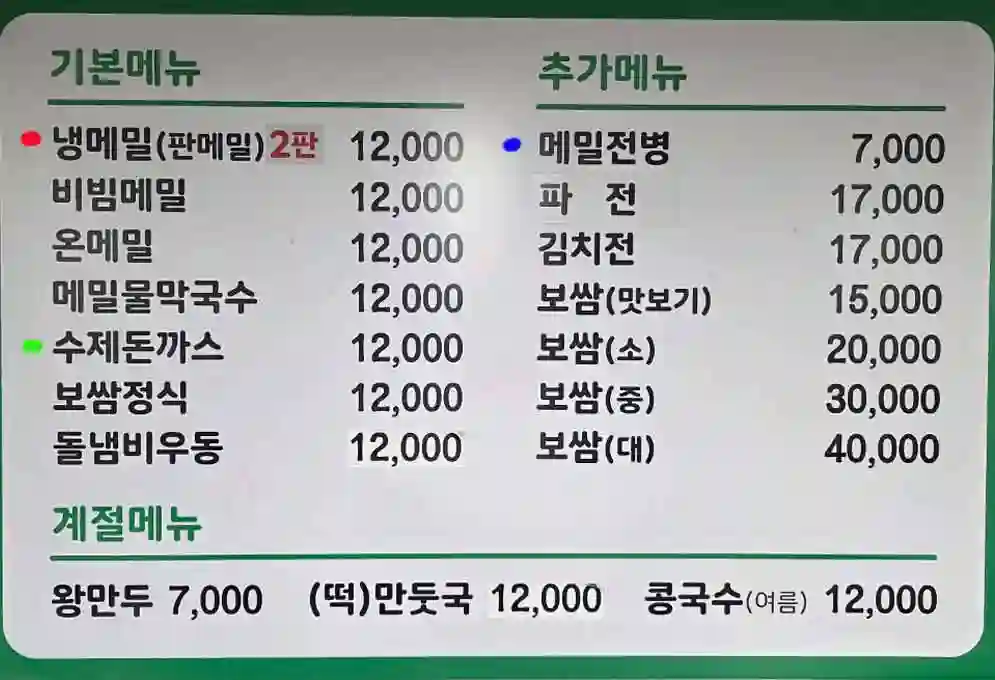
If it’s your first time at Mijin, I’d go with the cold buckwheat noodles (naeng memil). They’re the restaurant’s signature dish and the main reason people come here. I’ve marked them in red on the menu photo(냉메밀) so you can easily spot them, even if you can’t read Korean.
Want something extra to go with your noodles? The buckwheat crepes (memil jeonbyeong) are a popular option. Look for the menu item marked in blue.
Not a fan of noodles, or visiting with kids who might prefer something more familiar? The pork cutlet (donkatsu) is another option. I’ve marked it in green on the menu photo to make ordering a little easier.
If you’re just stopping by for a casual meal while exploring Gwanghwamun, the cold buckwheat noodles are a great place to start. You can always add the buckwheat crepes if you feel like trying a little more!
We always go for the cold buckwheat noodles, so we’re ordering two portions again today.
Where to Find Spoons and Chopsticks
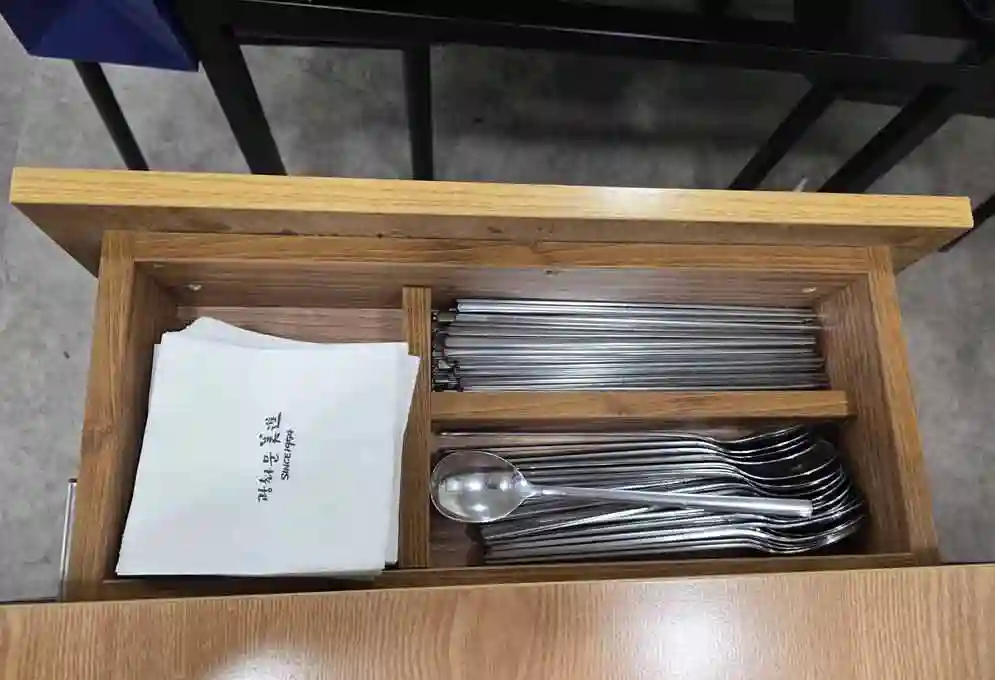
Once you’ve ordered, check the drawer next to your table. You’ll find spoons, chopsticks, and napkins inside. A lot of Korean restaurants keep them in table-side drawers like this, so if you can’t find them at your next stop, check the drawer first!
Getting Ready to Eat
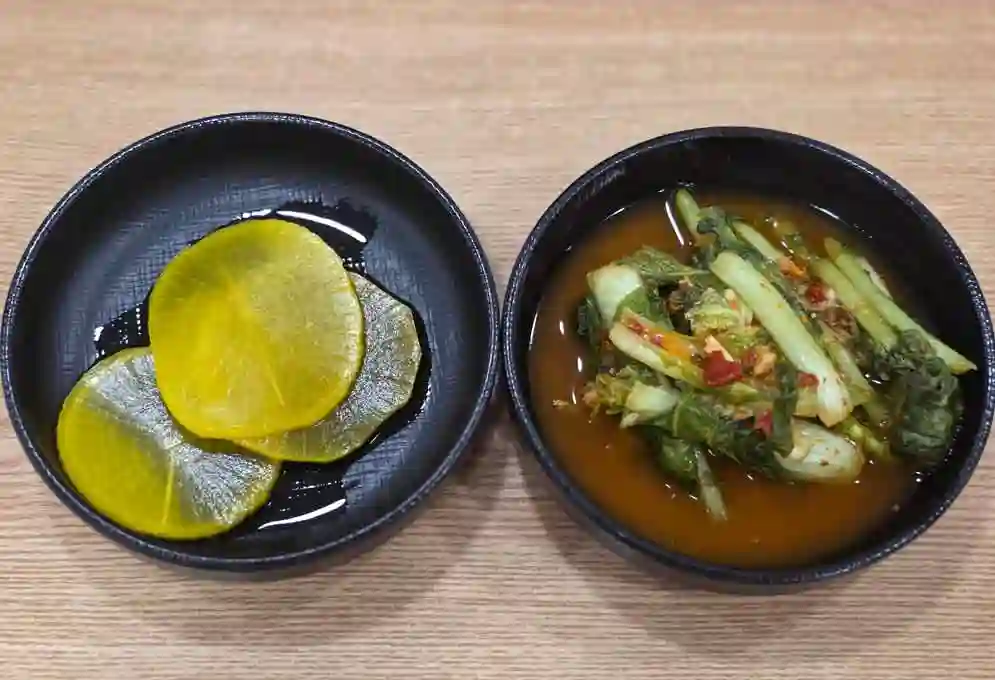
Pickled yellow radish and young radish kimchi are served first as side dishes. You can also help yourself to more at the self-service bar, free of charge, so feel free to grab as much as you’d like!
How to Use the Self-Service Station
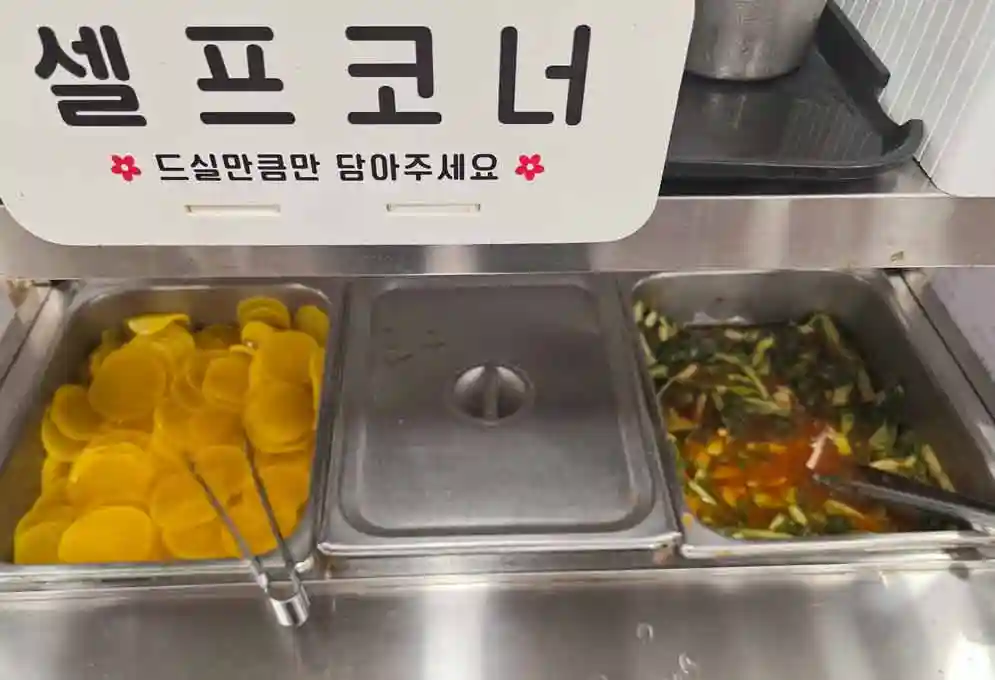
One Korean word worth remembering while traveling here is “self” (셀프)!
In Korea, you’ll see this word a lot at restaurants. It basically means you can help yourself instead of waiting for someone to bring things to your table. Water, side dishes, and other basics are often available at a self-service station.
So if you spot “셀프” or “셀프코너” (self-service corner), you’ll know what to do! 😉
How to Eat Pan Momil (Korean-Style Cold Buckwheat Noodles)
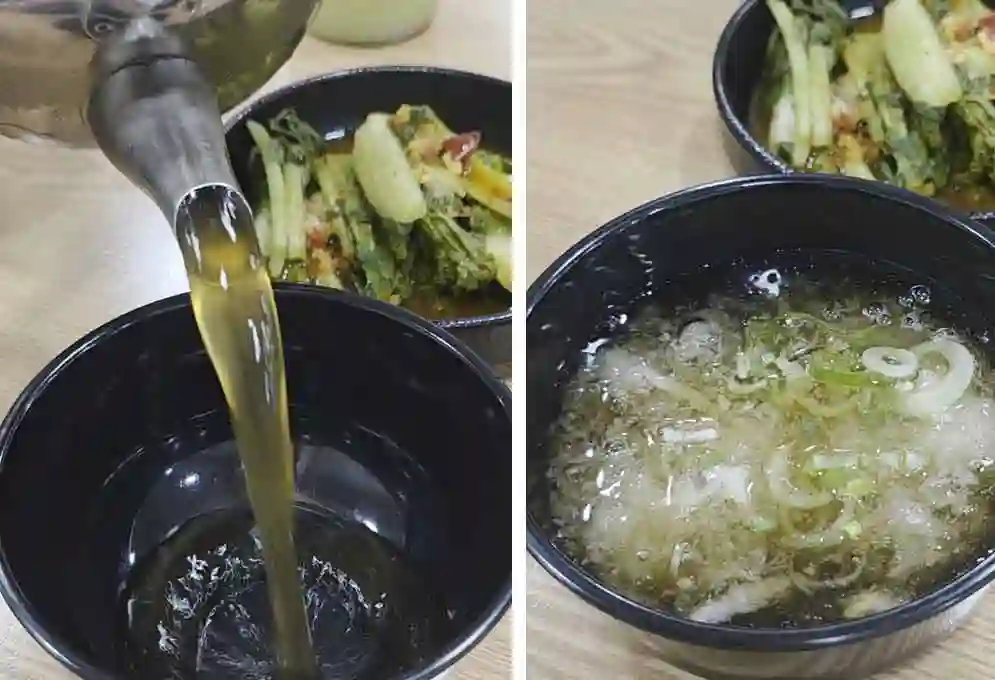
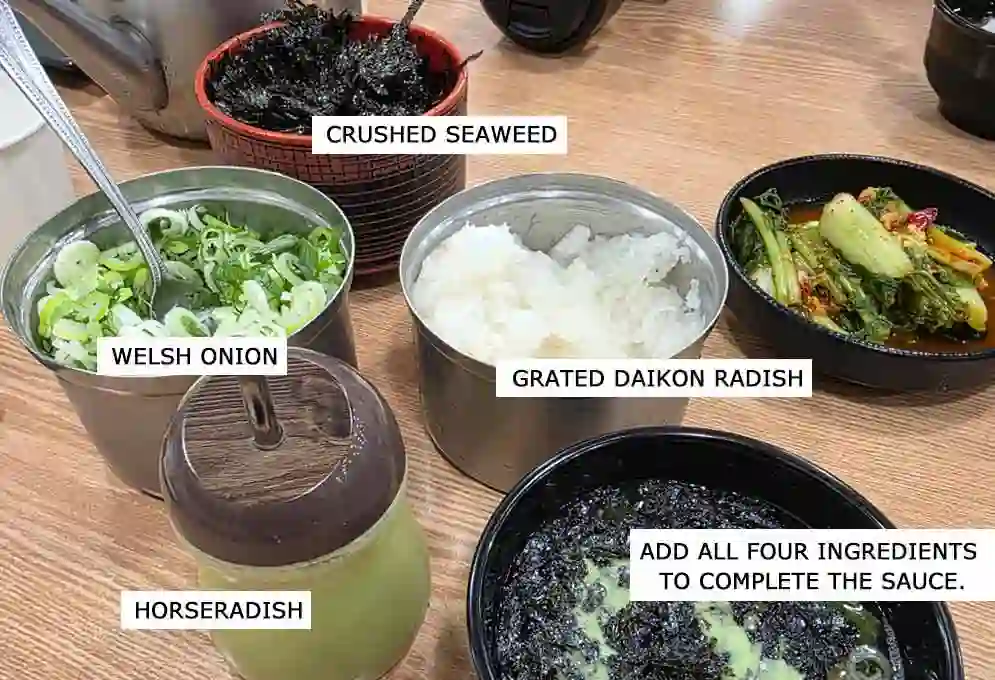
Pour the broth from the teapot into your dipping bowl, then add the condiments on the table.
I usually add all four. I like a little extra grated daikon radish, so I add about two spoonfuls of that and one spoonful of each of the others. That’s how I make my dipping sauce!
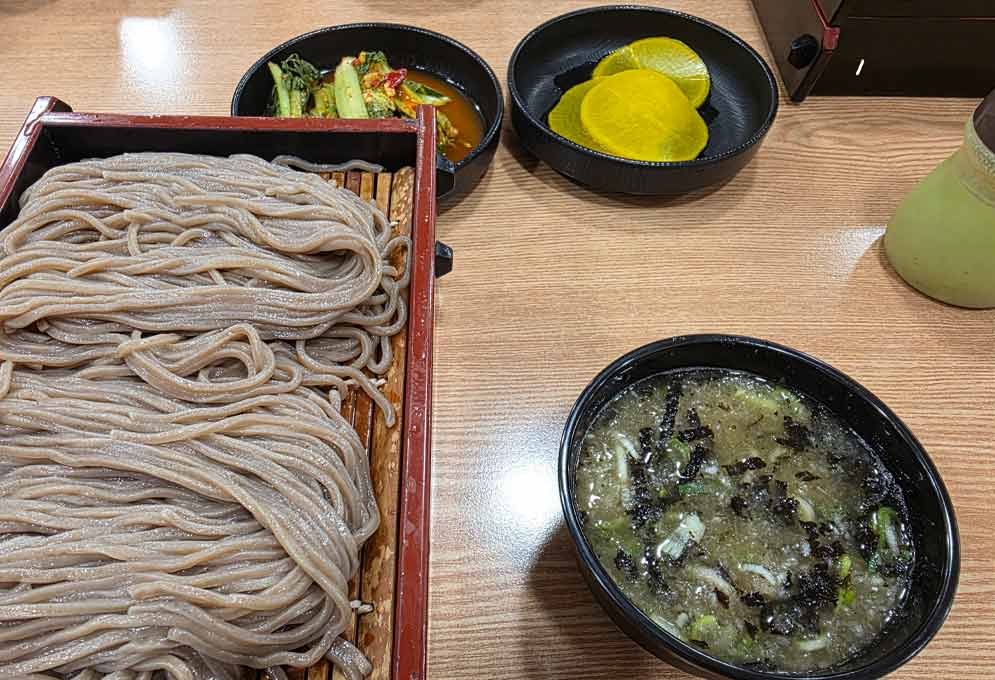
The noodles come on two separate trays, one on top of the other. Just pick up a comfortable amount of noodles, dip them into your broth, and enjoy!
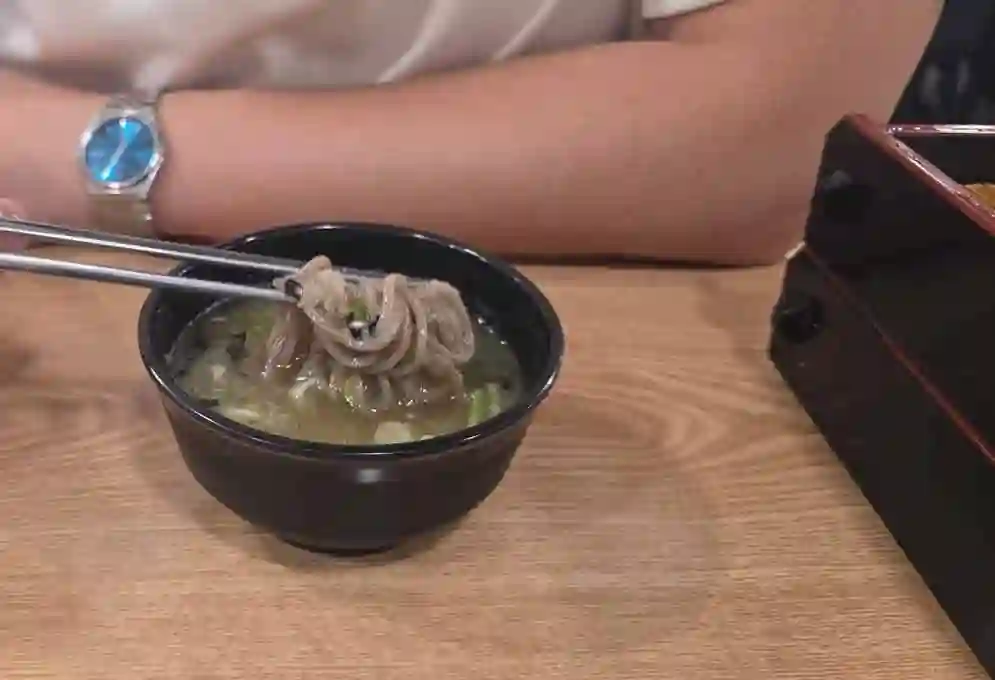
The noodles have a nice, chewy texture, and the dipping broth has a savory umami flavor with a hint of sweetness. It’s a great option when you want something light and simple!
Mijin is actually a chain, so you might come across other locations around seoul, but the Gwanghwamun branch is the original and has been around for years.
It’s also in a pretty convenient spot if you’re exploring Gwanghwamun, Gyeongbokgung Palace, or Insadong. Plus, it’s been recognized by the Michelin Guide, so if you’re a fan of noodle dishes, it might be worth stopping by while you’re in the area!